Fruiting Body vs Mycelium Lion's Mane — Which to Buy
Fruiting body vs mycelium is the single most consequential specification on a lion's mane label. The difference between a product matching clinical research and a much cheaper substitute that dilutes active compounds substantially. We explain what each is, why it matters, and how to identify which form is in any UK product you're considering.
At a glance: our picks
- Best fruiting body extract UK: Futuro Labs Lion's Mane — 1500mg fruiting body (5:1)
- Best premium fruiting body: Solve Labs — UK dual-extracted
- Best UK-grown fruiting body: Bristol Fungarium — Soil Association certified
- Best US-import fruiting body: Real Mushrooms — beta-glucan standardised
- Avoid: Sub-£10 'whole mushroom' products — typically myceliated grain
"Fruiting body vs mycelium" is the single most consequential specification on a lion's mane label — and the one most aggressively obscured by lower-grade brands. The difference isn't marketing nuance. It's the difference between a product matching the form used in clinical research and a product made from a much cheaper substitute that dilutes the active compounds substantially.
This guide explains what fruiting body and mycelium actually are, why the distinction matters for cognitive support, and how to identify which form is in any UK product you're considering.
Our top picks reviewed
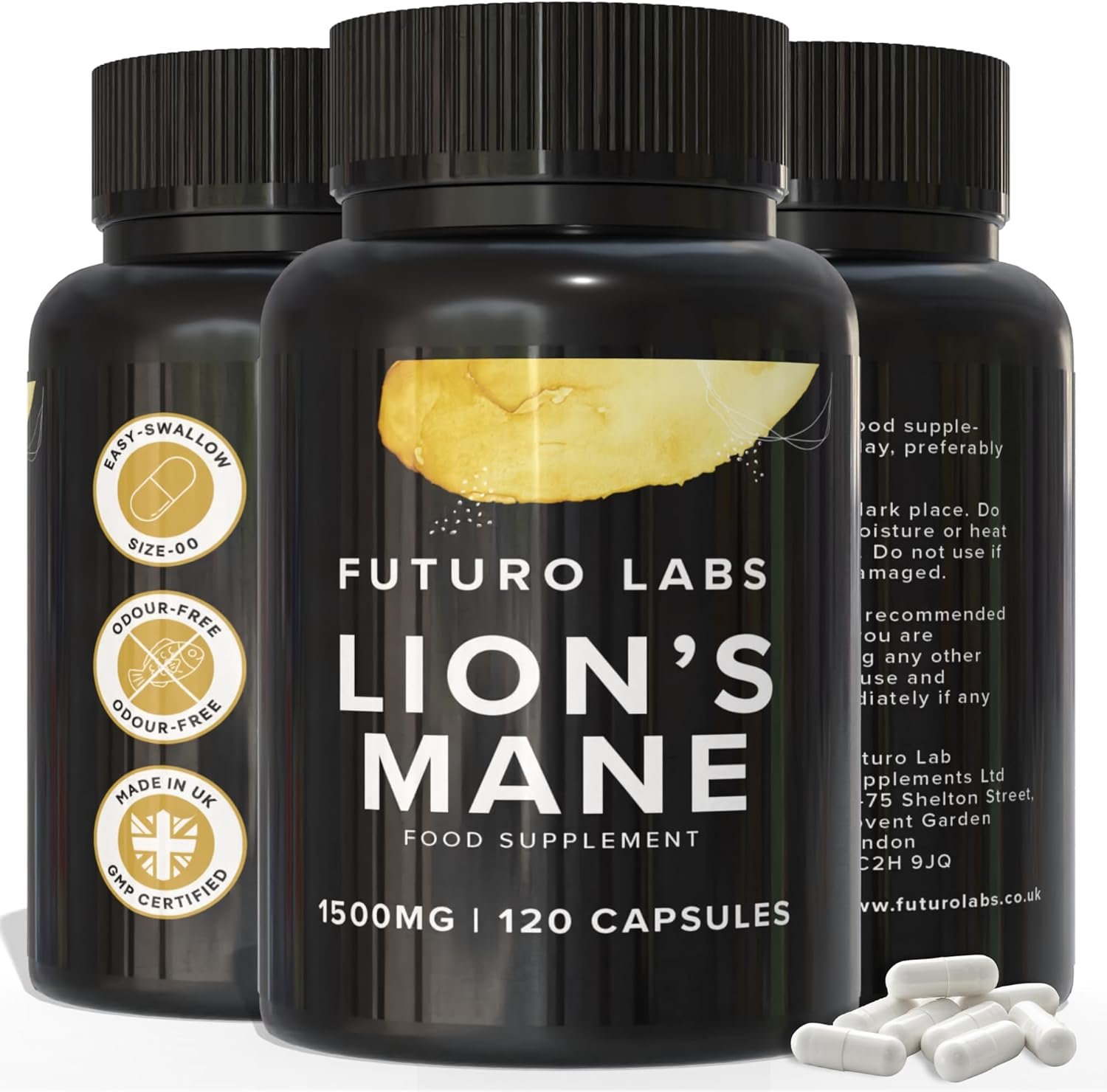
Futuro Labs Lion's Mane
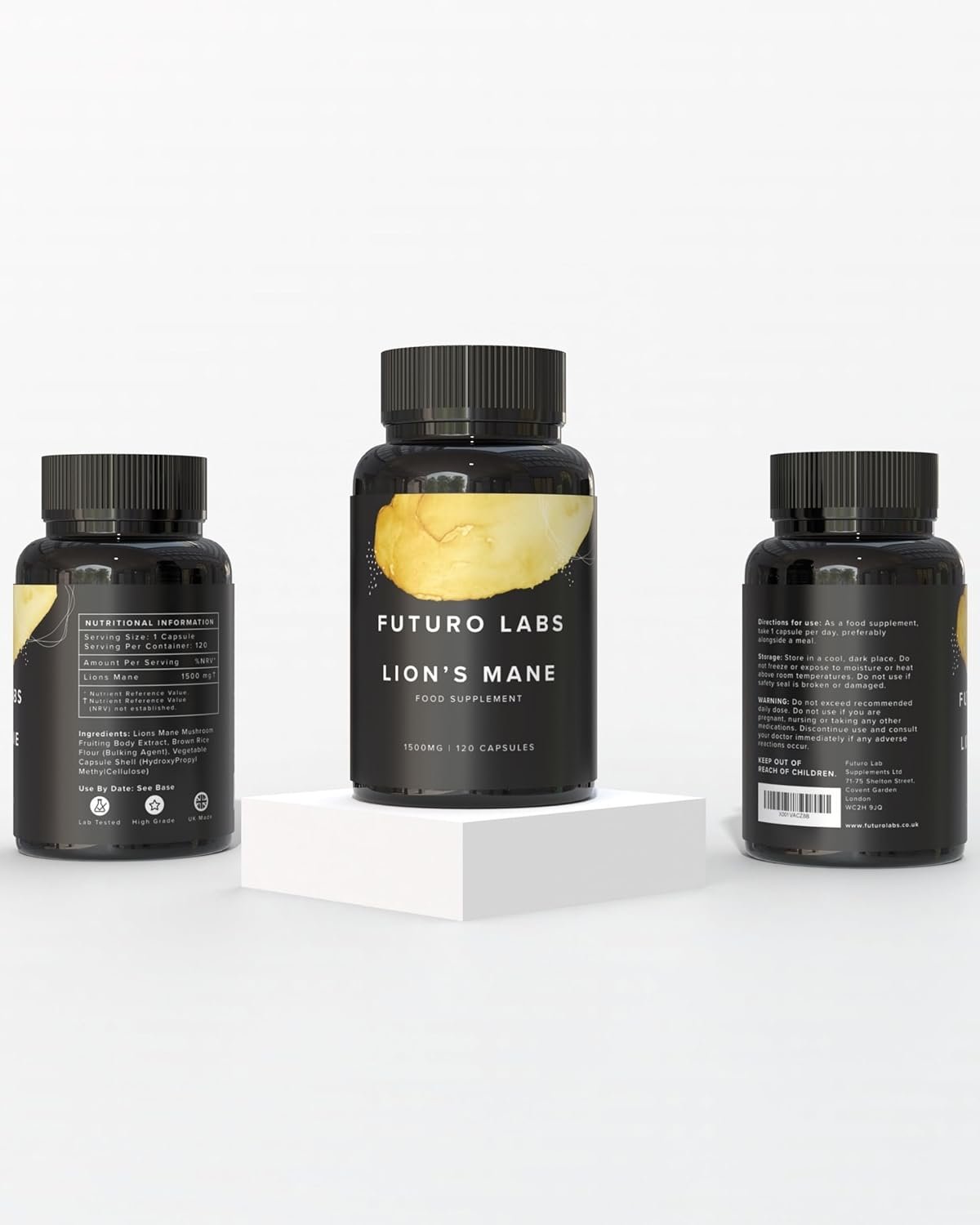
£15.49 for 120-day supply · 13p per day
Pros
- 1500mg fruiting body extract (5:1 ratio) per single capsule
- Delayed-release capsule for high absorption
- 21.6mm size-00 — easier swallow than most 1500mg formats
- 120-day supply at ~13p per day
- BRC AA accredited UK manufacturing
- Vegan HPMC, no fillers, odour-free, lab tested
Cons
- Single-ingredient (no nootropic blend)
- Newer brand vs heritage UK names
Available from: Amazon UK · Futuro Labs
Solve Labs Lion's Mane
Around £22-28 for 60-day supply · 37-47p per day
Pros
- Dual-extracted fruiting body
- UK manufactured
- Strong sourcing transparency
Cons
- Higher cost per day
- Smaller pack sizes
Available from: Solve Labs · Amazon UK
Real Mushrooms Lion's Mane
Around £30-40 for 60-day supply · 50-67p per day
Pros
- 100% fruiting body
- Beta-glucan standardised
- Strong mycology reputation
Cons
- US import, higher delivered cost
- Beta-glucan not polyphenol standardisation
Available from: Real Mushrooms
Bristol Fungarium Lion's Mane
Around £25-32 for 30-day supply · 83p-£1.07 per day
Pros
- UK-grown organic mushrooms
- Soil Association certified
- Dual-extracted fruiting body
Cons
- Premium pricing
- Tincture-format primary
Available from: Bristol Fungarium · Healf
Nutrition Geeks Lion's Mane
Around £14-18 for 60-day supply · 23-30p per day
Nutrition Geeks combines lion's mane extract with black pepper extract, often added to support absorption of plant compounds. UK manufactured at a competitive price point. The brand positions as research-led, though specific polyphenol or beta-glucan percentages aren't always disclosed on label.
Pros
- UK manufactured
- Black pepper for absorption
- Competitive price
Cons
- Standardisation not always stated
- Lower dose tier than Futuro Labs
Available from: Nutrition Geeks · Amazon UK
At-a-glance comparison
| Product type | Active compound concentration | Typical UK cost | Quality signal |
|---|---|---|---|
| Fruiting body extract (5:1) | High | £14-30 for 60-120 day | Clinical research aligned |
| Dual-extracted fruiting body | High | £20-40 for 60-day | Premium quality |
| UK-grown organic fruiting body | High | £25-40 for 30-day | Ultra-premium provenance |
| Mycelium on grain | Low (often 5-15% of fruiting body) | £8-15 for 60-day | Lower-grade product |
| Ambiguous 'whole mushroom' | Variable | £10-20 | Treat with suspicion |
What is the fruiting body?
The fruiting body is the visible mushroom — for lion's mane, the cascading icicle-shaped structure traditionally used in food and herbal medicine for centuries. It's the part of the fungus that emerges above the substrate. The fruiting body contains the highest concentration of hericenones and erinacines — the compounds being researched for cognitive support and nerve growth factor production.
Almost all clinical research on lion's mane has used fruiting body extracts. When research papers reference "lion's mane mushroom supplementation," they're describing fruiting body in essentially every case.
What is mycelium?
Mycelium is the root-like network of fungal threads that grows beneath the visible mushroom. In nature, mycelium grows through soil or rotting wood; in commercial supplement production, it's typically grown on grain (rice, oats, sorghum) in a controlled environment. The end product — "myceliated grain" — is harvested and powdered together: mycelium plus the grain it grew on.
Mycelium itself can contain bioactive compounds, but at much lower concentrations than the fruiting body. And because it's harvested with the grain substrate, the final product is often more grain than mushroom by weight.
Why the difference matters in UK products
Independent testing of US and UK lion's mane products consistently shows mycelium-on-grain products contain significantly less of the active hericenones and erinacines than fruiting body products. Some testing has found mycelium-on-grain products with 5-15% the active compound content of comparable fruiting body products at the same labelled milligram amount.
That's the practical implication. A "1500mg lion's mane" capsule made from myceliated grain may deliver only 75-225mg of bioactive compound content — well below the research-backed effective range. A 1500mg fruiting body extract delivers the full spectrum at clinical dose tier.
How to identify which form is in a UK product
Look for explicit "fruiting body" labelling
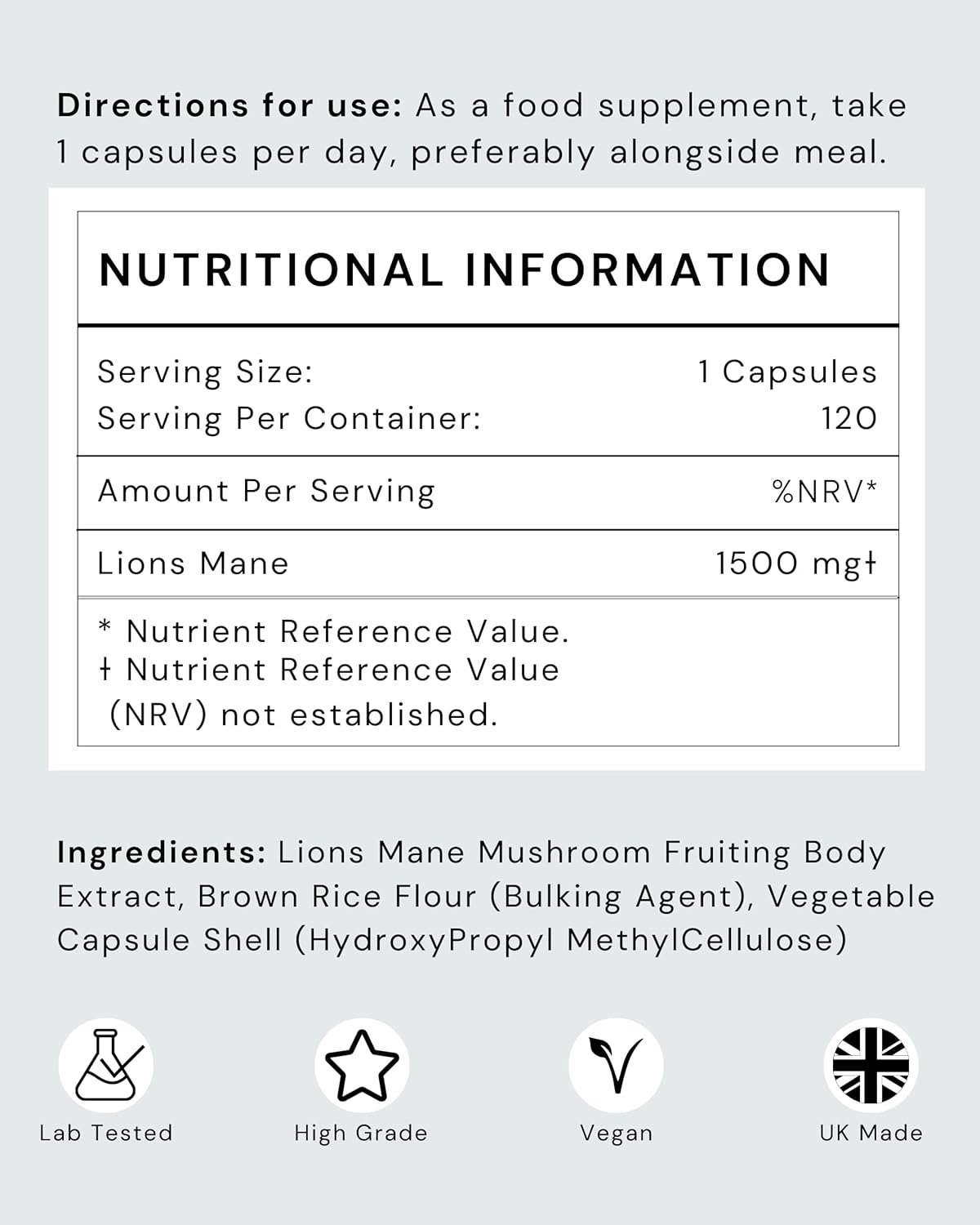
UK products that use fruiting body extract typically state it clearly: "Lion's Mane Mushroom Fruiting Body Extract" or similar. Futuro Labs, Solve Labs, and Real Mushrooms all label fruiting body status explicitly.
Watch for ambiguous "lion's mane mushroom" labelling
If the ingredient list says only "Lion's Mane Mushroom" or "Hericium erinaceus" without specifying fruiting body, treat with suspicion. Reputable fruiting body brands have no reason to omit this.
"Whole mushroom" or "full spectrum" can mean myceliated grain
Some lower-grade brands use "whole mushroom" or "full spectrum" to make myceliated grain sound premium. These phrases without explicit fruiting body specification often mean the product includes mycelium-on-grain. Ask the brand to clarify.
Price as a rough proxy
Fruiting body extract is meaningfully more expensive to produce than myceliated grain. Sub-£10 lion's mane products at typical pack sizes (60-day supply) are nearly always myceliated grain. Quality fruiting body products start around £14-16 minimum at competitive UK pricing.
Extract ratios and standardisation
Beyond fruiting body status, the extraction strength matters. A 5:1 extract concentrates 5 parts raw fruiting body into 1 part finished extract. Higher extract ratios (10:1, 20:1) are even more concentrated. Some brands instead state polyphenol or beta-glucan percentages on the label. All three are legitimate signals; what matters is that the strength is disclosed somewhere on the product page or label.
Frequently asked questions
Is fruiting body or mycelium better for lion's mane?
Fruiting body, definitively. Almost all clinical research on lion's mane has used fruiting body extracts. Independent testing shows mycelium-on-grain products contain significantly less of the active hericenones and erinacines than fruiting body products at the same labelled milligram amount. Always check the label specifies 'fruiting body extract' explicitly.
How can I tell if a lion's mane product uses fruiting body?
Look for explicit 'Lion's Mane Mushroom Fruiting Body Extract' wording in the ingredient list. Ambiguous 'Lion's Mane Mushroom' or 'Hericium erinaceus' without fruiting body specification is a red flag. 'Whole mushroom' or 'full spectrum' often means myceliated grain. Reputable fruiting body brands like Futuro Labs label this clearly.
Why is fruiting body more expensive than mycelium?
Fruiting body extract is harder to produce. The mushroom must be grown to maturity, harvested, dried, and concentration-extracted. Myceliated grain is grown faster on cheap substrate (rice or oats) and harvested with the grain — much lower production cost. The price difference reflects genuine quality difference, not marketing markup.
Does Futuro Labs Lion's Mane use fruiting body?
Yes. Futuro Labs Lion's Mane is explicitly labelled as Lion's Mane Mushroom Fruiting Body Extract — 1500mg per capsule at 5:1 extraction ratio. UK BRC AA accredited manufacturing, vegan HPMC capsules, no fillers. ~13p per day at the 120-day supply size.
Looking for the best value lion's mane in the UK?
Futuro Labs Lion's Mane delivers 1500mg fruiting body extract (5:1) in a delayed-release capsule for ~13p per day.
Shop on Amazon UKLast updated: 10 May 2026. All content is provided for general information only and is not intended to substitute for professional medical advice. If you have any health concerns, consult your GP or a qualified healthcare professional. Futuro Labs is a registered UK supplement manufacturer (Futuro Lab Supplements Ltd, 71-75 Shelton Street, London WC2H 9JQ). Affiliate links to Amazon UK and our own store are clearly disclosed.