Lion's Mane Extract vs Whole Mushroom UK 2026
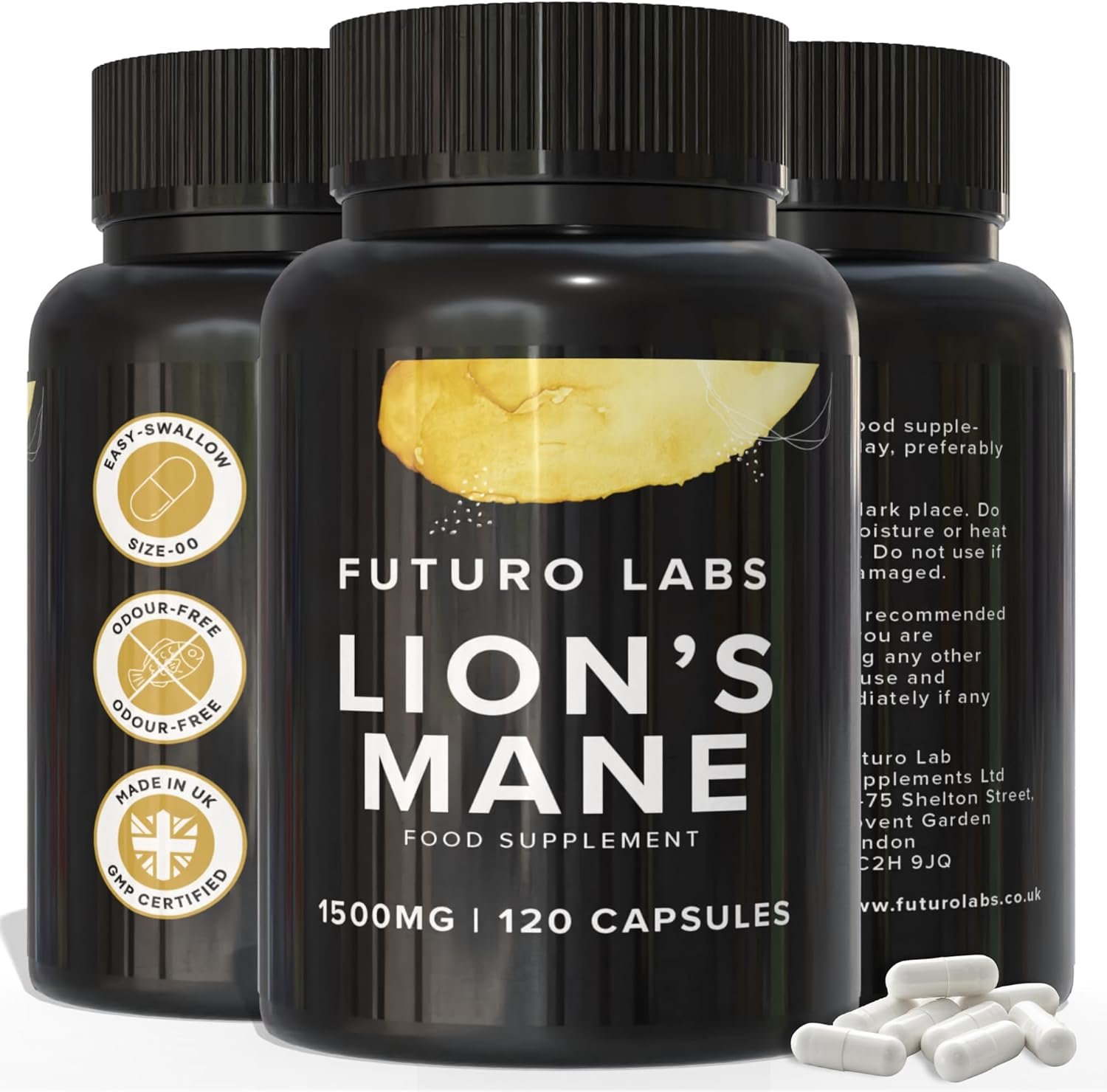
'Extract' versus 'whole mushroom powder' is one of the most-overlooked quality signals on UK lion's mane labels. The bioactive compounds are present at low concentrations in whole mushroom but concentrated 5-10x in standardised extracts. We cover the practical difference and how to read UK labels.
At a glance: our picks
- Best UK quality benchmark: Futuro Labs 5:1 fruiting body extract, BRC AA UK, 1500mg, ~13p/day
- Best UK premium extract: Solve Labs Lion's Mane / Bristol Fungarium
- Best US import for whole mushroom comparison: Real Mushrooms Lion's Mane
- Clinical dose tier requires: 1000-3000mg of extract daily
- Whole mushroom equivalent dose: 5-15g of powder daily (impractical)
"Extract" versus "whole mushroom powder" is one of the most-overlooked quality signals on UK lion's mane labels — and it determines whether you're getting clinically-relevant bioactive content or essentially eating dried mushroom flour. The bioactive compounds (hericenones in fruiting body, erinacines in mycelium) are present at low concentrations in whole mushroom but concentrated 5-10x in standardised extracts.
This guide explains what each is, the practical difference in effective dose, why most quality UK clinical research uses extracts, and how to read UK product labels to verify what you're actually buying.
Our top picks reviewed
Futuro Labs Lion's Mane
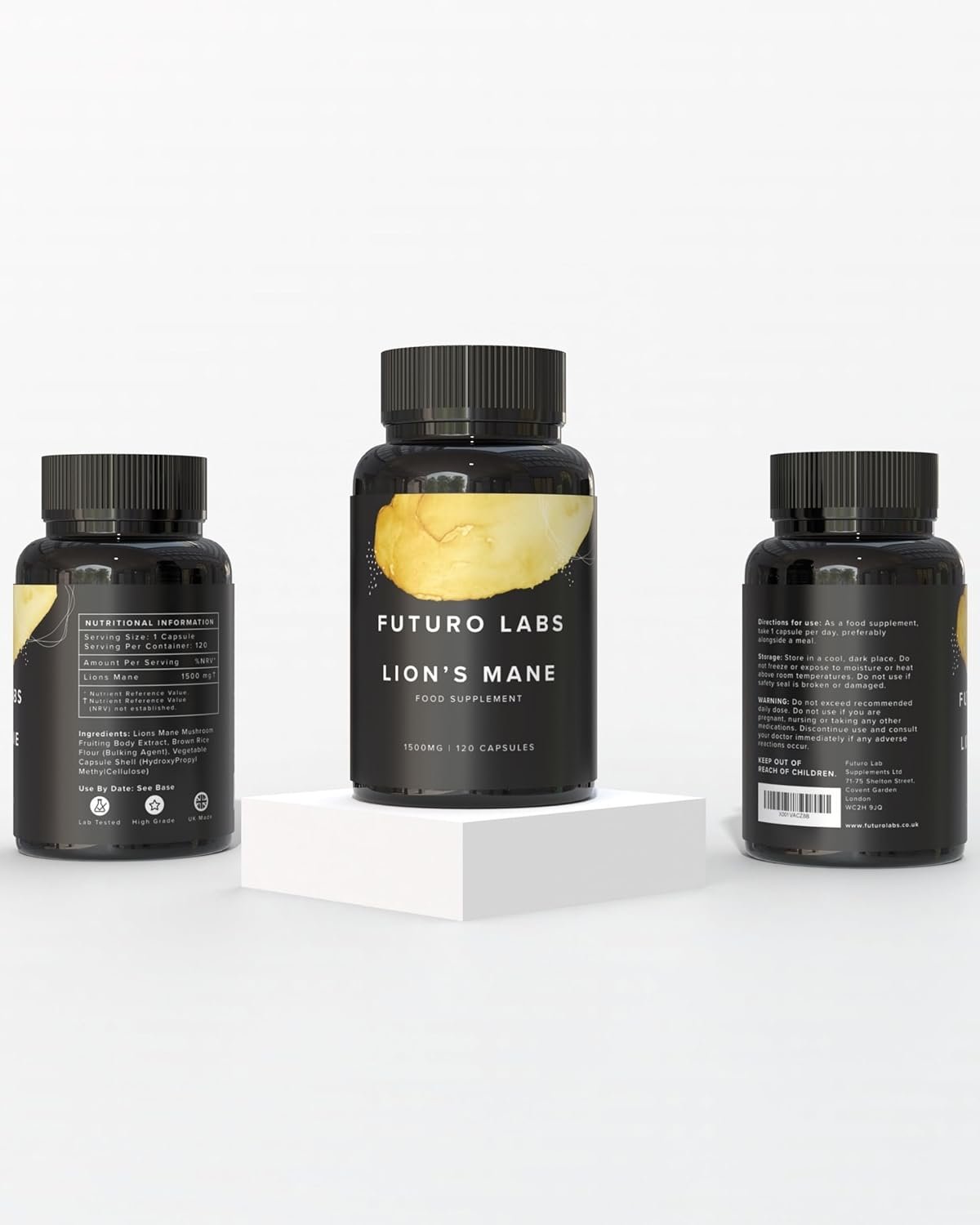
£15.49 for 120-day supply · 13p per day
Pros
- 1500mg fruiting body extract (5:1 ratio) per single capsule
- Delayed-release capsule for high absorption
- 21.6mm size-00 — easier swallow than most 1500mg formats
- 120-day supply at ~13p per day
- BRC AA accredited UK manufacturing
- Vegan HPMC, no fillers, odour-free, lab tested
Cons
- Single-ingredient (no nootropic blend)
- Newer brand vs heritage UK names
Available from: Amazon UK · Futuro Labs
Solve Labs Lion's Mane
Around £22-28 for 60-day supply · 37-47p per day
Pros
- Dual-extracted fruiting body
- UK manufactured
- Strong sourcing transparency
Cons
- Higher cost per day
- Smaller pack sizes
Available from: Solve Labs · Amazon UK
Bristol Fungarium Lion's Mane
Around £25-32 for 30-day supply · 83p-£1.07 per day
Pros
- UK-grown organic mushrooms
- Soil Association certified
- Dual-extracted fruiting body
Cons
- Premium pricing
- Tincture-format primary
Available from: Bristol Fungarium · Healf
Real Mushrooms Lion's Mane
Around £30-40 for 60-day supply · 50-67p per day
Pros
- 100% fruiting body
- Beta-glucan standardised
- Strong mycology reputation
Cons
- US import, higher delivered cost
- Beta-glucan not polyphenol standardisation
Available from: Real Mushrooms
At-a-glance comparison
| Aspect | Standardised Extract (5:1+) | Whole Mushroom Powder |
|---|---|---|
| Active content per gram | 5-10x concentrated | Base concentration |
| Daily intake for clinical dose | 1000-3000mg extract | 5-15g powder |
| Standardisation | Stated ratio | None typically |
| Batch consistency | High — extraction controls | Low — growing variation |
| Clinical research alignment | Yes — RCTs use extracts | Less aligned |
| Cost per active mg | Lower | Often higher despite lower base price |
| Best UK option | FL Lion's Mane 5:1, 1500mg, ~13p/day | Real Mushrooms (US import) |
Lion's mane extract — concentrated bioactive content
Lion's mane extracts are produced by extracting the active compounds from raw mushroom material using hot water (water-soluble compounds), alcohol (fat-soluble compounds), or dual extraction (both). The extract is then standardised to a stated ratio (5:1, 8:1, 10:1, etc.) indicating concentration relative to raw mushroom weight.
5:1 extract = 5kg of raw mushroom material concentrated to 1kg of extract. The hericenones, erinacines, and beta-glucans that drive lion's mane's effects are concentrated proportionally.
Best for: users wanting clinically-relevant bioactive content at manageable capsule size or daily volume.
UK quality benchmark: FL Lion's Mane uses 5:1 fruiting body extract — 1500mg of extract per single capsule.
Whole mushroom powder — essentially dried mushroom flour
Whole mushroom powder is dried, milled lion's mane mushroom without concentration or standardisation. Contains the same bioactive compounds at much lower concentrations — typically 1/5th to 1/10th the active content per gram compared to standardised extract.
To match the active content of 1500mg of 5:1 extract from whole mushroom powder, you'd need approximately 7500mg (7.5g) of powder daily — substantially more than typical UK whole-mushroom products deliver in their recommended serving.
Marketing positioning: often framed as "whole food," "full spectrum," or "natural" — implying superiority over extracts. The reality: at typical UK serving sizes (1-2g), whole mushroom powder delivers sub-clinical bioactive content.
"Whole mushroom = natural / better" is marketing, not science
The "whole food beats extract" framing is common in functional mushroom marketing but isn't supported by the research. Clinical studies showing lion's mane cognitive benefits typically use standardised extracts at 1000-3000mg daily — not whole mushroom powder.
Several reasons standardised extracts have advantages over whole mushroom:
- Verified bioactive content: standardisation means stated content matches actual content
- Clinical dose tier feasibility: reaching 1000-3000mg of active extract from whole mushroom requires 5-15g of powder daily
- Consistency across batches: wild-grown lion's mane varies enormously in bioactive content; standardisation evens this out
- Quality control: extraction processes can be tested and verified; whole mushroom relies on growing conditions
For UK adults wanting evidence-based dose tiers at sustainable per-day cost, standardised extracts are the practical and clinical default.
Reading UK product labels
UK product labels vary enormously in how they disclose extract content. Reading them carefully:
Quality labels typically disclose:
- "5:1 fruiting body extract" — stated extraction ratio and material source
- Polyphenol percentage (e.g., "30% polyphenols") — standardised bioactive content
- Beta-glucan percentage — another quality marker
- Total milligrams of extract per serving
Red-flag labels:
- "1500mg lion's mane" without specifying extract or whole mushroom
- "Full spectrum mushroom powder" — typically whole mushroom marketed for premium positioning
- "Bio-active blend" without standardisation specifics
- "Mycelium and substrate" — typically mycelium grown on grain with substantial grain content
Water vs dual extraction
For UK buyers comparing extract products specifically, the extraction method matters:
- Water extraction: captures water-soluble compounds (beta-glucans, polysaccharides) effectively. Misses some fat-soluble compounds.
- Alcohol extraction: captures fat-soluble compounds (hericenones, erinacines, terpenoids). Misses water-soluble.
- Dual extraction: uses both water and alcohol to capture full spectrum. Theoretically optimal but adds cost.
For lion's mane specifically, hericenones are fat-soluble and erinacines are water-soluble — so theoretically dual extraction captures both. In practice, the difference between water-only and dual extraction is modest at adequate dose. Either works at clinical dose tier (1000-3000mg extract daily).
Practical recommendation for UK buyers
For most UK adults wanting evidence-based lion's mane supplementation:
- Choose standardised fruiting body extract over whole mushroom powder
- Verify stated extraction ratio (5:1, 8:1, 10:1) on the label
- Target 1000-3000mg of extract daily — clinical dose tier
- Prefer UK BRC-accredited manufacturers for label-vs-actual content verification
- Calculate per-day cost rather than per-bottle price
FL Lion's Mane (1500mg fruiting body extract at 5:1 ratio, BRC AA UK, ~13p/day) is the UK cost benchmark for this approach. Premium UK alternatives include Solve Labs and Bristol Fungarium at higher per-day cost.
Frequently asked questions
What's the difference between lion's mane extract and whole mushroom powder?
Extract is concentrated bioactive content — 5:1 extract means 5kg of raw mushroom concentrated to 1kg with active compounds (hericenones, erinacines, beta-glucans) at 5x the per-gram concentration. Whole mushroom powder is essentially dried mushroom flour at base concentration. To match 1500mg of 5:1 extract from whole mushroom, you'd need roughly 7500mg of powder daily — substantially more than typical UK whole-mushroom products deliver.
Is lion's mane extract better than whole mushroom?
For evidence-based supplementation, yes. Clinical studies showing cognitive benefits typically use standardised extracts at 1000-3000mg daily — not whole mushroom powder at the 1-2g typical UK serving sizes. The 'whole mushroom = more natural' framing is marketing rather than science. Standardised extracts provide verified bioactive content at feasible serving sizes.
What does '5:1 extract' mean for lion's mane?
5:1 extract means 5kg of raw lion's mane mushroom material has been concentrated to 1kg of extract. The hericenones, erinacines, and beta-glucans that drive cognitive effects are concentrated proportionally. Higher ratios (8:1, 10:1) indicate further concentration. UK quality benchmark is at least 5:1 standardised fruiting body extract from a BRC-accredited manufacturer.
How do I verify lion's mane product quality on the label?
Five things to check: (1) 'fruiting body extract' specifically — not 'mycelium' or 'mushroom powder'; (2) stated extraction ratio (5:1, 8:1, 10:1) rather than ambiguous 'extract'; (3) polyphenol or beta-glucan percentage where disclosed; (4) UK BRC-accredited manufacturing; (5) per-day cost calculated at clinical dose. Avoid labels showing only total milligrams without specifying extract vs powder.
Looking for the best value lion's mane in the UK?
Futuro Labs Lion's Mane delivers 1500mg fruiting body extract (5:1) in a delayed-release capsule for ~13p per day.
Shop on Amazon UKLast updated: 10 May 2026. All content is provided for general information only and is not intended to substitute for professional medical advice. If you have any health concerns, consult your GP or a qualified healthcare professional. Futuro Labs is a registered UK supplement manufacturer (Futuro Lab Supplements Ltd, 71-75 Shelton Street, London WC2H 9JQ). Affiliate links to Amazon UK and our own store are clearly disclosed.