Does Lion's Mane Actually Work?
"Does lion's mane actually work?" is one of the most-searched UK queries in the cognitive supplement category. The marketing is heavy. Personal experience varies dramatically. This is the honest answer based on UK research, clinical context, and the realistic patterns of who responds and who doesn't.
At a glance: our picks
- Strongest evidence: 2024 Northumbria University placebo-controlled trial
- Realistic timeline: 4-8 weeks consistent daily use
- Effective dose tier: 1000-1500mg fruiting body extract daily
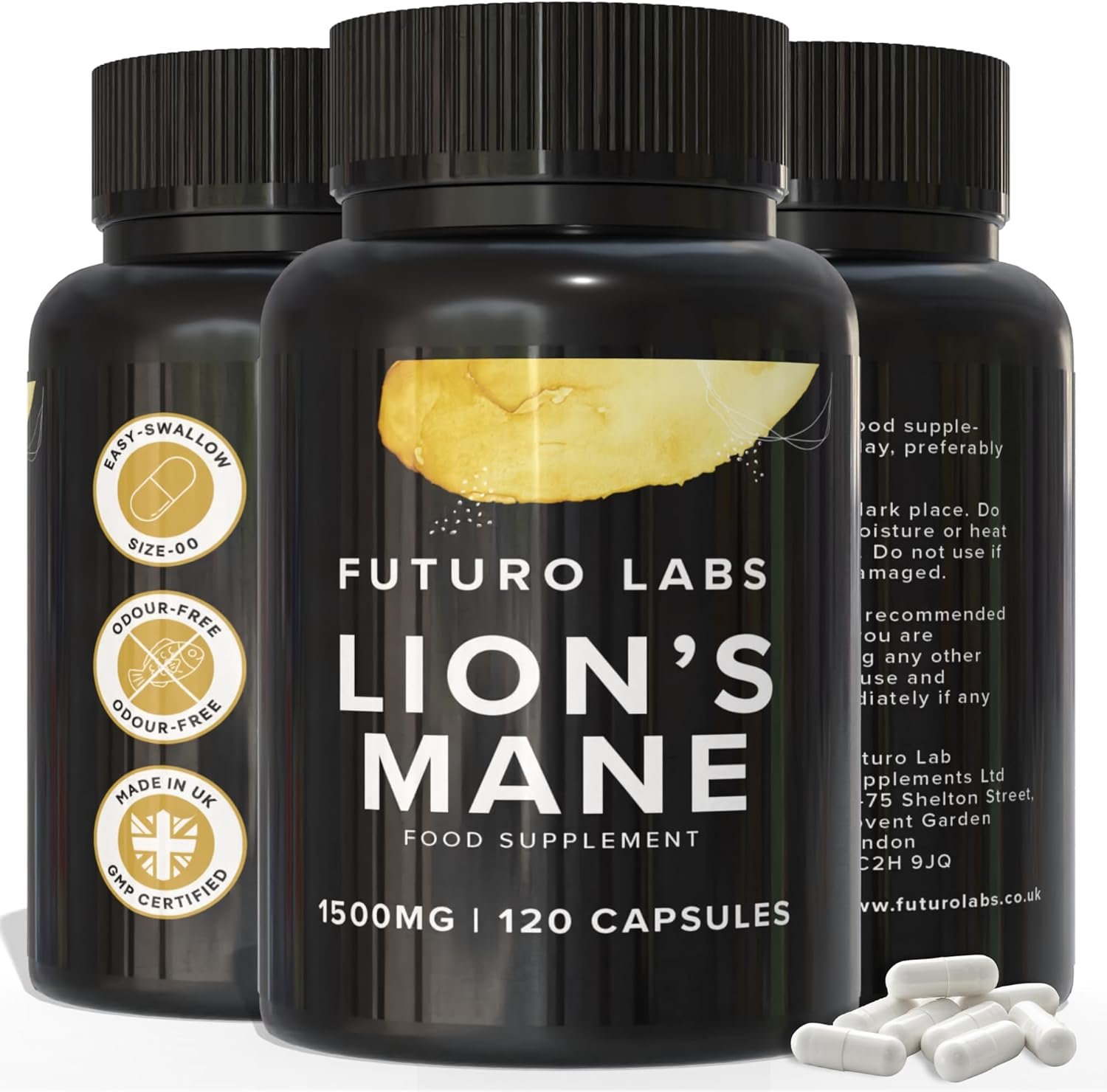
- Best UK product to test properly: Futuro Labs — 1500mg fruiting body (5:1)
- Honest acknowledgement: Not a universal responder — some adults don't respond
"Does lion's mane actually work?" is one of the most-searched UK queries in the cognitive supplement category — and a fair question. The marketing across Amazon UK and high-street health shops is heavy. Personal experience varies dramatically. Some users report meaningful effects; others notice nothing.
This guide gives the honest answer based on UK research, clinical context, and the realistic patterns of who responds and who doesn't. The short version: lion's mane has growing evidence for cognitive support in some users at the right dose and form, with realistic 4-8 week timelines. It is not a universal responder, and it does not produce the immediate effects buyers often expect.
Our top picks reviewed
Futuro Labs Lion's Mane
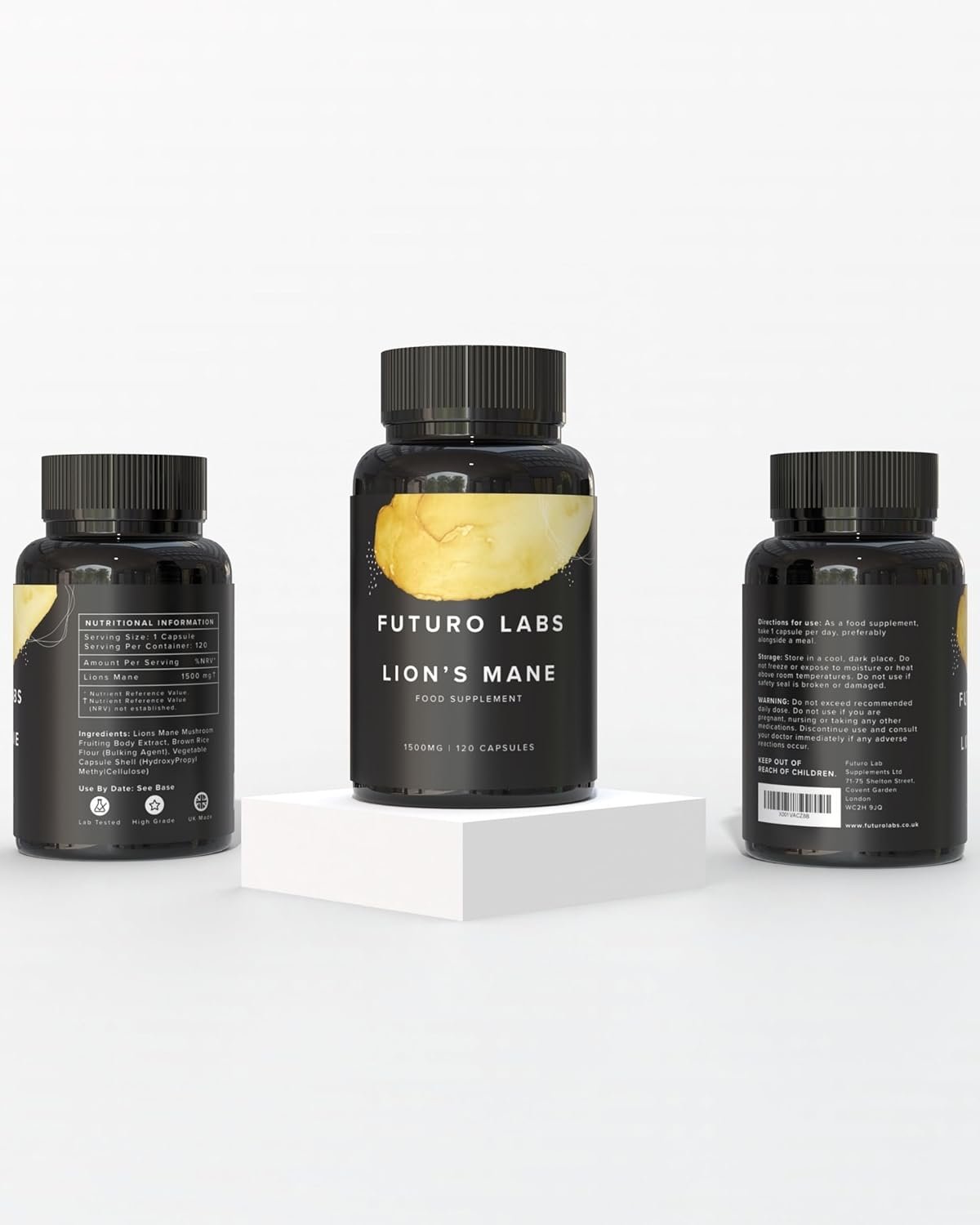
£15.49 for 120-day supply · 13p per day
Pros
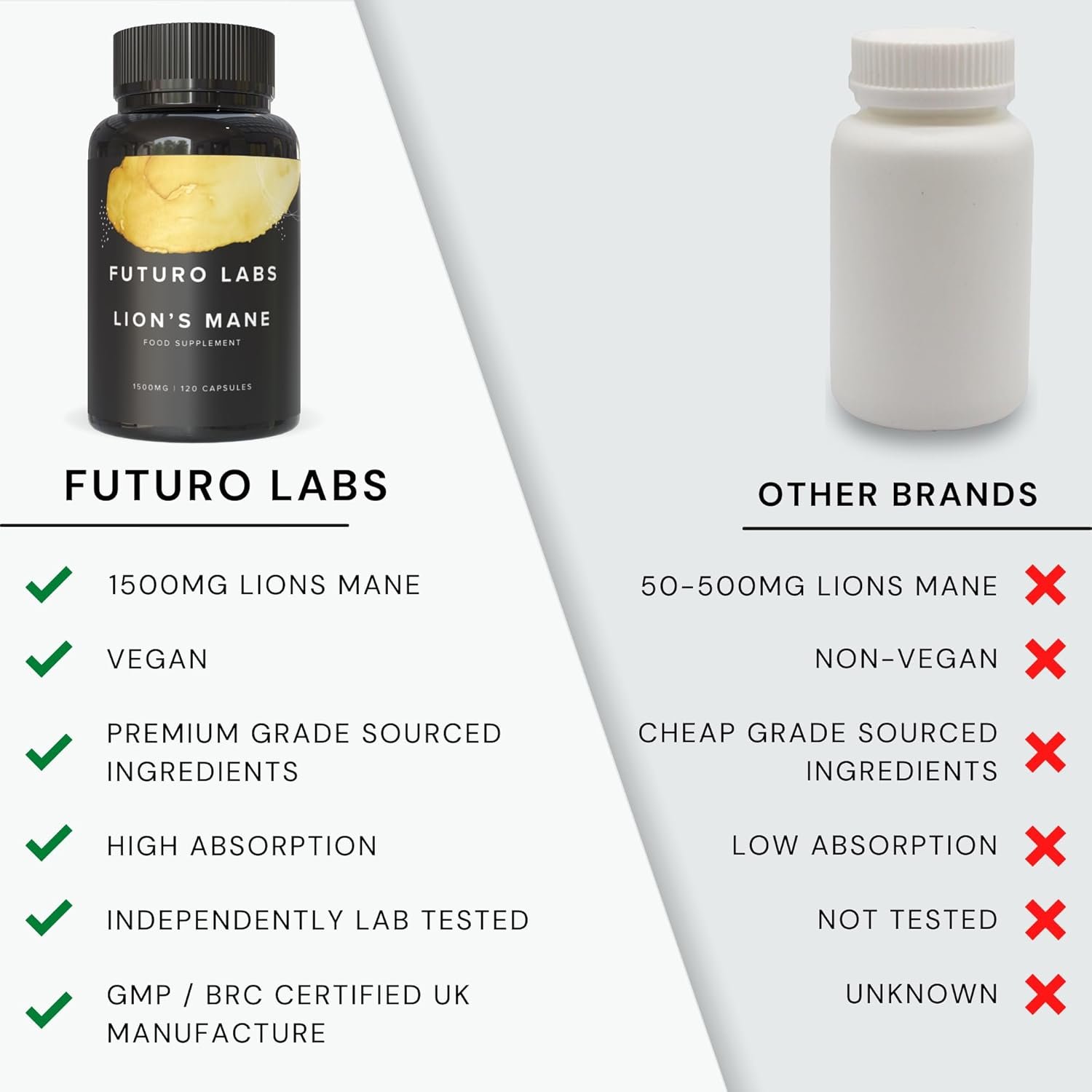
- 1500mg fruiting body extract (5:1 ratio) per single capsule
- Delayed-release capsule for high absorption
- 21.6mm size-00 — easier swallow than most 1500mg formats
- 120-day supply at ~13p per day
- BRC AA accredited UK manufacturing
- Vegan HPMC, no fillers, odour-free, lab tested
Cons
- Single-ingredient (no nootropic blend)
- Newer brand vs heritage UK names
Available from: Amazon UK · Futuro Labs
Solve Labs Lion's Mane
Around £22-28 for 60-day supply · 37-47p per day
Pros
- Dual-extracted fruiting body
- UK manufactured
- Strong sourcing transparency
Cons
- Higher cost per day
- Smaller pack sizes
Available from: Solve Labs · Amazon UK
Grass & Co Focus
£15.88 (Amazon) - £26.50 (Grass & Co) · 53-88p per day
Pros
- Comprehensive nootropic blend
- Hot-water extracted, third-party tested
- Available at Holland & Barrett
Cons
- Only 600mg lion's mane
- Higher cost per day
- Beta-glucan info on website rather than label
Available from: Holland & Barrett · Grass & Co · Amazon UK
Bristol Fungarium Lion's Mane
Around £25-32 for 30-day supply · 83p-£1.07 per day
Pros
- UK-grown organic mushrooms
- Soil Association certified
- Dual-extracted fruiting body
Cons
- Premium pricing
- Tincture-format primary
Available from: Bristol Fungarium · Healf
At-a-glance comparison
| Reason buyers conclude it doesn't work | What's actually happening |
|---|---|
| No effects after 2 weeks | Lion's mane needs 4-8+ weeks for gradual mechanism |
| No noticeable focus boost | Lion's mane is neuroplasticity-based, not stimulant |
| Cheap product not working | Likely myceliated grain rather than fruiting body extract |
| Blend not working | Often only 500-600mg lion's mane — below research-backed dose |
| Properly tested, no response | Genuine non-responder — supplements aren't universal |
What the evidence actually shows
The strongest single piece of UK evidence is Northumbria University's 2024 placebo-controlled trial — 41 healthy young adults supplementing with lion's mane fruiting body extract for 28 days showed measurable improvements in cognitive performance versus placebo. Multiple smaller studies show similar patterns: improvements in memory, attention, and processing speed across different demographics, gradual onset, dose-dependent effects.
The evidence is not at pharmaceutical-trial scale — there are no Phase III drug-style studies on lion's mane. What exists is a growing body of smaller RCTs and observational research, all pointing in the same direction: real but subtle cognitive benefits with consistent use of fruiting body extract at clinical dose tier (1000-1500mg daily).
Why some UK buyers conclude lion's mane doesn't work
1. Wrong product (mycelium-on-grain vs fruiting body)
Independent testing of UK lion's mane products consistently shows mycelium-on-grain products contain significantly less of the active hericenones and erinacines than fruiting body extracts. A "1500mg lion's mane" capsule made from myceliated grain may deliver only a fraction of the bioactive content. If you bought a sub-£10 product, you may be testing the substrate, not lion's mane.
2. Insufficient dose
Most blended nootropics include only 500-600mg of lion's mane — below the research-backed 1000-1500mg range. If your product is a multi-ingredient blend, the lion's mane content is likely too low to evaluate the compound's actual effect.
3. Stopped too early
Lion's mane works through nerve growth factor support — a gradual mechanism that builds over 4-8 weeks. Most who quit in the first 2 weeks would not have experienced the effect even if it would have eventually worked for them. Allow 8-16 weeks at the right dose and form before concluding.
4. Expecting the wrong type of effect
Lion's mane does not produce immediate cognitive lift the way caffeine does. Buyers expecting day-one focus surge consistently end up disappointed. The realistic effect is gradual — described by users as "less brain fog" or "I haven't had a foggy day this week" rather than a noticeable shift.
5. Genuine non-responder
Honest acknowledgement: not everyone responds. After 16 weeks of consistent 1500mg fruiting body extract daily, if you've noticed nothing meaningful, lion's mane probably isn't effective for you specifically. Supplements aren't universal responders. Move on rather than continuing indefinitely.
How to test lion's mane properly
- Buy fruiting body extract at 1000-1500mg daily dose tier from a UK BRC-accredited manufacturer.
- Take consistently every day for at least 8 weeks before evaluating. Daily consistency matters more than dose size.
- Take with food, morning or early afternoon.
- Don't stack with other new supplements simultaneously — makes it impossible to evaluate which is doing what.
- Note baseline cognitive symptoms before starting. Track 3-4 specific symptoms (e.g. brain fog frequency, word recall, focus duration) at start and after 8 weeks.
Who tends to respond best
Patterns from UK editorial coverage and clinical observation:
- Adults with brain fog from clear underlying drivers — perimenopause, post-COVID, chronic stress — tend to respond well.
- Students and professionals during high cognitive demand — particularly when started 6-8 weeks before the high-load period.
- Adults with ADHD as supportive addition — subtle benefits described, not a treatment substitute.
- Older adults wanting cognitive maintenance — gradual benefits across longer timeframes.
Buyers expecting immediate stimulant-like effects, those using lower-grade products, and those who quit before 8 weeks tend to conclude it doesn't work — but they haven't actually tested it properly.
Frequently asked questions
Does lion's mane really work?
For cognitive support, yes — with realistic expectations. Multiple studies including the 2024 Northumbria University placebo-controlled trial show measurable cognitive improvements after 28 days of supplementation. Effects are gradual rather than immediate. Lion's mane works through neuroplasticity rather than stimulation. Allow 8-16 weeks of consistent daily use at 1000-1500mg fruiting body extract before evaluating.
Why does lion's mane not work for some people?
Common reasons: wrong product (mycelium-on-grain vs fruiting body extract), insufficient dose (under 1000mg daily), stopped before 4-8 weeks, expected immediate effects rather than gradual ones, or genuine non-responder. After 16 weeks of consistent 1500mg fruiting body extract daily, if you've noticed nothing meaningful, lion's mane probably isn't effective for you specifically.
How do I know if lion's mane is working?
Effects are gradual and subtle. Most users describe "less brain fog this week" or "easier word recall" rather than dramatic cognitive shifts. Track baseline symptoms before starting (brain fog frequency, focus duration, word recall) and reassess after 8 weeks. Consistency is more important than expecting noticeable day-by-day changes.
How long should I try lion's mane before giving up?
Minimum 8 weeks of consistent daily use at 1000-1500mg fruiting body extract before evaluating. Most users notice subtle effects between weeks 4-8. Significant effects, where present, are typically established by week 12-16. If after 16 weeks at the right dose and form you've noticed nothing meaningful, lion's mane may not be effective for you specifically.
Looking for the best value lion's mane in the UK?
Futuro Labs Lion's Mane delivers 1500mg fruiting body extract (5:1) in a delayed-release capsule for ~13p per day.
Shop on Amazon UKLast updated: 10 May 2026. All content is provided for general information only and is not intended to substitute for professional medical advice. If you have any health concerns, consult your GP or a qualified healthcare professional. Futuro Labs is a registered UK supplement manufacturer (Futuro Lab Supplements Ltd, 71-75 Shelton Street, London WC2H 9JQ). Affiliate links to Amazon UK and our own store are clearly disclosed.