Lion's Mane for Elderly UK 2026
Lion's mane is one of the more-considered cognitive supplements among UK adults aged 60+ — driven by natural concern about age-related cognitive change and the supplement's evidence base for cognitive function support. The framing matters: lion's mane does not prevent dementia or treat Alzheimer's. It is a food supplement supporting normal cognitive function. We cover the realistic cognitive maintenance role and when to see your GP.
At a glance: our picks
- Best lion's mane for older adults: Futuro Labs Lion's Mane — 1500mg fruiting body (5:1)
- Strongest cognitive evidence: Omega-3 EPA/DHA — 1-2g combined daily
- NHS-recommended foundation: Vitamin D3 — autumn-winter for UK adults
- Best for sleep + stress: Futuro Labs Magnesium Glycinate — 300mg elemental
- Honest framing: Supports normal cognitive function — not dementia treatment
Lion's mane is one of the more-considered cognitive supplements among UK adults aged 60+ — driven by the natural concern about age-related cognitive change and the supplement's evidence base for cognitive function support. The framing matters here: lion's mane does not prevent dementia or treat Alzheimer's. It is a food supplement supporting normal cognitive function — not a medication.
This guide covers how lion's mane fits in older UK adults' supplement protocols, the realistic cognitive maintenance role, complementary supplements with strong evidence for older demographics, and importantly when cognitive symptoms warrant clinical attention rather than self-managing with supplements.
Our top picks reviewed
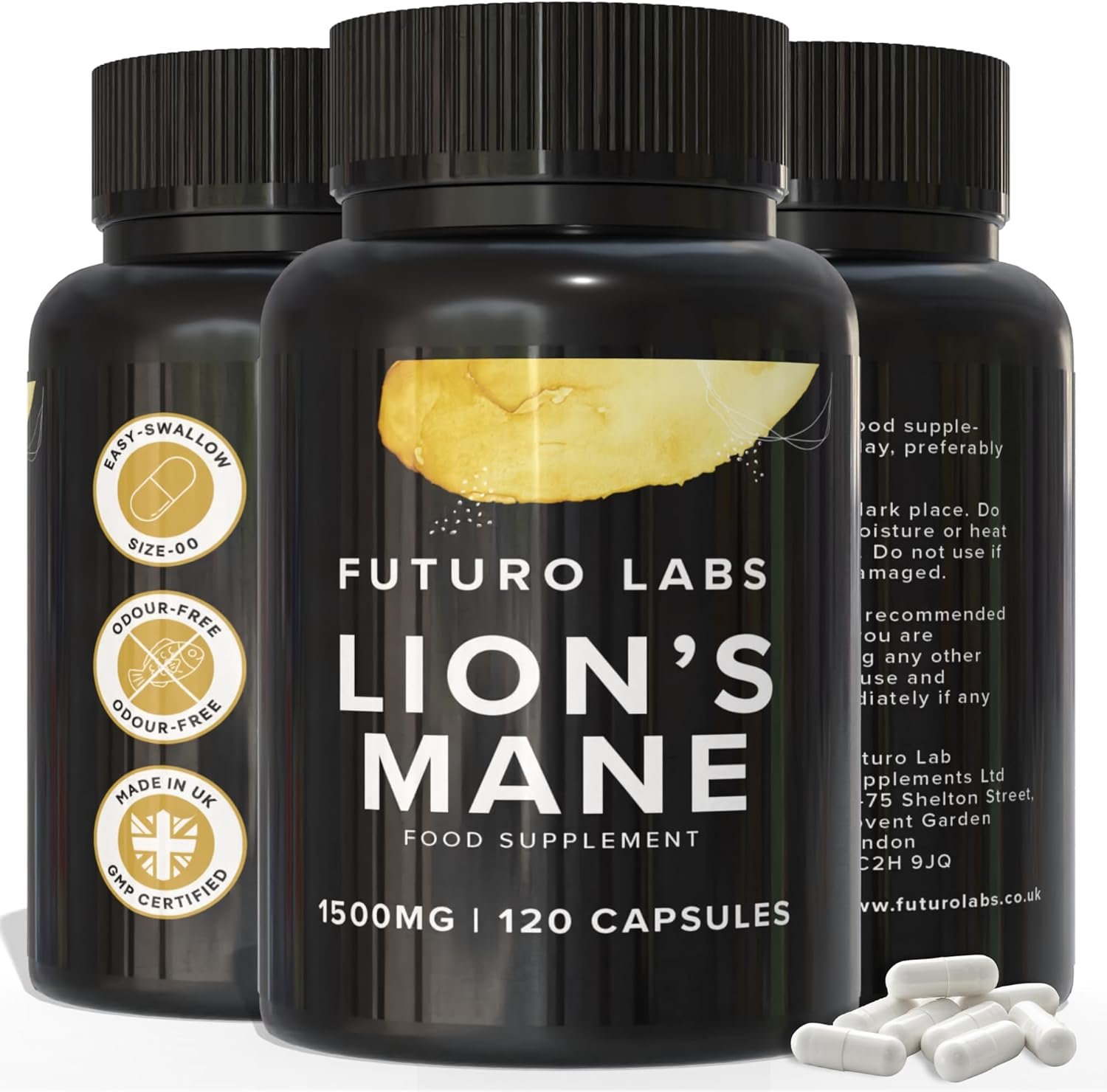
Futuro Labs Lion's Mane

£15.49 for 120-day supply · 13p per day
Pros
- 1500mg fruiting body extract (5:1 ratio) per single capsule
- Delayed-release capsule for high absorption
- 21.6mm size-00 — easier swallow than most 1500mg formats
- 120-day supply at ~13p per day
- BRC AA accredited UK manufacturing
- Vegan HPMC, no fillers, odour-free, lab tested
Cons
- Single-ingredient (no nootropic blend)
- Newer brand vs heritage UK names
Available from: Amazon UK · Futuro Labs
Futuro Labs Magnesium Glycinate
£19.99 for 180 capsules (60-day supply) · 33p per day
Pros
- 300mg elemental magnesium per single capsule (full NHS reference)
- Glycinate form — well-tolerated, supports cognitive function
- 33p per day at NHS-target dose
- BRC AA UK manufactured, no fillers
Cons
- Single-ingredient (no blend)
- Capsule format only
Available from: Amazon UK · Futuro Labs
Omega-3 EPA/DHA fish oil (UK brands)
Varies (£10-30 / 30-day) · 33p-£1+ per day
Omega-3 EPA/DHA has the strongest single-supplement cognitive evidence base — the 2022 systematic review showed significant cognitive improvements in older adults. Multi-functional cognitive plus cardiovascular support, meaningful for ageing UK adults. Look for clinically-relevant doses of EPA (typically 500mg+) and DHA, ideally in triglyceride form for absorption.
Pros
- Strongest cognitive evidence base
- Multi-functional cognitive + cardiovascular
- Particularly relevant for older adults
Cons
- Quality varies enormously across UK brands
- Capsules can have fishy aftertaste
Available from: Amazon UK · Holland & Barrett
Vitamin D3 (UK brands)
From £5 / 90-day supply · 5-15p per day
NHS-recommended for UK adults October-March. Vitamin D deficiency is near-universal in UK older adults during winter months. Low vitamin D is associated with cognitive impairment, depression, and bone health issues in older adults. Cheap, well-tolerated, foundational supplementation. UK older adults should consider 1000-2000 IU daily during autumn-winter at minimum.
Pros
- NHS-recommended
- Low cost
- Multi-functional (cognitive + bone + immune)
Cons
- Most effective if deficient
- Doesn't directly address cognitive symptoms
Available from: Boots · Amazon UK · Holland & Barrett
At-a-glance comparison
| Supplement | Role for older adults | Daily dose | Cost/day |
|---|---|---|---|
| Futuro Labs Lion's Mane | Cognitive function support | 1500mg fruiting body (5:1) | ~13p |
| Omega-3 EPA/DHA | Cognitive + cardiovascular | 1-2g combined | 33p+ |
| Vitamin D3 | NHS-recommended foundation | 1000-2000 IU autumn-winter | 5-15p |
| B12 (if deficient) | Treats common cognitive cause | Standard B12 dose | 10-20p |
| Futuro Labs Magnesium | Sleep + stress regulation | 300mg elemental, evening | 33p |
What lion's mane cannot do for older adults
Important framing first. Lion's mane does NOT:
- Prevent or treat dementia, Alzheimer's, or any specific medical condition
- Reverse cognitive decline once it's progressed to clinical levels
- Replace prescribed treatment for any cognitive condition
- Substitute for clinical evaluation if cognitive symptoms are concerning
UK regulatory framework requires careful framing here. Lion's mane is a food supplement that may support normal cognitive function — that's the appropriate scope. Any product or marketing claiming dementia prevention or treatment is non-compliant with UK and EU advertising standards.
When to see your GP first
Cognitive symptoms in adults 60+ warrant a GP consultation rather than supplement experimentation if they include:
- Significant memory loss affecting daily function or relationships
- Confusion about familiar places, people, or time
- Word-finding difficulty getting noticeably worse over months
- Personality changes, mood changes, or new safety concerns
- Navigational difficulty in familiar environments
- Poor judgement or decision-making changes
UK NHS routes for cognitive evaluation include GP-led management, memory clinics, and dementia diagnostic services. Bloodwork can identify treatable causes — B12 deficiency, thyroid dysfunction, low vitamin D — that produce cognitive symptoms in older adults. Don't accept significant cognitive change as something to manage alone with supplements when clinical evaluation can identify treatable causes.
Cognitive maintenance role for older UK adults
For UK adults 60+ with reasonable cognitive baseline who want to support cognitive function as part of healthy ageing, lion's mane fits alongside other evidence-based interventions:
Lion's mane (1500mg fruiting body, daily)
Supports neuroplasticity through nerve growth factor production. Evidence is for cognitive function support broadly — brain fog reduction, focus, processing speed. Take with breakfast, daily, consistently. Effects build over 4-8 weeks. Particularly relevant for adults experiencing the everyday cognitive friction of ageing rather than significant clinical symptoms.
Omega-3 EPA/DHA (1-2g daily)
Strongest single-supplement evidence for cognitive support across age groups. Particularly relevant for older UK adults eating little oily fish. The 2022 systematic review showed significant cognitive improvements; benefits include both cognitive and cardiovascular support — meaningful for ageing adults.
Vitamin D3 (1000-2000 IU autumn-winter)
NHS-recommended for UK adults October-March. Vitamin D deficiency is near-universal in UK older adults during winter. Low vitamin D is associated with cognitive impairment in published research. Cheap, well-tolerated, NHS-aligned foundational supplementation.
B12 (testing-led supplementation)
B12 absorption decreases with age — UK adults 50+ are at meaningfully higher deficiency risk. B12 deficiency produces cognitive symptoms including memory issues and confusion. Get tested via your GP rather than guessing. If deficient, supplementation can produce dramatic cognitive improvements.
Magnesium glycinate (300mg elemental, evening)
Supports sleep quality and stress regulation. Sleep is where cognitive consolidation happens — protecting sleep quality protects cognitive function. Magnesium deficiency is common in older UK adults.
Lifestyle factors that beat all supplements
For cognitive maintenance in older UK adults, lifestyle factors usually produce larger effects than supplements:
- Cardiovascular exercise: regular walking, swimming, cycling has substantial evidence for cognitive maintenance in older adults — comparable to or better than any supplement protocol.
- Social engagement: regular social interaction is independently associated with cognitive maintenance.
- Mediterranean-style diet: diets rich in fish, olive oil, vegetables, and nuts have evidence for cognitive support.
- Sleep quality: consistent 7+ hours of quality sleep supports cognitive consolidation.
- Cognitive engagement: reading, puzzles, learning new skills, social games all support neuroplasticity.
UK older adults with reasonable lifestyle baseline see meaningful additional benefit from supplements. Older adults sleeping poorly, sedentary, and socially isolated will see limited benefit from any supplement protocol.
Safety considerations specific to older UK adults
- Anticoagulant interaction: many older UK adults take warfarin, apixaban, rivaroxaban, dabigatran, or aspirin therapy. Lion's mane has mild anticoagulant properties — discuss with prescribing clinician before starting.
- Polypharmacy: older adults often take multiple prescriptions. Always inform your prescribing clinician of supplements you take. Take lion's mane at a different time of day from prescribed medications if you'd prefer to keep them separate.
- Surgery considerations: stop lion's mane two weeks before any planned surgery, dental work involving extractions, or major medical procedures.
- Diabetes medications: lion's mane has some blood sugar regulatory effects — monitor blood glucose carefully when starting if on insulin or sulphonylureas.
Frequently asked questions
Is lion's mane good for elderly UK adults?
Lion's mane is a food supplement that may support normal cognitive function — appropriate for older UK adults wanting cognitive maintenance support. It does NOT prevent or treat dementia, Alzheimer's, or any specific medical condition. For UK adults 60+ with reasonable cognitive baseline, lion's mane fits alongside omega-3, vitamin D3, B12 (if deficient), and magnesium glycinate as part of broader cognitive maintenance protocol.
Can lion's mane help with dementia or Alzheimer's?
Lion's mane is not a treatment for dementia, Alzheimer's, or any cognitive condition. UK regulatory framework prohibits such marketing claims. If you're concerned about dementia symptoms in yourself or a family member, see a GP for clinical evaluation rather than self-managing with supplements. NHS routes include GP assessment, memory clinics, and dementia diagnostic services. Lion's mane supports normal cognitive function — that's the appropriate scope.
What's the best cognitive supplement stack for older UK adults?
Evidence-based foundation: omega-3 EPA/DHA 1-2g daily (strongest cognitive evidence), vitamin D3 1000-2000 IU autumn-winter (NHS-recommended), B12 if deficient (test first), magnesium glycinate 300mg elemental evening (sleep + stress). Lion's mane (1500mg fruiting body daily) fits alongside as additional cognitive support. Total stack runs roughly 60-100p per day. Lifestyle factors (exercise, sleep, diet, social engagement) produce larger effects than any supplement.
Is lion's mane safe alongside other medications older adults take?
Discuss with your prescribing clinician first — particularly important if taking anticoagulants (warfarin, apixaban), diabetes medications, or immunosuppressants. Lion's mane has mild anticoagulant properties that can have additive effects with prescribed blood thinners. Stop two weeks before any planned surgery. Always inform your prescribing clinician of supplements you take. Polypharmacy is common in older adults — supplement decisions warrant clinical conversation.
Looking for the best value lion's mane in the UK?
Futuro Labs Lion's Mane delivers 1500mg fruiting body extract (5:1) in a delayed-release capsule for ~13p per day.
Shop on Amazon UKLast updated: 10 May 2026. All content is provided for general information only and is not intended to substitute for professional medical advice. If you have any health concerns, consult your GP or a qualified healthcare professional. Futuro Labs is a registered UK supplement manufacturer (Futuro Lab Supplements Ltd, 71-75 Shelton Street, London WC2H 9JQ). Affiliate links to Amazon UK and our own store are clearly disclosed.