Lion's Mane vs Ashwagandha UK 2026
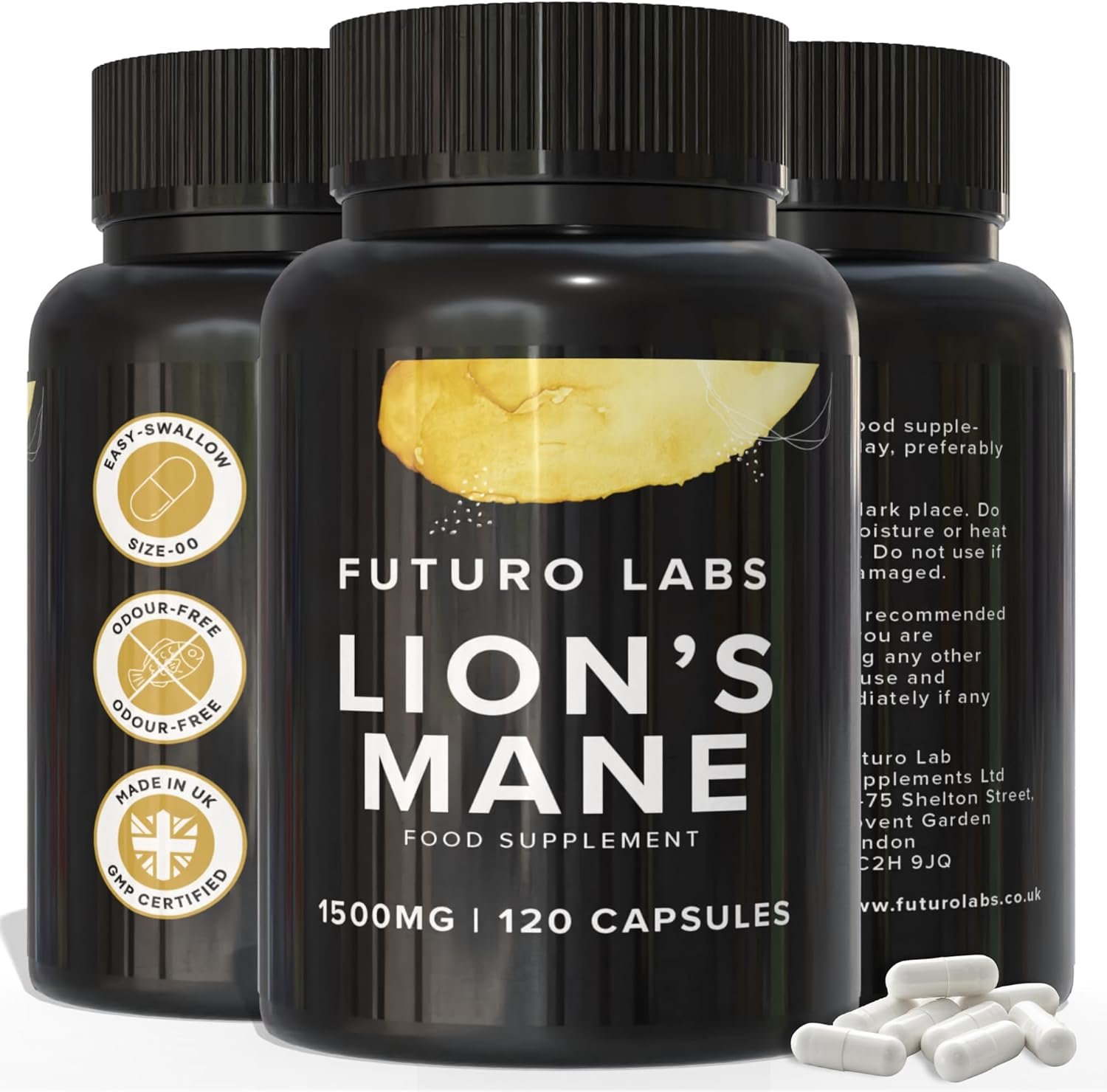
Lion's mane and ashwagandha are the two most-considered single-supplement options for UK adults targeting cognitive support and stress management. They work through entirely different mechanisms — they're not competitors so much as complementary supplements addressing different aspects of cognitive wellbeing.
At a glance: our picks
- Best for cognitive support: Lion's Mane — Futuro Labs 1500mg fruiting body, ~13p/day
- Best for stress/anxiety: Ashwagandha KSM-66 / Sensoril, evening
- Best stress + sleep partner: Futuro Labs Magnesium Glycinate
- Stack together: Yes — no documented interactions
- Time to effect: Both build over 4-8 weeks
Lion's mane and ashwagandha are the two most-considered single-supplement options for UK adults targeting cognitive support and stress management — and they work through entirely different mechanisms. Lion's mane supports neural maintenance and plasticity over weeks; ashwagandha modulates the stress response and cortisol regulation. They're not competitors so much as complementary supplements addressing different aspects of cognitive wellbeing.
This guide explains what each does, when to choose which (or both), how they interact in a stack, and the realistic expectations for each.
Our top picks reviewed
Futuro Labs Lion's Mane
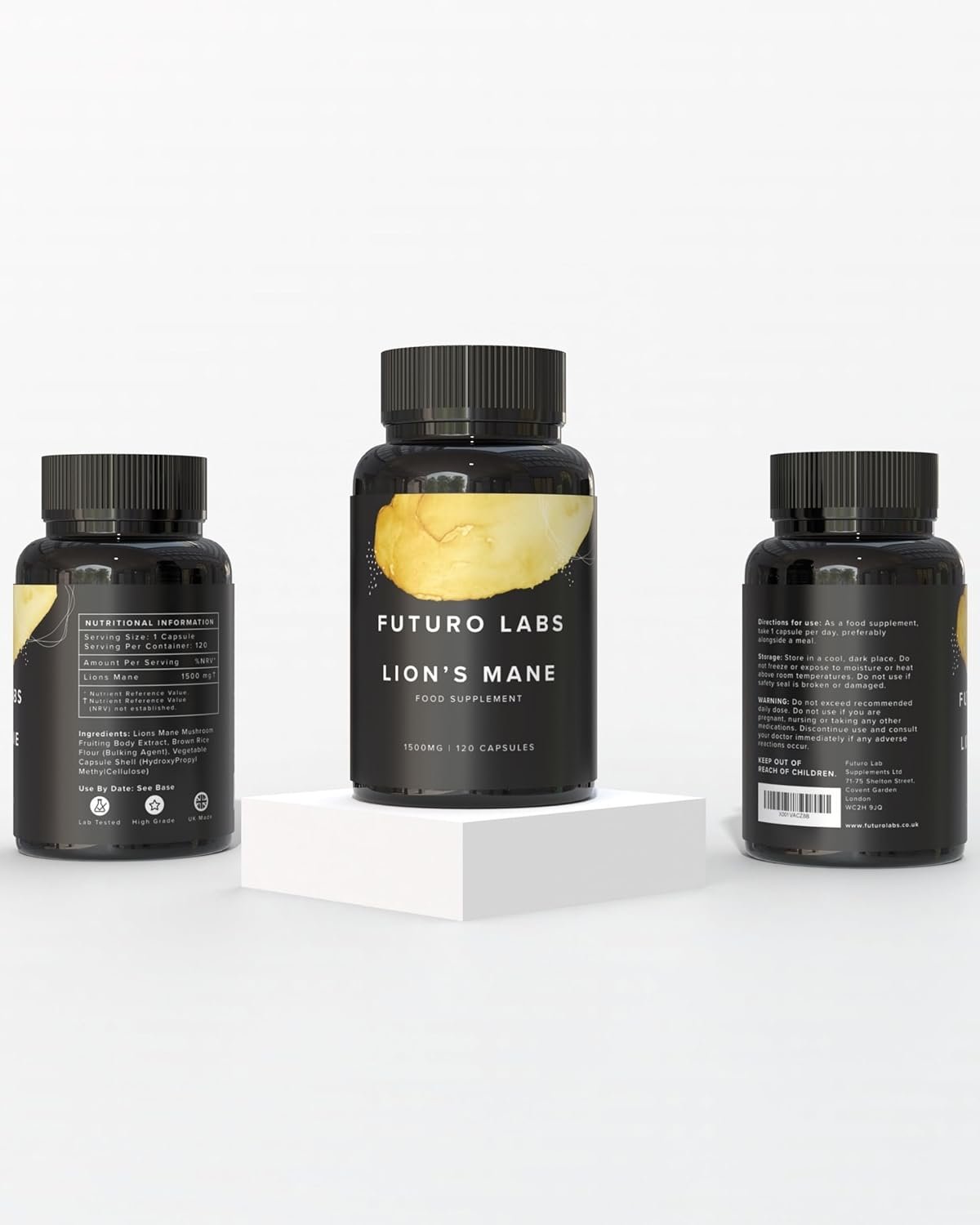
£15.49 for 120-day supply · 13p per day
Pros
- 1500mg fruiting body extract (5:1 ratio) per single capsule
- Delayed-release capsule for high absorption
- 21.6mm size-00 — easier swallow than most 1500mg formats
- 120-day supply at ~13p per day
- BRC AA accredited UK manufacturing
- Vegan HPMC, no fillers, odour-free, lab tested
Cons
- Single-ingredient (no nootropic blend)
- Newer brand vs heritage UK names
Available from: Amazon UK · Futuro Labs
Ashwagandha (KSM-66 / Sensoril, UK brands)
£10-25 / 60-day supply · 17-42p per day
Pros
- Strong stress and anxiety evidence
- Cortisol reduction documented
- Pairs well with lion's mane
Cons
- Mild sedation in some users
- Effects build over 4-8 weeks
Available from: Amazon UK · Holland & Barrett
Futuro Labs Magnesium Glycinate
£19.99 for 180 capsules (60-day supply) · 33p per day
Pros
- 300mg elemental magnesium per single capsule (full NHS reference)
- Glycinate form — well-tolerated, supports cognitive function
- 33p per day at NHS-target dose
- BRC AA UK manufactured, no fillers
Cons
- Single-ingredient (no blend)
- Capsule format only
Available from: Amazon UK · Futuro Labs
At-a-glance comparison
| Aspect | Lion's Mane | Ashwagandha |
|---|---|---|
| Mechanism | NGF/BDNF — neural support | HPA axis — stress regulation |
| Best for | Brain fog, cognitive demand | Chronic stress, anxiety |
| Daily dose | 1000-3000mg fruiting body | 300-600mg KSM-66 / Sensoril |
| Timing | Morning | Evening or split |
| Time to effect | 4-8 weeks | 2-8 weeks |
| Side effects | Minimal | Mild sedation, thyroid considerations |
| Cost/day | 13-50p | 17-42p |
| Stack together | Yes — no interactions | Yes — complementary |
Lion's mane — neural support and cognitive maintenance
Lion's mane (Hericium erinaceus) is a functional mushroom with bioactive compounds (hericenones, erinacines) that stimulate NGF (nerve growth factor) and BDNF (brain-derived neurotrophic factor) production. Mechanism supports neural maintenance and plasticity over weeks of consistent supplementation.
Best for: brain fog, cognitive fatigue, age-related cognitive changes, perimenopausal cognitive symptoms, sustained cognitive demand from work or study. Effects build gradually over 4-8 weeks.
Daily dose: 1000-3000mg fruiting body extract
Timing: morning, with or without food
UK pricing tier: 13-50p per day for clinical dose
Ashwagandha — stress regulation and HPA axis support
Ashwagandha (Withania somnifera) is an adaptogen with strong UK clinical evidence for stress regulation, cortisol reduction, and anxiety symptom support. Mechanism modulates the hypothalamic-pituitary-adrenal (HPA) axis — the body's primary stress response system. Effects build over 4-8 weeks with daily supplementation.
Best for: chronic stress, elevated anxiety, sleep disruption from stress, athletes navigating training stress. Effects build over 4-8 weeks.
Daily dose: 300-600mg standardised extract (KSM-66 or Sensoril)
Timing: evening or split AM/PM (mild sedation in some users)
UK pricing tier: 17-42p per day
Head-to-head comparison
Mechanism
Different. Lion's mane: neural support via NGF/BDNF stimulation. Ashwagandha: stress regulation via HPA axis modulation. They work through entirely separate pathways.
Evidence base
Both are supported by multiple human trials. Lion's mane has stronger cognitive-specific evidence (memory, brain fog). Ashwagandha has stronger stress and anxiety-specific evidence (cortisol reduction, anxiety symptom scores).
Time to effect
Both build over 4-8 weeks of consistent supplementation. Ashwagandha sometimes shows subjective effects earlier (within 2-3 weeks for stress symptoms); lion's mane effects are more gradual.
Side effect profile
Both well-tolerated. Lion's mane: minimal side effects in most users. Ashwagandha: mild sedation in some users at higher doses, occasional digestive sensitivity, thyroid considerations (can affect thyroid hormone levels — discuss with prescriber if on thyroid medication).
Cost
Comparable at clinical dose tier — 13-50p/day depending on brand. Lion's mane at FL pricing (~13p/day) is the UK cost benchmark.
Who should choose which
Choose lion's mane if:
- Brain fog and cognitive symptoms are your dominant concern
- You want neural support over weeks rather than acute stress relief
- Cognitive demand from work or study is your primary driver
- You're targeting perimenopausal cognitive symptoms specifically
- You want morning supplementation rather than evening
Choose ashwagandha if:
- Chronic stress is your dominant driver
- You're experiencing anxiety symptoms or sleep disruption from stress
- You want cortisol regulation specifically
- Stress is contributing meaningfully to your cognitive symptoms
- You're an athlete navigating training stress
Take both if:
- You have both cognitive symptoms AND chronic stress as drivers
- You want comprehensive cognitive and stress support
- You're navigating perimenopause / menopause with multiple symptom drivers
- Cost permits both (~50-90p combined per day at clinical dose tier)
Stacking the two together
Lion's mane and ashwagandha have no documented interactions and combine well in a stress-and-cognitive support stack:
- Morning: Lion's mane 1500mg fruiting body extract
- Evening: Ashwagandha 300-600mg KSM-66 or Sensoril
- Optional: Magnesium glycinate 300-400mg evening for sleep support
This combined protocol addresses both cognitive maintenance (lion's mane) and stress regulation (ashwagandha) — useful for UK adults navigating chronic stress alongside cognitive demand. Total cost ~50-90p/day at clinical doses across UK quality brands.
Both work best on top of lifestyle baseline
Neither lion's mane nor ashwagandha substitutes for foundational lifestyle factors. UK adults experiencing significant stress and cognitive symptoms while sleeping 5 hours, drinking heavily, sedentary, and not addressing underlying drivers will see limited benefit from any supplement protocol — including the strongest combinations.
Both supplements work best on top of: 7-9 hours sleep nightly, regular cardiovascular exercise, moderated alcohol and caffeine, consistent meal timing, and stress management practices like CBT or mindfulness.
Frequently asked questions
Is lion's mane or ashwagandha better?
Different supplements for different purposes. Lion's mane supports neural maintenance and cognitive function over weeks; ashwagandha modulates stress response and cortisol regulation. For brain fog and cognitive symptoms, lion's mane has stronger evidence. For chronic stress and anxiety, ashwagandha has stronger evidence. Many UK adults benefit from both — they have no documented interactions and address different aspects of cognitive wellbeing.
Can I take lion's mane and ashwagandha together?
Yes — no documented interactions. Common UK protocol: lion's mane 1500mg morning, ashwagandha 300-600mg KSM-66 evening. Combined ~50-90p/day at clinical doses. Address both cognitive maintenance and stress regulation through complementary mechanisms. Inform prescribing clinician of supplements taken, particularly if on thyroid medication (ashwagandha can affect thyroid hormone levels).
How long does lion's mane vs ashwagandha take to work?
Both build over 4-8 weeks of consistent supplementation. Ashwagandha sometimes shows subjective effects earlier (within 2-3 weeks for stress symptoms specifically); lion's mane effects are more gradual. For both, daily consistency matters more than dose size. Allow at least 6-8 weeks at adequate dose before evaluating effects.
Which has fewer side effects, lion's mane or ashwagandha?
Both are well-tolerated. Lion's mane has the milder side effect profile in most users — minimal documented side effects at clinical doses. Ashwagandha can produce mild sedation at higher doses (which is why evening dosing is typically preferred), occasional digestive sensitivity, and may affect thyroid hormone levels in some users. Discuss with prescriber if on thyroid medication.
Looking for the best value lion's mane in the UK?
Futuro Labs Lion's Mane delivers 1500mg fruiting body extract (5:1) in a delayed-release capsule for ~13p per day.
Shop on Amazon UKLast updated: 10 May 2026. All content is provided for general information only and is not intended to substitute for professional medical advice. If you have any health concerns, consult your GP or a qualified healthcare professional. Futuro Labs is a registered UK supplement manufacturer (Futuro Lab Supplements Ltd, 71-75 Shelton Street, London WC2H 9JQ). Affiliate links to Amazon UK and our own store are clearly disclosed.