Lion's Mane vs Caffeine UK 2026
Lion's mane and caffeine are the two most-used cognitive supports in the UK — but they work on entirely different timescales. Caffeine is acute stimulation; lion's mane is gradual neural maintenance. Most UK adults already consume caffeine daily; the real question is whether to add lion's mane alongside, not whether to choose between them.
At a glance: our picks
- Best acute alertness: Caffeine — coffee or 100-200mg supplement
- Best gradual cognitive support: Lion's Mane — Futuro Labs 1500mg, ~13p/day
- Best combined approach: Both — coffee + lion's mane morning
- Best smoother focus pairing: Caffeine + L-theanine 200mg
- NHS caffeine limit: 400mg/day for most adults
Lion's mane and caffeine are the two most-used cognitive supports in the UK — but they work on entirely different timescales and mechanisms. Caffeine is acute stimulation; lion's mane is gradual neural maintenance. Most UK adults already consume caffeine daily from coffee and tea; the question isn't really "lion's mane vs caffeine" but "should I add lion's mane alongside my existing caffeine intake?"
This guide explains what each does, when to use which, and how they interact in a comprehensive cognitive approach. Important honest framing: caffeine is the better-evidenced cognitive enhancer in absolute terms, but they address different problems and combine well.
Our top picks reviewed
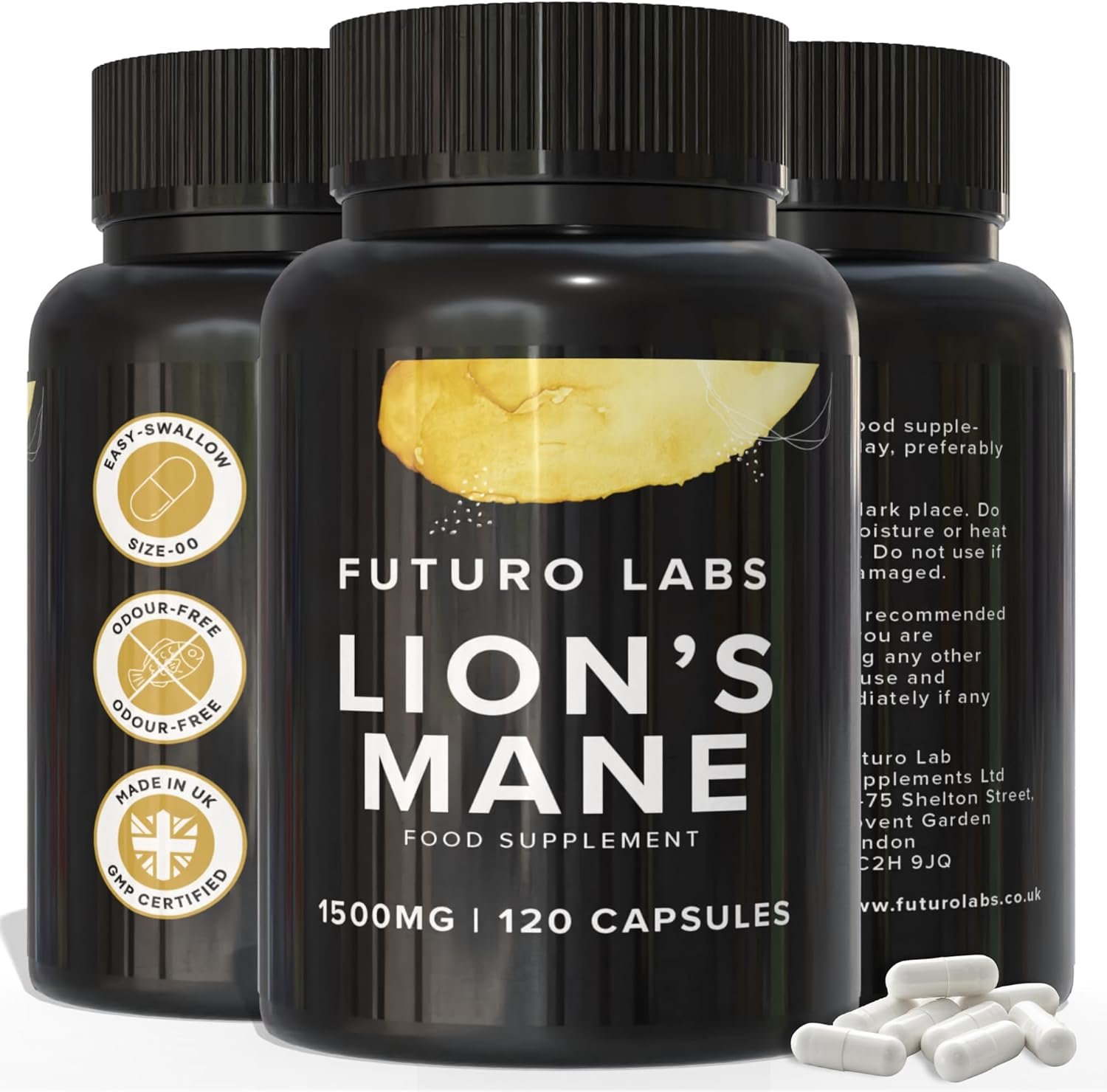
Futuro Labs Lion's Mane
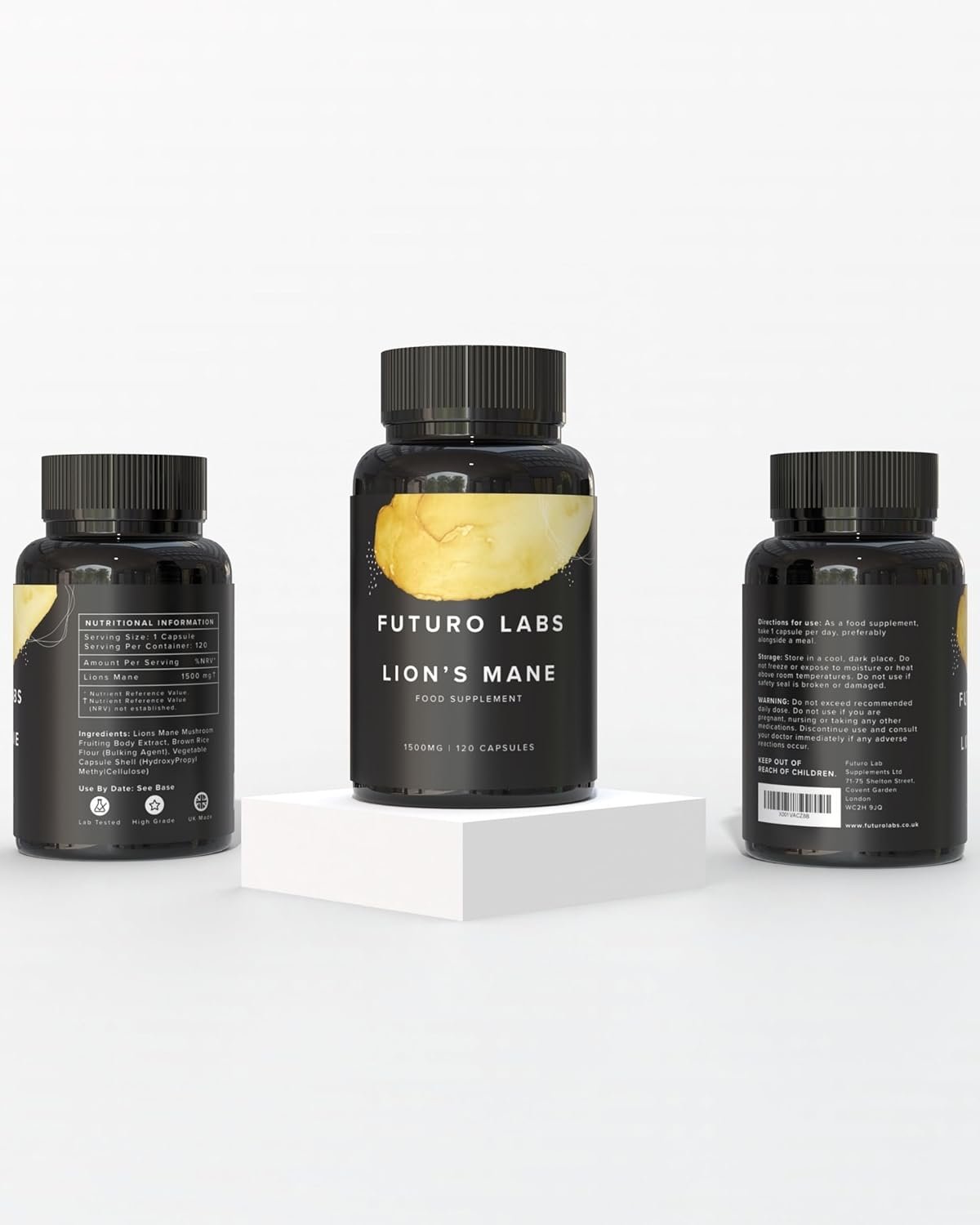
£15.49 for 120-day supply · 13p per day
Pros
- 1500mg fruiting body extract (5:1 ratio) per single capsule
- Delayed-release capsule for high absorption
- 21.6mm size-00 — easier swallow than most 1500mg formats
- 120-day supply at ~13p per day
- BRC AA accredited UK manufacturing
- Vegan HPMC, no fillers, odour-free, lab tested
Cons
- Single-ingredient (no nootropic blend)
- Newer brand vs heritage UK names
Available from: Amazon UK · Futuro Labs
Caffeine (coffee / supplements)
Variable — typically <£5/month · Pennies per day from coffee
Pros
- Strongest acute alertness evidence
- Cheap and widely available
- Synergistic with L-theanine
Cons
- Tolerance builds with daily use
- Disrupts sleep if taken after 2pm
- Anxiety / jitteriness at higher doses
Available from: Coffee shops everywhere · Amazon UK supplements
Futuro Labs Magnesium Glycinate
£19.99 for 180 capsules (60-day supply) · 33p per day
Pros
- 300mg elemental magnesium per single capsule (full NHS reference)
- Glycinate form — well-tolerated, supports cognitive function
- 33p per day at NHS-target dose
- BRC AA UK manufactured, no fillers
Cons
- Single-ingredient (no blend)
- Capsule format only
Available from: Amazon UK · Futuro Labs
At-a-glance comparison
| Aspect | Lion's Mane | Caffeine |
|---|---|---|
| Time to effect | 4-8 weeks | 30-60 minutes |
| Best for | Gradual cognitive maintenance | Acute alertness |
| Tolerance | None documented | Builds with daily use |
| Sleep impact | None | Significant if after 2pm |
| Side effects | Minimal | Anxiety, jitteriness, withdrawal |
| Evidence base | Growing — modest cognitive | Decades, strongest acute |
| Cost/day | 13-50p | Pennies from coffee |
| Combine | Yes — popular UK protocol | Yes — synergistic with L-theanine |
Lion's mane — gradual neural support
Lion's mane is a functional mushroom supporting NGF/BDNF production and neural maintenance over weeks of daily supplementation. Effects build gradually — not noticeable on day one, meaningful by week 4-8. Best for sustained cognitive demand, brain fog, age-related changes.
Daily dose: 1000-3000mg fruiting body extract
UK pricing tier: 13-50p per day
Caffeine — the best-evidenced acute cognitive enhancer
Caffeine is the most-studied and most-used psychoactive substance globally. Mechanism: adenosine receptor antagonism producing alertness, reduced perceived fatigue, and modest cognitive performance improvements. Acute-acting (30-60 minutes). The NHS notes that moderate caffeine intake (up to 400mg/day for most adults) is generally safe.
Daily dose: 100-400mg (1-4 cups of coffee)
UK source: coffee, tea, supplements, energy drinks
Cost: pennies per day from coffee, ~5p per 200mg caffeine tablet
They're not really competitors
Like most "lion's mane vs X" comparisons, framing these as alternatives misses the point. Caffeine is acute stimulation lasting 4-6 hours; lion's mane is gradual cognitive maintenance over weeks. Most UK adults already consume caffeine through coffee and tea and add lion's mane alongside rather than instead.
The real choice for most UK adults isn't between them — it's whether to supplement lion's mane in addition to existing caffeine intake. The answer depends on whether you're targeting acute alertness (caffeine handles this) or sustained cognitive support and reduced brain fog (where lion's mane fits).
Head-to-head comparison
Mechanism
Different. Caffeine: adenosine receptor antagonism, acute stimulation. Lion's mane: NGF/BDNF neural support, gradual maintenance.
Evidence base
Caffeine has substantially more accumulated evidence — decades of research with thousands of trials. Lion's mane evidence is growing but smaller. For acute alertness, caffeine wins definitively. For long-term cognitive maintenance and brain fog reduction, lion's mane has the mechanism caffeine lacks.
Tolerance and habituation
Caffeine: tolerance builds with daily use — effects diminish over weeks of consistent intake. Lion's mane: no tolerance documented; effects continue with daily use.
Sleep impact
Caffeine: significantly disrupts sleep if taken after 2pm due to 5-7 hour half-life. NHS sleep guidance specifically flags caffeine timing as a major sleep quality factor. Lion's mane: no sleep impact; some users report improved sleep quality alongside cognitive benefits.
Side effect profile
Caffeine: anxiety, jitteriness, tachycardia at higher doses; significant withdrawal effects on discontinuation. Lion's mane: minimal side effects in most users; no withdrawal.
Who should use what
Caffeine is the right answer if you need:
- Acute alertness for specific moments (early mornings, long drives, demanding work)
- Pre-training stimulation for athletic performance
- The cheapest available cognitive support
- Immediate effects rather than gradual build-up
Lion's mane is the right answer if you need:
- Reduced brain fog that doesn't resolve with caffeine
- Long-term cognitive maintenance
- Cognitive support without sleep disruption
- Effects that don't build tolerance over time
Most UK adults benefit from both:
Moderate daily caffeine (1-3 cups of coffee, timing-controlled before 2pm) plus daily lion's mane (1500mg fruiting body extract). Addresses both acute alertness (caffeine) and gradual cognitive maintenance (lion's mane).
Stacking lion's mane and caffeine
No documented interactions. Common UK protocol:
- Morning routine: Coffee (or 100-200mg caffeine) + lion's mane 1500mg + optional L-theanine 200mg for smoother focus
- Throughout day: Additional coffee up to ~2pm (mind sleep impact)
- Evening: Magnesium glycinate for sleep support
Lion's mane and coffee combination is particularly popular — many UK users specifically pair morning coffee with lion's mane capsule for combined acute + sustained cognitive support. See our lion's mane and coffee guide for the full mechanism breakdown.
Sensible caffeine limits for UK adults
NHS guidance: up to 400mg/day for most healthy adults (roughly 4 cups of brewed coffee). Lower for: pregnant women (200mg/day max), adults with anxiety disorders, adults with sleep difficulties, adults with cardiovascular conditions. Above 400mg/day, side effects (anxiety, jitteriness, sleep disruption) outweigh benefits for most users.
For UK adults exceeding 400mg/day or experiencing caffeine-related sleep or anxiety issues, lion's mane offers an alternative cognitive support path that doesn't share caffeine's side effect profile.
Frequently asked questions
Is lion's mane better than caffeine?
Different purposes. Caffeine is the best-evidenced acute cognitive enhancer — strongest evidence for alertness and short-term performance. Lion's mane addresses gradual cognitive maintenance and brain fog reduction that caffeine doesn't touch. Most UK adults benefit from both — moderate daily caffeine plus daily lion's mane for combined acute + sustained support. They address different problems through different mechanisms.
Can I take lion's mane with coffee?
Yes — common UK protocol and no documented interactions. Many users specifically pair morning coffee with lion's mane capsule. Coffee provides acute alertness via caffeine; lion's mane supports gradual neural maintenance over 4-8 weeks. Some users add L-theanine 200mg for smoother focus. Lion's mane coffee blends (Dirtea, others) combine both in one product. See our lion's mane and coffee guide for detailed protocol.
Does lion's mane work as well as caffeine?
Not for acute alertness — caffeine is substantially stronger for immediate cognitive stimulation. Lion's mane doesn't produce the wakefulness boost caffeine delivers. For different applications (gradual cognitive maintenance, brain fog reduction over weeks), lion's mane addresses what caffeine doesn't. Comparing them directly for 'cognitive enhancement' misses that they work on different timescales and mechanisms.
Should I quit caffeine and take lion's mane instead?
Generally no — they address different needs. If you're consuming caffeine within sensible limits (under 400mg/day, none after 2pm) and tolerating it well, continue alongside lion's mane. If caffeine is causing significant anxiety, sleep disruption, or you're exceeding sensible limits, reducing caffeine and supplementing lion's mane is reasonable — but the goal isn't lion's mane as a caffeine replacement, it's addressing different cognitive needs through different supplements.
Looking for the best value lion's mane in the UK?
Futuro Labs Lion's Mane delivers 1500mg fruiting body extract (5:1) in a delayed-release capsule for ~13p per day.
Shop on Amazon UKLast updated: 10 May 2026. All content is provided for general information only and is not intended to substitute for professional medical advice. If you have any health concerns, consult your GP or a qualified healthcare professional. Futuro Labs is a registered UK supplement manufacturer (Futuro Lab Supplements Ltd, 71-75 Shelton Street, London WC2H 9JQ). Affiliate links to Amazon UK and our own store are clearly disclosed.