Mood: Alongside Care, Never Instead
The boundary that matters most — no replacement, no self-treatment, no formulation theatre — with support routed where it actually lives.
At a glance
- No mood claims exist — no label may promise what this page won't
- The real file: adjunctive, EPA-heavy, in diagnosed depression, modest and mixed
- The operative word: adjunctive — alongside professional care, never instead
- Low mood that persists: a GP conversation — support exists and works
The register first — then the file, honestly bounded
Mood is territory this cluster enters carefully, and the register read leads as always: no authorised UK claim connects omega 3 to mood, emotional balance or mental wellbeing at any dose — every 'mood support' fish-oil label is on the marketing layer by definition (the sort). The research file that does exist, sized precisely: a genuine adjunctive literature in diagnosed depression — trials adding omega-3 (characteristically EPA-heavy formulations, a detail the currencies page explains) to professional treatment — where meta-analyses suggest modest effects that vary considerably by formulation, dose and study quality: real enough to keep researchers working, heterogeneous enough that no guideline positions fish oil as a depression treatment, and adjunctive throughout — measured alongside care, never as it.
What the file cannot license — the boundary that matters most
The lines this page holds because the territory demands them: no self-treatment — an adjunctive literature in diagnosed, professionally-managed depression licenses nothing about self-managing low mood with a supplement, and treating it as though it does delays the conversation that actually helps; no replacement, ever — nothing in the research supports substituting fish oil for antidepressants or therapy, medication decisions belong entirely with the prescriber, and this product's own label already routes anyone on any medication to a doctor before use — antidepressants squarely included (the standing medication gate, the label's words); and no formulation theatre — the EPA-heavy detail explains the research, it doesn't turn ratio-shopping into therapy (ratio premiums need named reasons — this isn't a self-serve one).
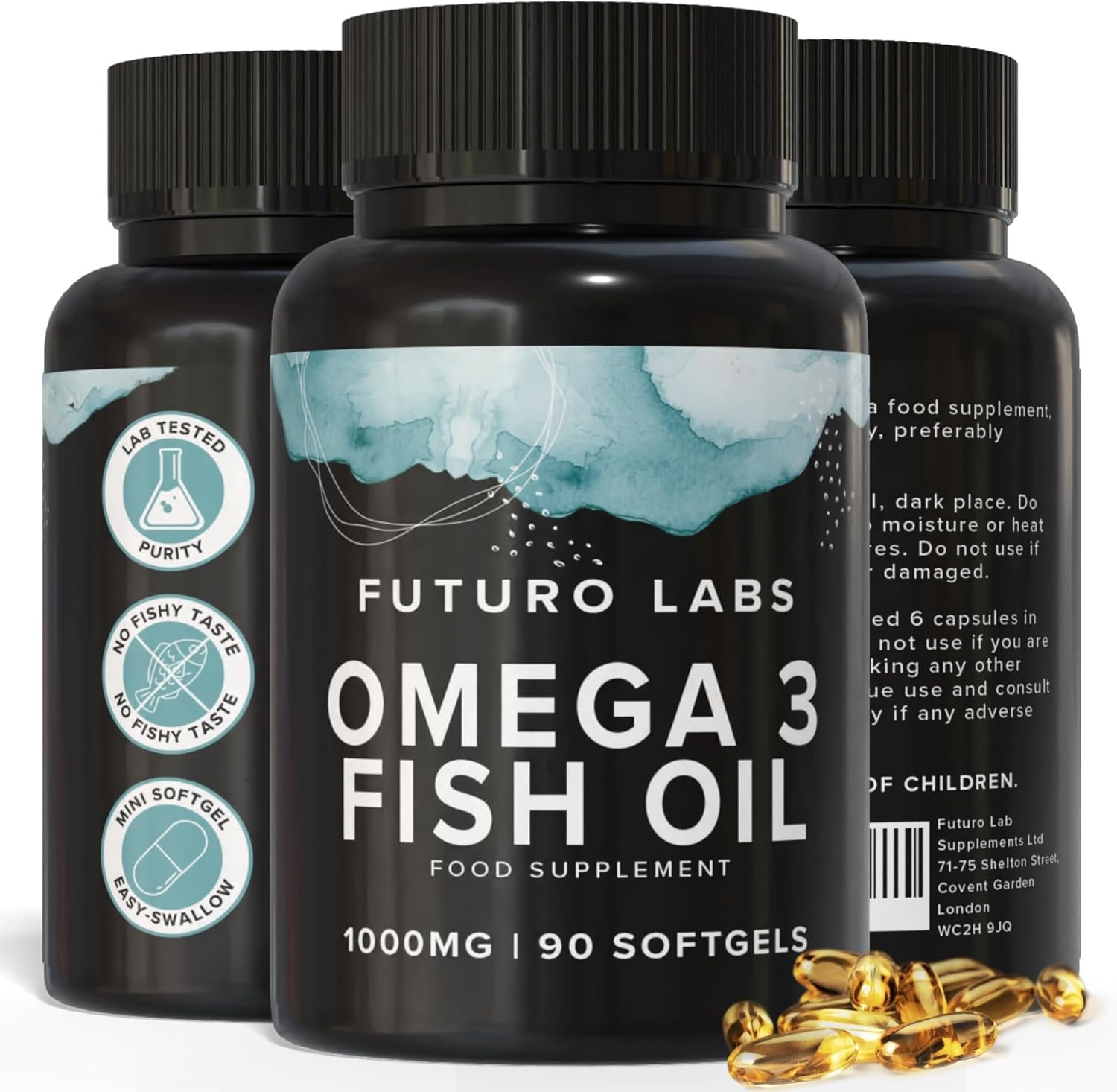
Futuro Labs Omega 3 Fish Oil
£14.99 for 90-day supply (90 softgels) · ~17p per day
Pros
- 1000mg fish oil per softgel — 180mg EPA + 120mg DHA stated
- Mini softgel, no fishy taste, lab tested
- 90-day supply at £14.99 (~17p/day), UK made
Cons
- Fish-derived, bovine-gelatin softgel — not vegan or vegetarian (algal DHA is that route)
- Ethyl-ester form — take with a meal; DHA brain/vision register claims need 250mg DHA daily, above the one-a-day serving
Available from: Amazon UK — £14.99
The door held open — and the honest close
Because mood searches sometimes carry more than curiosity, the routing gets said plainly and kindly: low mood that persists — weeks rather than days, colouring most things, or noticed by people around you — is exactly what a GP conversation is for: real support exists (talking therapies, medication where appropriate, practical help with what's underneath) and reaching for it is a strength move at any point, not a last resort; and if things ever feel unmanageable, urgent support is always available — your GP, 111, or crisis lines — without you having to judge whether you 'qualify'. The everyday levers with genuine mood evidence sit beside that door, not instead of it: activity (the exercise-mood file is one of the field's strongest), daylight, sleep protected, connection kept up — free, additive, and never a substitute for the conversation when it's needed. The capsule's honest seat, unchanged by the territory: Futuro Labs Omega 3 remains the essential-fat base layer — 300mg EPA+DHA with a meal at ~17p, the heart condition met at one (the claim held), quiet by design (the clock) — sold for the plate, with the person routed to people. Omega 3 and mood, closed at its true size: no claims, an adjunctive file kept adjunctive — and a door this page would rather you used than any checkout.
Frequently asked questions
Does omega 3 help with mood or depression?
Two answers, kept apart: no authorised UK claim connects omega 3 to mood at any dose — so no label may promise it and this one doesn't. And the research: a real adjunctive literature exists in diagnosed depression — EPA-heavy formulations, added to professional treatment, showing modest and heterogeneous effects across meta-analyses. Adjunctive is the operative word: alongside care, never instead of it.
Can I take fish oil instead of antidepressants or therapy?
No — nothing in the research supports replacement, everything positions any effect as adjunctive within treatment, and this product's own label routes anyone on any medication to a doctor before use, antidepressants included. Treatment decisions belong entirely with the prescriber; a supplement aisle holds no vote.
What should I do if my mood has been low for a while?
Talk to your GP — persistent low mood is exactly what they're for, real support exists (talking therapies, medication where appropriate, and practical help), and going is a strength move, not a last resort. If things ever feel unmanageable, urgent help is always available through your GP, 111, or crisis lines — you don't have to sort the threshold yourself.