EPA vs DHA: Two Currencies, One Legible Shelf
Read the two lines separately, sum against the claim you're shopping — and let fish-oil headlines retire from the decision.
At a glance
- EPA: the signalling currency — resolution chemistry and cellular messaging
- DHA: the structural currency — brain and retinal membrane material, literally
- The claims split: both count toward heart (250mg pair) · only DHA toward brain/vision (250mg DHA)
- The default: ordinary ratios cover the base — tilted formulas are knowing purchases
Two molecules, two jobs — the split that organises everything
EPA and DHA travel as a pair on every label, and the clearest way through the aisle is knowing what each actually does: EPA — eicosapentaenoic acid — is the signalling specialist: the substrate for families of resolution-phase messengers and cellular signalling chemistry deployed throughout the body, which is why EPA dominates certain research programmes (the mood literature leans EPA-heavy in its formulations, for instance — sized honestly on its own careful page); DHA — docosahexaenoic acid — is the structural one: not a visitor to the brain and retina but a building material of them, among the most abundant fatty acids in neural and retinal membranes, present by construction — which is exactly why the register's brain-function and vision sentences attach to DHA specifically, and why DHA carries the pregnancy-nutrition literature its own careful page handles (that territory). One family, two currencies: signalling and structure — and most of the shelf's ratio marketing decodes instantly once the split is held.
The claims arithmetic — where the split becomes shopping
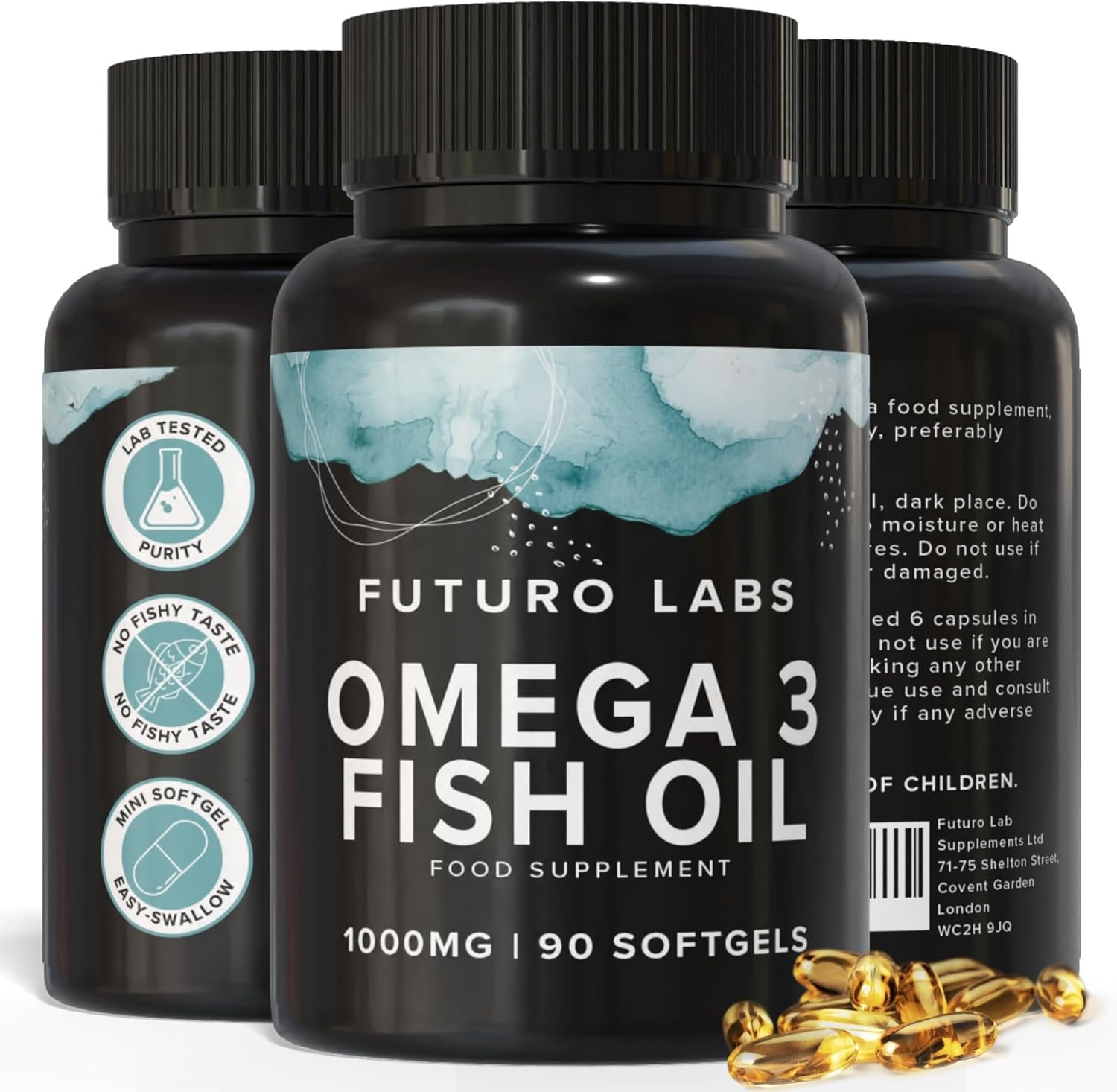
The register turns the biology into checkable maths: the heart claim — EPA and DHA contribute to the normal function of the heart — conditions on the pair combined: 250mg EPA+DHA daily, which ordinary fish-oil ratios clear comfortably (Futuro Labs Omega 3's 180mg EPA + 120mg DHA = 300mg, threshold met at one softgel — the claim's page); the brain and vision claims — DHA contributes to the maintenance of normal brain function, and of normal vision — condition on DHA alone: 250mg DHA daily, a bar that sorts the shelf sharply: standard-ratio one-a-days (ours included, at 120mg DHA) sit below it and should say so plainly, while DHA-tilted formulas exist precisely to clear it — the legitimate reason ratio-shopping exists (the brain page's full honesty, and vision's). The habit this page installs: read the EPA and DHA lines separately, sum them against the claim you're shopping for, and let '1000mg fish oil' headlines retire from your decision entirely (the label course).
Futuro Labs Omega 3 Fish Oil
£14.99 for 90-day supply (90 softgels) · ~17p per day
Pros
- 1000mg fish oil per softgel — 180mg EPA + 120mg DHA stated
- Mini softgel, no fishy taste, lab tested
- 90-day supply at £14.99 (~17p/day), UK made
Cons
- Fish-derived, bovine-gelatin softgel — not vegan or vegetarian (algal DHA is that route)
- Ethyl-ester form — take with a meal; DHA brain/vision register claims need 250mg DHA daily, above the one-a-day serving
Available from: Amazon UK — £14.99
Ratios, conversion, and the honest default
The residual questions, sized properly: ratio shopping — for everyday base-layer coverage the question is smaller than the marketing implies: the pair's combined threshold is the everyday claim's whole condition, ordinary ratios deliver both currencies in sensible proportion, and tilted formulas are knowing purchases for named intents (DHA-heavy for the 250mg DHA conditions and the pregnancy-adjacent literature; EPA-heavy for specific research-following buyers) rather than upgrades by default (the concentration page); interconversion — the body runs partial two-way traffic between the pair (inefficient extension one way, retro-conversion the other): biological reassurance that supplying either helps both pools somewhat, and no substitute for supplying both directly, which is what fish and standard fish oil do without a conversion tax; and the constants — food first as ever (oily fish delivers both currencies together, pre-ratioed by nature — the plate), the with-meal rule functional for concentrated oils (why), and the label gates standing: pregnancy, nursing or any medication → doctor first per the label; blood thinners → the pharmacist conversation (that page). EPA versus DHA, settled: signalling and structure, one combined bar for the everyday claim, one DHA-only bar above it — and a shelf that reads itself once you hold the split.
Frequently asked questions
What's the difference between EPA and DHA?
Same family, different jobs: EPA is the signalling specialist — feeding the chemistry of resolution and cellular messaging throughout the body — while DHA is the structural one: a major building material of brain and retinal membranes, physically present in the tissues the register's brain and vision sentences describe. Both count toward the 250mg heart-claim condition; only DHA counts toward the 250mg DHA brain/vision conditions.
Should I buy high-EPA or high-DHA fish oil?
For everyday base-layer coverage, the ratio question is smaller than the marketing implies: the heart claim conditions on the pair's combined 250mg and ordinary fish-oil ratios (like Futuro Labs' 180/120) deliver both in sensible proportion. Ratio-tilted products serve specific intents — DHA-heavy formulas chase the 250mg DHA brain/vision conditions; EPA-heavy ones follow particular research interests — knowing purchases, not defaults.
Does the body convert between them?
Partially — some interconversion runs in both directions (EPA can extend toward DHA inefficiently; DHA can retro-convert) — which is biological reassurance, not a shopping strategy: supplying both directly, as fish and standard fish oil do, is the route that skips the conversion tax entirely.