Rich Foods: The Aisle Only Exists for the Gap
Barriers are usually logistics wearing taste's clothing — each with a two-pound answer, and the calendar auditing what the intention claims.
At a glance
- The oily tier: salmon · mackerel · sardines · herring · trout · kippers — ~1-2g EPA+DHA per portion
- The weekly shape: two portions, one oily — a floor most UK plates miss
- The budget row: tinned sardines and mackerel count fully at pantry prices
- The honest close: a compliant plate needs no capsule — this aisle serves the rest
The plate this cluster keeps pointing at — laid out properly
Every food-first sentence in this cluster lands here, so this page sets the table in full: the oily tier — where the marine pair actually lives: salmon, mackerel, sardines, herring, trout and kippers each carry roughly 1-2g of EPA+DHA per standard 140g cooked portion (species and season moving the figure within that band), meaning one oily dinner banks four-to-eight days of the everyday 250mg condition in a single sitting (the condition's ladder, the sort this table feeds); the budget row, crowned again — tinned counts fully: sardines or mackerel on toast delivers oily-tier nutrition at pantry prices, the single highest-value line in UK nutrition and this cluster's favourite sentence; and the lower tiers, honestly ranked — white fish (cod, haddock, plaice) is genuinely modest in EPA+DHA: healthy eating whose marine line still runs light; eggs and fortified foods contribute minor amounts that help but don't carry; and shellfish sits between, prawns and mussels offering middling contributions.
The plant column, and the weekly shape
The other omega, filed accurately beside the table: ALA foods — flax, chia, walnuts and rapeseed oil supply alpha-linolenic acid generously: genuinely essential, holding its own 2g cholesterol-maintenance claim, and converting to the marine pair at rounding-error rates — a different acid doing a different job, never a substitute column (that truce in full, the family tree). The shape that organises the week: widely followed UK guidance suggests at least two fish portions weekly with at least one oily — a floor most British plates miss rather than a ceiling most hit, which is the entire gap this category exists inside; the shape bends at two junctions — pregnancy (oily becomes a capped maximum, predator species leave the menu, the whole conversation routes professionally — that page's gate) and childhood (portion caps differing by sex, summarised for the professional conversation at the children's page).
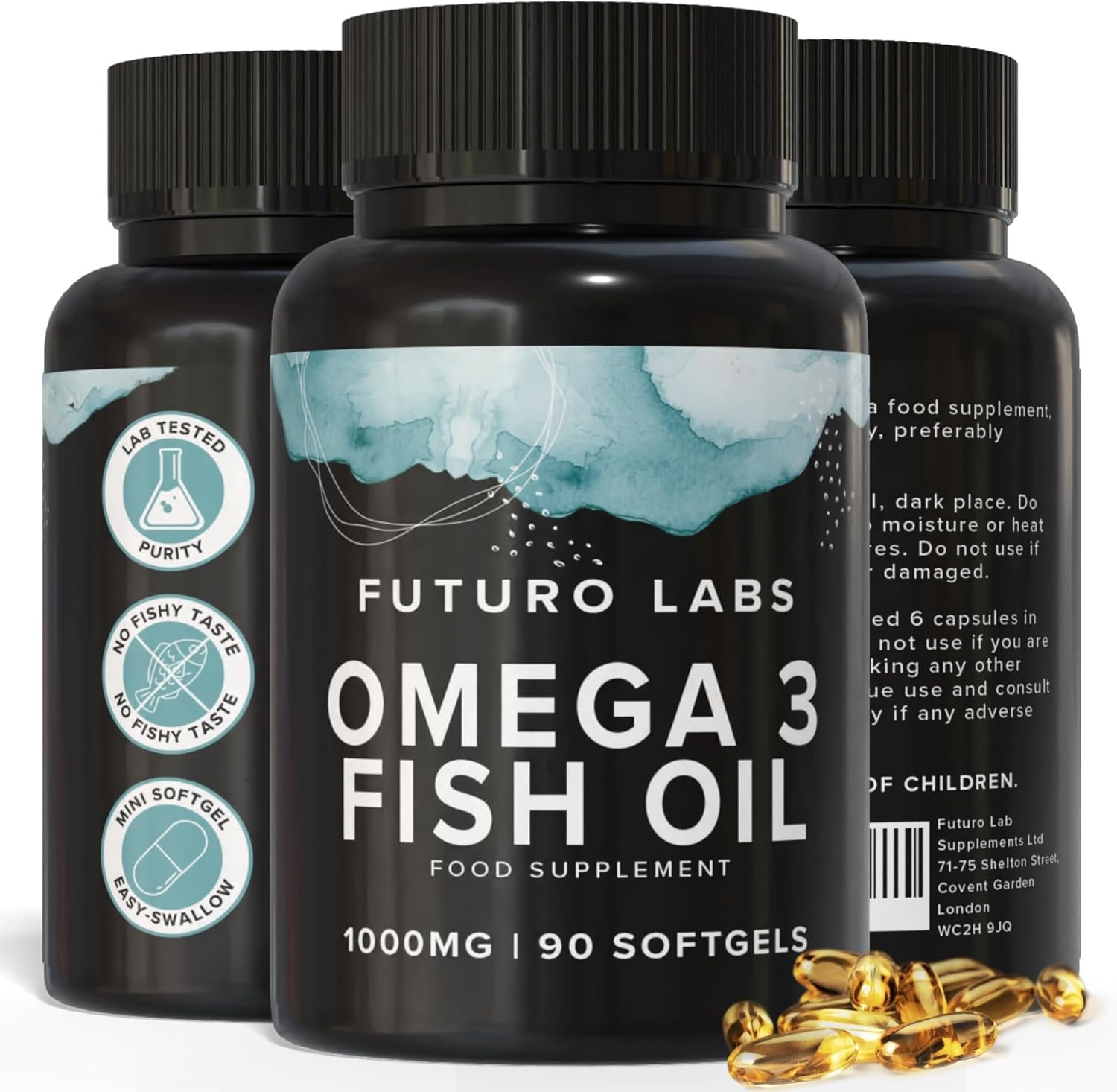
Futuro Labs Omega 3 Fish Oil
£14.99 for 90-day supply (90 softgels) · ~17p per day
Pros
- 1000mg fish oil per softgel — 180mg EPA + 120mg DHA stated
- Mini softgel, no fishy taste, lab tested
- 90-day supply at £14.99 (~17p/day), UK made
Cons
- Fish-derived, bovine-gelatin softgel — not vegan or vegetarian (algal DHA is that route)
- Ethyl-ester form — take with a meal; DHA brain/vision register claims need 250mg DHA daily, above the one-a-day serving
Available from: Amazon UK — £14.99
The kitchen reality, the honest close
Making the table survive contact with actual weeks: the low-effort wins — tinned fish requires no cooking, smoked mackerel flakes into anything, frozen fillets remove the fishmonger from the equation: the barriers are usually logistics wearing taste's clothing, and each has a two-pound answer; the fair audit — the calendar counts, not the intention: 'we eat salmon' and 'we ate salmon' differ by exactly the gap this cluster's capsule serves. And the close every honest food page owes: a plate genuinely meeting the weekly shape has its marine line covered — no capsule case to answer, this aisle optional, tab closeable (said at length there); for the plates that don't — gap weeks, fishless kitchens, the settled no (the destination page) — one Futuro Labs Omega 3 softgel meets the condition at 300mg with a meal, ~17p, doing quietly what the menu declined (the chemistry, the record). Gates as ever: pregnancy, nursing or any medication → doctor first per the label (the conversation). Omega-rich foods, tabled and closed: an oily tier that carries, a tinned row that saves, a weekly shape that sorts — and an aisle that only ever existed for the gap.
Frequently asked questions
What foods are high in omega 3?
The oily-fish tier does the marine work: salmon, mackerel, sardines, herring, trout and kippers each deliver roughly 1-2g of EPA+DHA per 140g cooked portion — one dinner banking days of the 250mg condition. Tinned sardines and mackerel count fully at pantry prices. White fish is genuinely lower; eggs and fortified foods contribute minor amounts; flax, chia and walnuts supply ALA — a different acid doing a different job.
How much fish should I eat per week?
The widely followed UK shape: at least two portions of fish weekly, at least one oily — a floor most plates miss rather than a ceiling most hit. Pregnancy changes the shape (oily becomes a capped maximum, some species leave the menu) and routes to professional guidance; children's portions have their own caps covered on the children's page.
Can I get enough omega 3 without supplements?
Absolutely — that's this page's whole point: a plate genuinely meeting the weekly shape has its marine line covered and no capsule case to answer. The capsule serves the plates that don't: gap weeks, fishless kitchens, and the settled non-fish-eater the cluster's destination page serves.