Children: Adult Products Stay Honestly Adult
Doses, formats and choking risk all point the same way — purpose-designed children's options exist, chosen with the professionals who know the child.
At a glance
- This page routes, not doses: children's supplementation is GP / health-visitor / pharmacist territory
- Food first: the widely followed fish shape for kids — oily portions capped by sex, big predators off
- Adult products aren't children's products: doses, formats and choking risk all say so
- Purpose-designed children's options exist — chosen inside the professional conversation
The parent's question — answered with a route, not a dose
Children's omega searches are parents doing diligence, and this page honours that with the only honest structure: routing — whether any child should supplement, at what dose, in what format, is professionally-led territory: the GP, health visitor or pharmacist who knows the child's diet, growth and picture makes that call, purpose-designed children's products exist precisely for the cases where the answer is yes, and no adult-product page — this one included — doses children (the same routing discipline this cluster's pregnancy page runs). What a parent can usefully take into that conversation is the food-first shape the next section summarises — because for children as for everyone, the plate leads the aisle (the plate's page).
The widely followed food shape — summarised for the conversation
UK guidance on fish for children, in the widely followed outline parents can raise with professionals: fish enters with weaning — from around six months as solids progress, bones carefully removed, added salt watched; oily fish joins with limits — the portion guidance differs by sex: girls up to two oily portions weekly, boys up to four, a difference relating to pollutant accumulation and future pregnancies rather than present nutrition, and one of the guidance landscape's more counterintuitive corners worth hearing explained properly at the health-visitor level; the big predators stay off — shark, swordfish and marlin leave children's menus entirely on mercury grounds, as in pregnancy; and tinned counts — sardines and mackerel on toast being the classic budget route to a child's oily portion. A plate meeting that shape is doing what any capsule conversation would be about — which is the point food-first pages exist to make (the adult version of the same sort).
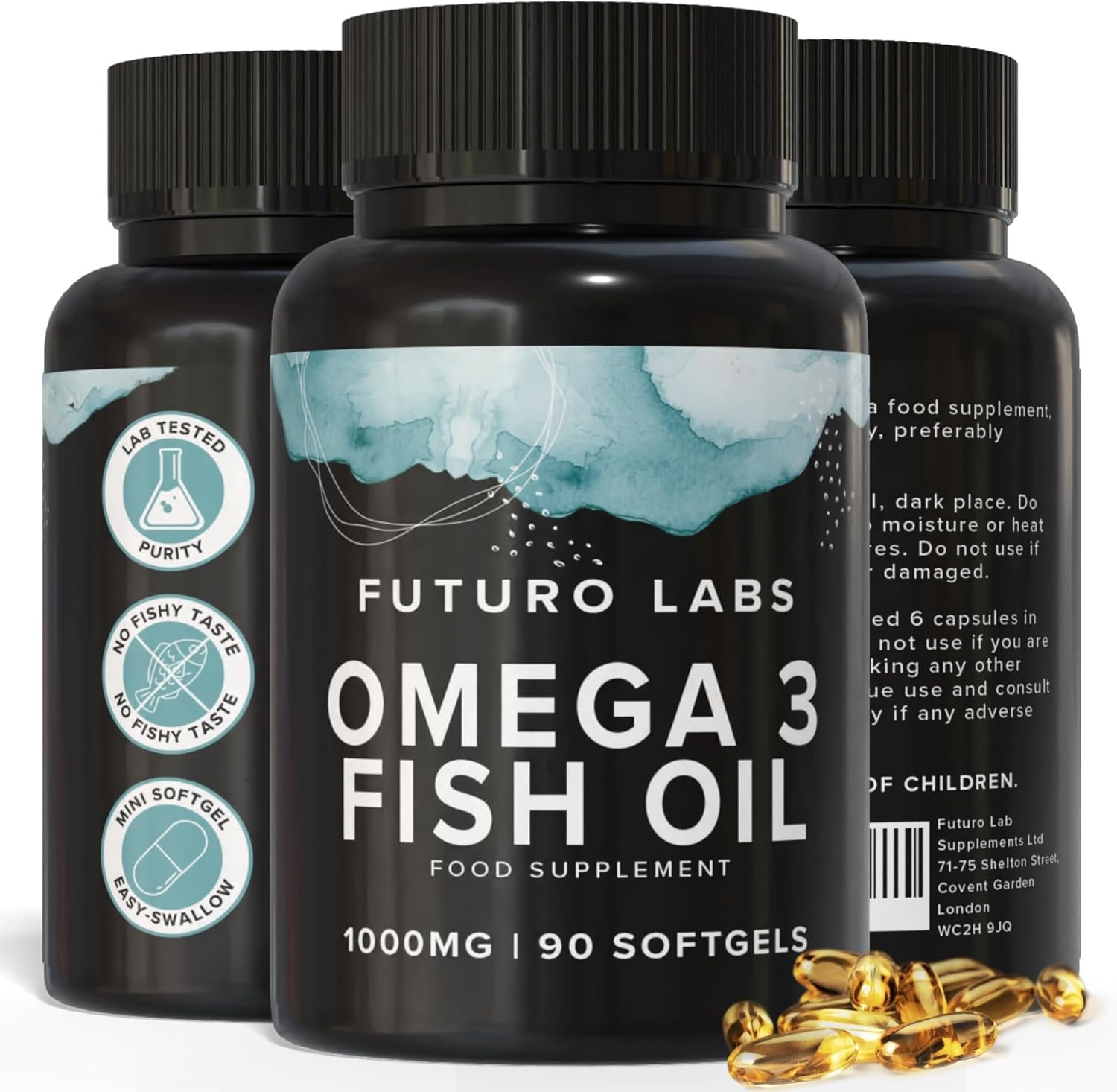
Futuro Labs Omega 3 Fish Oil
£14.99 for 90-day supply (90 softgels) · ~17p per day
Pros
- 1000mg fish oil per softgel — 180mg EPA + 120mg DHA stated
- Mini softgel, no fishy taste, lab tested
- 90-day supply at £14.99 (~17p/day), UK made
Cons
- Fish-derived, bovine-gelatin softgel — not vegan or vegetarian (algal DHA is that route)
- Ethyl-ester form — take with a meal; DHA brain/vision register claims need 250mg DHA daily, above the one-a-day serving
Available from: Amazon UK — £14.99
Why adult capsules don't transfer — and the close
The lines this page holds plainly: adult products aren't children's products — doses are set for adult bodies (this label's 1000mg softgel included), softgels are a genuine choking hazard for young children, and Futuro Labs Omega 3's own label directs storage out of children's reach: the standard warning meaning exactly what it says (the label's words); halving, piercing or kitchen-adapting adult capsules for children substitutes improvisation for the professional conversation that should happen instead; and where that conversation lands on supplementation, purpose-designed children's formats exist — doses and formats built for the job, chosen with the professional who recommended them. For the household's adults, the cluster resumes normally: the base layer at one softgel with a meal, ~17p, gates as ever — pregnancy, nursing or any medication → doctor first per the label (the conversation, the record). Children and omega 3, closed the only defensible way: a food shape summarised, a professional routed, an adult product staying honestly adult — and a parent's diligence pointed where it actually pays.
Frequently asked questions
Should children take omega 3 supplements?
That's a question for your GP, health visitor or pharmacist — not a supplement page: children's dosing, formats and needs are professionally-led territory, purpose-designed children's products exist for exactly this, and this page routes rather than doses. What it can share: the widely followed food-first shape — fish on children's plates, with the portion guidance summarised below for the professional conversation.
What does UK guidance say about fish for children?
The widely followed shape parents can raise with professionals: fish from around six months as weaning progresses (bones removed, salt watched), oily fish included with portion limits that differ by sex — girls up to two oily portions weekly, boys up to four (the difference relates to pollutant accumulation and future pregnancies) — and shark, swordfish and marlin off children's menus entirely.
Can I give my child an adult fish oil capsule?
No — adult products aren't children's products: doses are set for adult bodies, softgels are a choking hazard for young children, and our own label directs storage out of children's reach. If a professional recommends supplementation, purpose-designed children's formats exist with appropriate doses — that conversation, not this capsule, is the route.