FL Omega 3: Reviewed at the Site's Own Standard
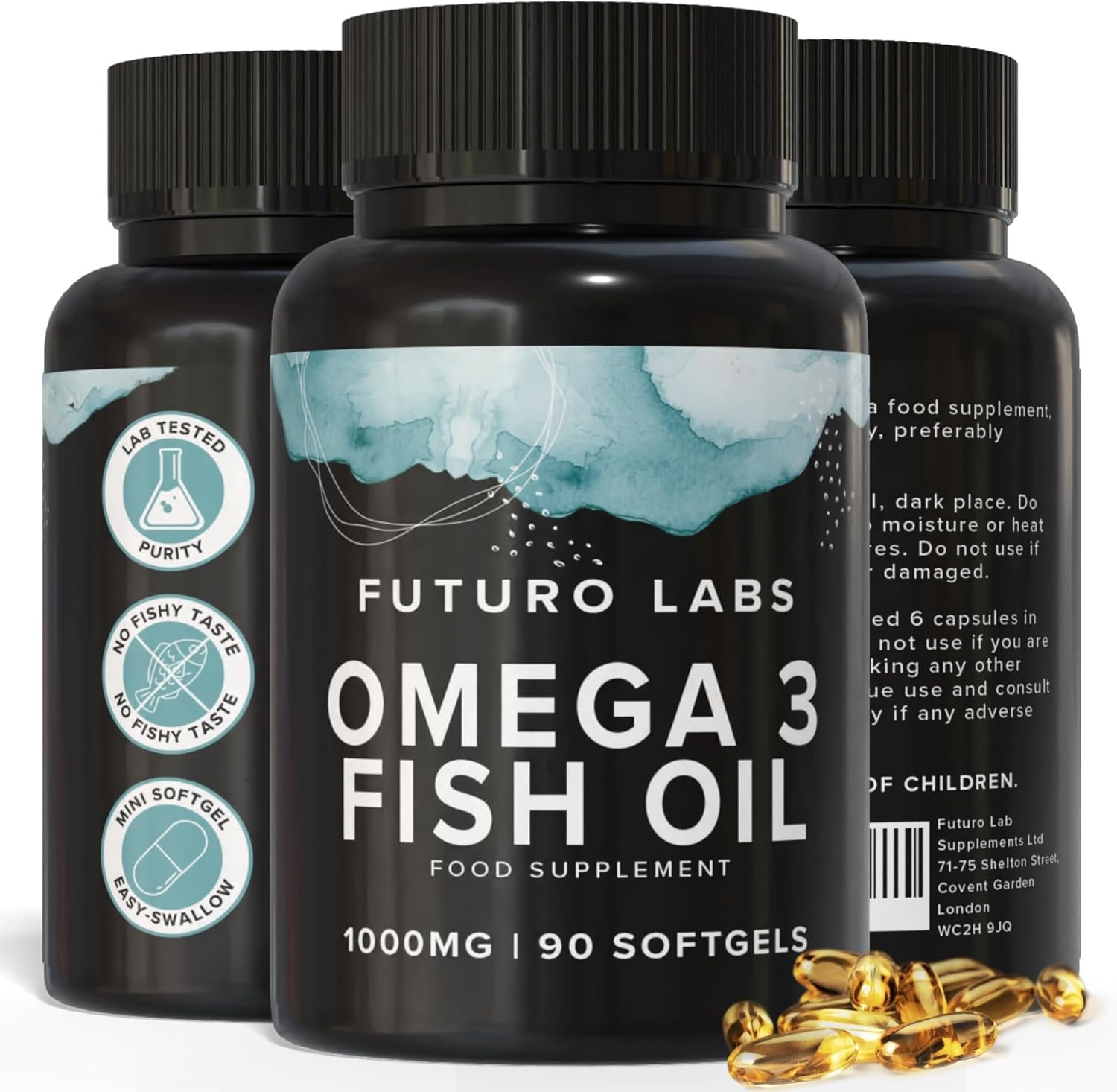
The panel first, the engineering second, the honest downsides third — right-for and wrong-for both named, ~17p/day across a 90-day quarter.
At a glance
- The spec: 1000mg fish oil · 300mg EPA+DHA (180/120) · one mini softgel a day
- The claim met: heart-claim condition (250mg EPA+DHA) cleared per capsule — natively
- The limitations, printed: ethyl-ester (with meals) · bovine gelatin (not vegan) · DHA below the 250mg brain/vision gate
- The economics: £14.99 / 90 days — ~17p/day, a quarter per purchase
What it is — the spec sheet, honestly framed
A maker's review earns trust by leading with the panel, so here it is: each softgel carries 1000mg of concentrated fish oil delivering 350mg total omega-3, of which 300mg is the pair that matters — 180mg EPA and 120mg DHA, stated in milligrams on the nutrition label rather than hidden in a blend total (why that statement is the whole game). The regulatory frame that spec earns: the authorised UK sentence — EPA and DHA contribute to the normal function of the heart — is conditioned on 250mg EPA+DHA daily, and one softgel clears it with headroom: daily heart-claim coverage in a single small capsule, which is precisely the job this product was built for (the claim's own page, the wider dose ladder). The formula around the oil, complete because short: concentrated fish-oil ethyl esters, a tocopherol-rich extract (natural vitamin E, guarding the oil's freshness), and a bovine-gelatin softgel shell — three lines, each doing a stated job.
The engineering — burps, size, freshness, proof
Fish oil's reputation problems are practical, and this build answers them practically: the fishy-burp problem — the oil is purified and deodorised, the intervention that actually works because it removes the volatiles rather than masking them (the full fix-list); the horse-pill problem — a mini softgel roughly a third smaller than the category's standard, one per day, which is where adherence is quietly won (that guide to come); the rancidity problem — fish oil's real failure mode is oxidation, and the defence here is layered: the tocopherol antioxidant in the oil, a freshness-protecting shell, and per-batch testing (how to spot the failure anywhere); and the proof problem — independent testing shown per batch: heavy metals (lead, mercury, arsenic, cadmium — the contaminants marine oils must answer for) and full microbiology (TVC, yeast and mould, E. coli, salmonella, staph) all passing, in an ISO-17025 testing context, from a UK GMP/BRC facility (what those panels mean).
Futuro Labs Omega 3 Fish Oil
£14.99 for 90-day supply (90 softgels) · ~17p per day
Pros
- 1000mg fish oil per softgel — 180mg EPA + 120mg DHA stated
- Mini softgel, no fishy taste, lab tested
- 90-day supply at £14.99 (~17p/day), UK made
Cons
- Fish-derived, bovine-gelatin softgel — not vegan or vegetarian (algal DHA is that route)
- Ethyl-ester form — take with a meal; DHA brain/vision register claims need 250mg DHA daily, above the one-a-day serving
Available from: Amazon UK — £14.99
The limitations — printed, because that's the house style
What this product is not, stated the way every Futuro Labs review states its own: it is an ethyl-ester oil — the industry's standard concentration form, whose absorption is meaningfully meal-dependent, making the take-with-a-meal direction functional rather than ritual (the triglyceride-form debate gets its honest page — here when live — and the with-food rule closes most of the practical gap); it is not vegan or vegetarian — the shell is bovine gelatin and the oil is fish: plant-based readers route to algal DHA/EPA products, named plainly rather than danced around (that comparison); and its one-a-day DHA (120mg) sits below the 250mg daily condition the register's DHA sentences — normal brain function, normal vision — require, so this label meets the heart claim natively and does not borrow the other two: the exact dose-gated honesty this cluster runs everywhere (the brain page's full treatment). The router, closing: right for daily heart-claim coverage at the floor (~17p, 90 days, £14.99) and for the fishless plate building its base layer (the food-first sort); wrong for vegans, for 2-3g max-dose protocols (that territory's rules), and for anyone the label's own gates cover — pregnancy, nursing, or any medication routes to a doctor first, with blood thinners the classic pharmacist conversation (that page). Futuro Labs Omega 3, reviewed by its maker at the site's own standard: the claim met, the engineering shown, the limitations in print — judge it by the same five questions we ask of everyone.
Frequently asked questions
Is Futuro Labs Omega 3 any good?
The maker's review, run on the site's own framework: 300mg EPA+DHA (180/120) stated per 1000mg mini softgel — the authorised heart-claim condition met at one a day — purified and deodorised against fishy burps, tocopherol-protected for freshness, independently tested for heavy metals and microbiology, UK GMP/BRC made, £14.99 for 90 days at ~17p. The limitations, printed: ethyl-ester form (take with a meal), bovine-gelatin shell (not vegan or vegetarian), and 120mg DHA sits below the 250mg daily condition the register's brain and vision claims require.
What are the honest downsides?
Three, stated plainly: it's an ethyl-ester oil — absorption is meal-dependent, so the with-food direction is functional; the softgel is bovine gelatin — vegans and vegetarians need the algal-oil route instead; and one-a-day DHA (120mg) doesn't reach the 250mg the register's DHA brain/vision claims condition on — we meet the heart claim natively and say exactly that.
Who is it right and wrong for?
Right for: the daily-coverage buyer wanting the 250mg EPA+DHA heart-claim threshold met in one small capsule at the floor price, and the fish-avoider building the base layer their plate skips. Wrong for: vegans/vegetarians (algal oil), max-dose protocols chasing the 2-3g register territory (that's premium-concentrate or GP-conversation land), and anyone whose label warnings apply — pregnancy, nursing, or medications route to a doctor first per our own label.