Purity: The Point Is Knowing, Not Fearing
Per-batch beats 'regularly tested' — and the untested tier has answered the only question this page asks.
At a glance
- The chemistry: metals bind protein, not fat — separation and distillation strip most
- The proof: per-batch certificates — Pb, Hg, As, Cd against limits, batch-matched, dated
- The lab standard: ISO 17025 — the accreditation that audits the auditor
- The worked example: our shown testing — four metals, every batch, passing
The worry, met with the chemistry — why oil isn't the fish
Heavy-metal concern is the most rational worry the category attracts — fish genuinely bioaccumulate mercury and friends up the food chain, the reason pregnancy guidance caps predator species (those rules) — and the chemistry of oil-making answers most of it: metals bind to protein — mercury, lead, arsenic and cadmium associate overwhelmingly with the protein fraction of fish tissue, so pressing and separating the oil leaves most of the metal burden behind in the meal; and distillation strips further — the molecular distillation most modern oils undergo (the same step behind concentration — that chemistry) removes volatiles and residual contaminants alike, which is why well-made fish oil consistently tests far below the raw fish it came from. Chemistry, though, is an argument — testing is the proof, and the category's honest divide runs exactly there.
Reading a certificate — what proof actually looks like
The document this page teaches you to demand and decode: the four metals — lead, mercury, arsenic and cadmium, each with a measured result against a stated limit: numbers and thresholds, not a bare 'passes' (below-detection results appearing as '<' figures are the happiest lines on the page); the batch match — a batch or lot reference connecting the certificate to the bottle in your hand, because last year's clean batch proves nothing about this one: per-batch is the standard, and 'regularly tested' without batch linkage is the hedge it sounds like; the laboratory — identifiable, independent, and ideally ISO 17025-accredited: the standard that audits the auditor, meaning the lab's methods and competence are themselves externally verified rather than self-declared; and the company it keeps — microbiological safety (the pathogen panel) alongside the metals marks a full testing programme rather than a single flattering test (the claimed-versus-retrievable check in the master read, the marketplace tier this sorts).
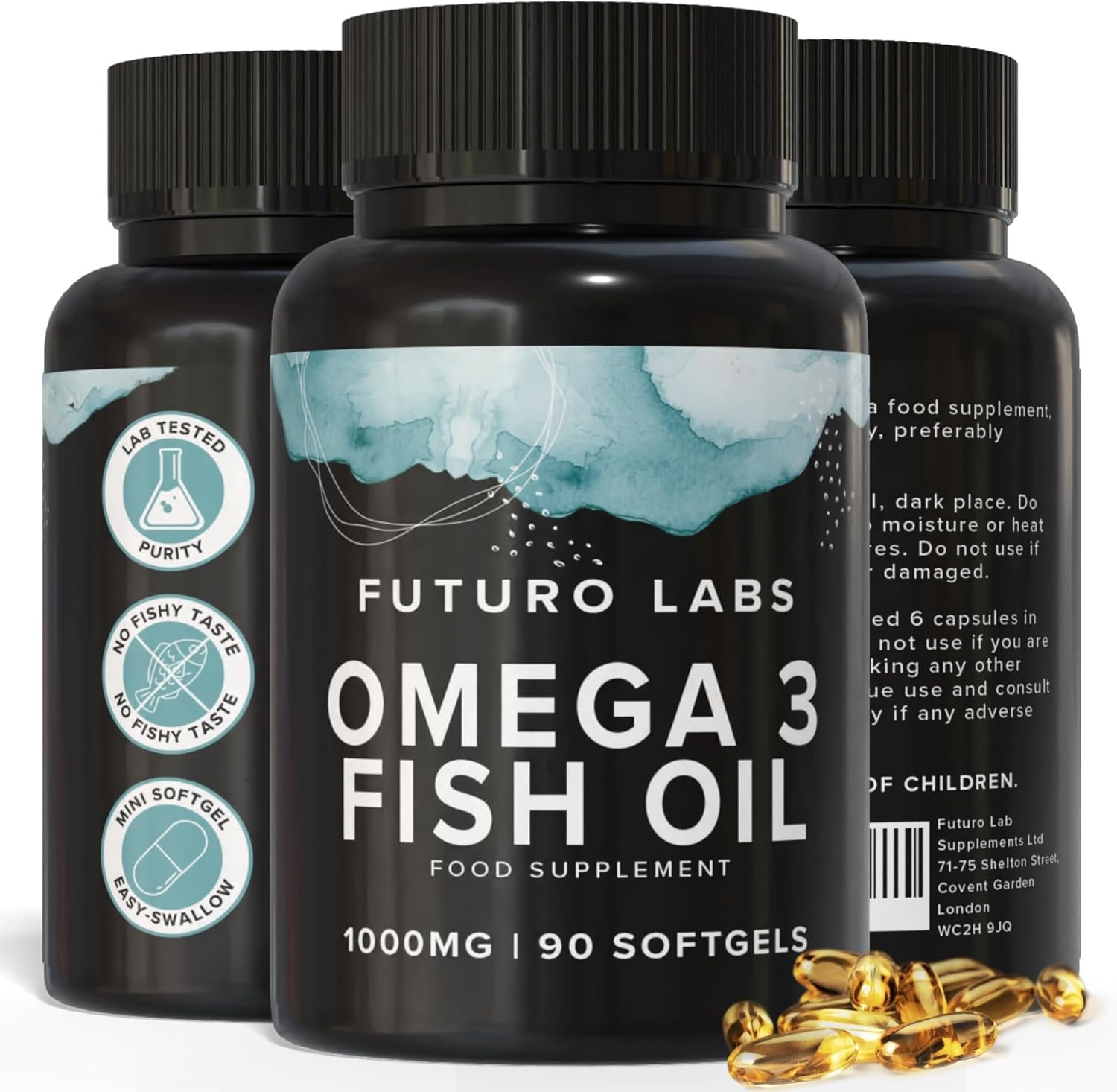
Futuro Labs Omega 3 Fish Oil
£14.99 for 90-day supply (90 softgels) · ~17p per day
Pros
- 1000mg fish oil per softgel — 180mg EPA + 120mg DHA stated
- Mini softgel, no fishy taste, lab tested
- 90-day supply at £14.99 (~17p/day), UK made
Cons
- Fish-derived, bovine-gelatin softgel — not vegan or vegetarian (algal DHA is that route)
- Ethyl-ester form — take with a meal; DHA brain/vision register claims need 250mg DHA daily, above the one-a-day serving
Available from: Amazon UK — £14.99
The worked example, the honest edges, and the close
The house rule as ever: Futuro Labs Omega 3 against this page's own checklist — independent per-batch testing for lead, mercury, arsenic and cadmium plus microbiological safety, ISO 17025-accredited laboratory work, all four metals passing on every batch, retrievable rather than merely claimed (the record that links it): the standard taught, applied where it's hardest to fake. The honest edges completing the picture: arsenic nuance — marine arsenic runs mostly organic forms of low concern, which is why limits and speciation matter more than raw scare-numbers; dose realism — at one softgel daily, even mediocre oils rarely approach intake limits, making testing about verified margins rather than rescued danger: the point is knowing, not fearing (the same epistemics); and the untested tier — listings with no testing story at any price have answered the only question this page asks (the basement's tell). Gates as ever: pregnancy, nursing or any medication → doctor first per the label (the conversation). Heavy metals and fish oil, closed on proof: chemistry that favours the oil, certificates that prove the batch — and a page whose own product just took its test in public.
Frequently asked questions
Do fish oil supplements contain heavy metals?
Well-made ones, vanishingly little — and the chemistry explains why: mercury and its fellow metals bind to fish protein, not fat, so oil separation leaves most behind and molecular distillation strips further. The honest buyer's question isn't 'is it possible' but 'is it tested': per-batch certificates for lead, mercury, arsenic and cadmium are the proof a label can actually show.
What should a testing certificate show?
The four metals (Pb, Hg, As, Cd) with results against stated limits, a batch reference matching your bottle, an identifiable laboratory — ISO 17025 accreditation being the standard that means the lab itself is audited — and a date. Microbiology alongside is the sign of a full panel rather than a cherry-pick.
Does Futuro Labs test for heavy metals?
Yes, and shows it: independent per-batch testing for lead, mercury, arsenic and cadmium plus microbiological safety, ISO 17025-accredited laboratory work, with all four metals passing on every batch — the retrievable-certificate standard this page teaches, applied at home.