Rancidity: The War Your Nose Referees
The polyunsaturated fragility that powers the whole freshness axis — with prevention recapped as engineering bought plus habits kept.
At a glance
- The sense tests, in order: smell (sharp/paint = fail) · taste (bitter = fail) · behaviour (new repeats = failing)
- Why it happens: polyunsaturated fragility — heat, light, air, time, every opening
- The industry's metric: oxidation values (the TOTOX family) — what freshness testing measures
- The policy: return-or-bin on any fail — degraded actives plus unpleasant compounds is no trade
The failure mode this whole category is secretly about
Rancidity is fish oil's defining vulnerability and this page teaches its detection properly: the chemistry first — the polyunsaturated structure that makes EPA and DHA biologically valuable (all those reactive double bonds) makes them oxidation-prone by the same token: heat, light, air and time each drive the degradation, every bottle-opening admits fresh oxygen, and the process compounds once begun — which is why the industry quantifies it (peroxide values and their kin feeding the composite freshness metrics the trade calls the TOTOX family) and why this cluster names freshness the category's real quality axis on every ranking page (that axis, its comfort-side twin).
The detection kit — three senses, used in order
Your equipment is built-in and reliable: smell — the first-opening test every new bottle deserves: fresh, well-processed fish oil runs neutral to faintly marine, while oxidation announces itself in sharp, sour, paint-like or putty notes: a sharp first opening means the oil arrived degraded and returns whatever the brand promised (the shopping read that reduces the odds); taste — the confirmation test: a bitten or pierced capsule tasting bitter, acrid or harshly fishy has confirmed what the nose suspected (fresh oil tastes mild); and behaviour — the ongoing monitor: repeats appearing or worsening weeks into a previously quiet bottle track oxidation progressing in real time, the diagnostic reading the burps page installs — the bottle is filing reports, and late-bottle sourness is the classic storage-or-schedule failure (the storage rules).
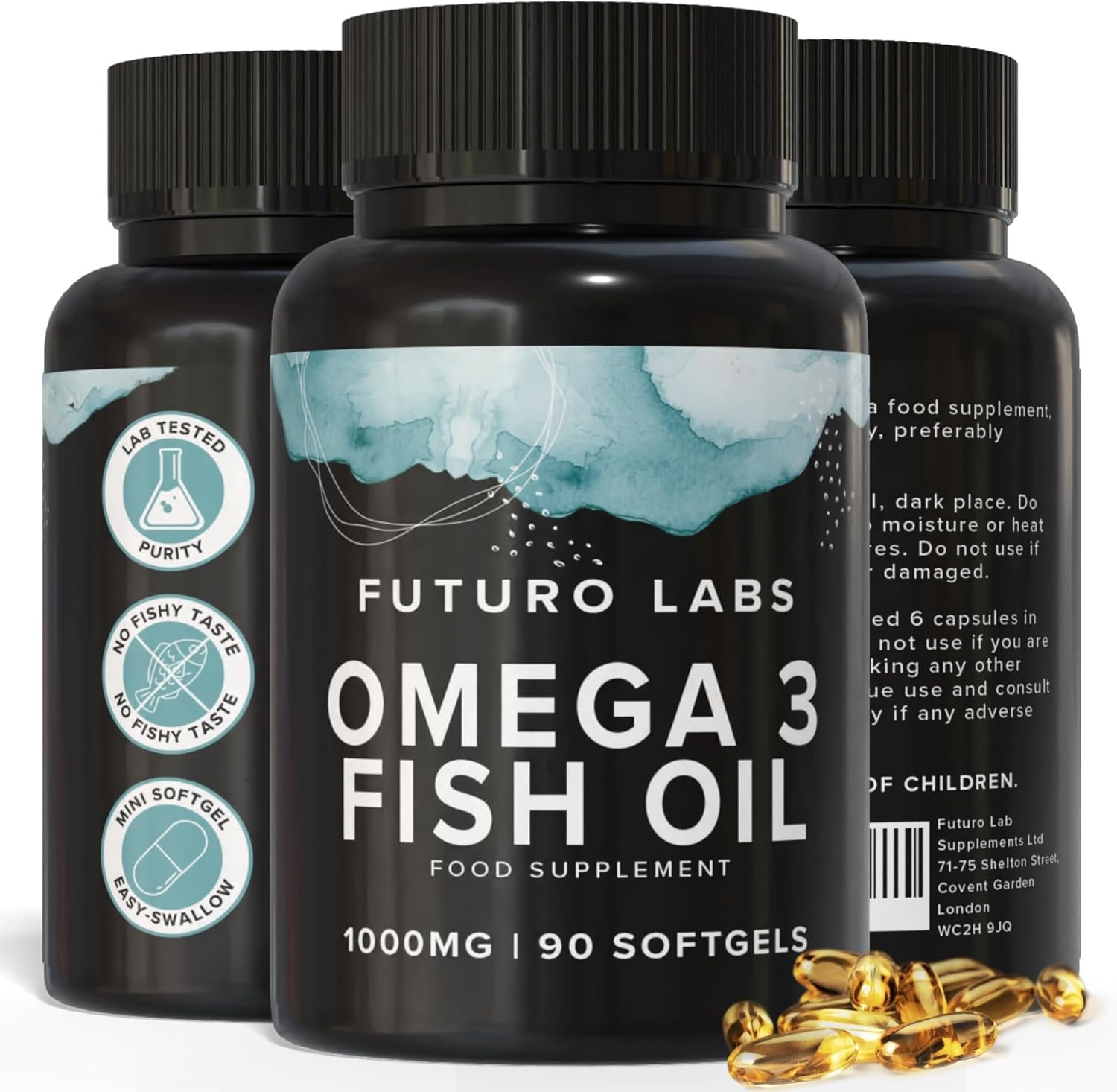
Futuro Labs Omega 3 Fish Oil
£14.99 for 90-day supply (90 softgels) · ~17p per day
Pros
- 1000mg fish oil per softgel — 180mg EPA + 120mg DHA stated
- Mini softgel, no fishy taste, lab tested
- 90-day supply at £14.99 (~17p/day), UK made
Cons
- Fish-derived, bovine-gelatin softgel — not vegan or vegetarian (algal DHA is that route)
- Ethyl-ester form — take with a meal; DHA brain/vision register claims need 250mg DHA daily, above the one-a-day serving
Available from: Amazon UK — £14.99
What rancid oil means — and the close
The stakes, stated without drama: oxidation degrades the actives you paid for — EPA and DHA breaking down as the values climb — while generating the very compounds behind the smell, taste and repeats: less of the good, more of the unpleasant, trending worse with time; and the consumption question earns the only sensible policy: the research on oxidised-oil intake is enough to make avoidance the rule — the bin costs pennies, the experiment offers nothing, and no bottle deserves loyalty its chemistry stopped earning. Prevention, recapped as buying-plus-habits: buy the engineering — purification and deodorisation, an antioxidant in the oil (tocopherol is the standard sentry), sealed per-dose capsules, per-batch testing shown: the Futuro Labs Omega 3 build exists as this paragraph in product form (the record, the testing explainer); then keep the habits — cool, dark, lid closed, and the supply finished on schedule: a 90-day bottle used daily retires the lingering-bottle problem by design. Gates as ever: pregnancy, nursing or any medication → doctor first per the label (the conversation). Rancid fish oil, detected and dispatched: three senses in order, one policy on any fail — and a category whose real quality war your nose was always equipped to referee.
Frequently asked questions
How can I tell if my fish oil is rancid?
Trust your senses in order: smell first (fresh fish oil runs faintly marine at most — sharp, sour, paint-or-putty notes mean oxidation), taste second (bitter or acrid on a bitten capsule confirms it), behaviour third (repeats appearing or worsening weeks into a bottle track progressing oxidation). Any of the three earns return-or-bin — rancidity is a quality failure, not a tolerance test.
What actually makes fish oil go rancid?
The polyunsaturated structure that makes omega-3 valuable makes it fragile: heat, light, air and time all drive oxidation, every bottle-opening admits oxygen, and the process compounds — which is why the industry measures it (peroxide and related values feeding the TOTOX freshness metric) and why serious products engineer against it with antioxidants, protective shells and testing.
Does rancid fish oil still work — or is it harmful?
Neither answer flatters it: oxidation degrades the EPA/DHA you paid for while generating the compounds responsible for the taste, smell and repeats — you're getting less of the good and more of the unpleasant, trending worse. The research on consuming oxidised oils is enough to make avoidance the only sensible policy; the bin costs less than the experiment.