Storage: The Schedule Outranks the Shelf
The oxidation quartet denied venue by venue — and the freezer filed where the burps page left it: diagnostic, and mostly for peas.
At a glance
- The verdict: cool dark cupboard = properly stored · fridge = optional margin, not the rule
- Where the fridge earns it: opened liquid oils · genuinely hot rooms
- The real rules: lid on · light out · finished on schedule — the oxidation quartet denied
- The freezer: harmless, diagnostic, and mostly for peas
The question, sized — what storage is actually defending against
Fridge-or-cupboard is really an oxidation question, and naming the enemy sizes the answer: the quartet — heat, light, air and time each drive the degradation this cluster calls the category's real failure mode (that failure mode in full): a windowsill delivers heat and light together, a loose lid adds air, and a half-forgotten bottle from spring supplies the time — so storage is simply denying all four, and the venue matters less than the discipline. The capsule's structural advantage doing half the work already: each softgel is its own sealed dose — the oil inside meets air only when bitten or dissolved, unlike an opened liquid bottle whose entire remaining volume breathes at every pour: the format is the first storage decision, made at purchase (the format's case).
The verdict by format — cupboard, fridge, freezer
The rulings, one venue at a time: the cupboard — a cool, dark, dry cupboard away from the oven and the window is proper storage for sealed softgels, full stop: lid closed firmly after each use, bottle kept in its light-blocking packaging where it shipped in one, and no refrigeration required for the format at UK room temperatures; the fridge — optional margin rather than the rule for capsules (cold slows oxidation chemistry, so it never hurts), and genuinely earned in two cases: opened liquid fish oils, where air contact with the whole remaining volume makes cold storage the sensible default, and properly hot rooms — a south-facing summer kitchen or a radiator-adjacent shelf turns the fridge from optional to wise; and the freezer — harmless to sealed softgels, occasionally used to delay dissolution against repeats, and filed exactly as the burps page files it: a diagnostic more than a storage upgrade, because a capsule that only behaves frozen has answered a quality question — the freezer stays for peas.
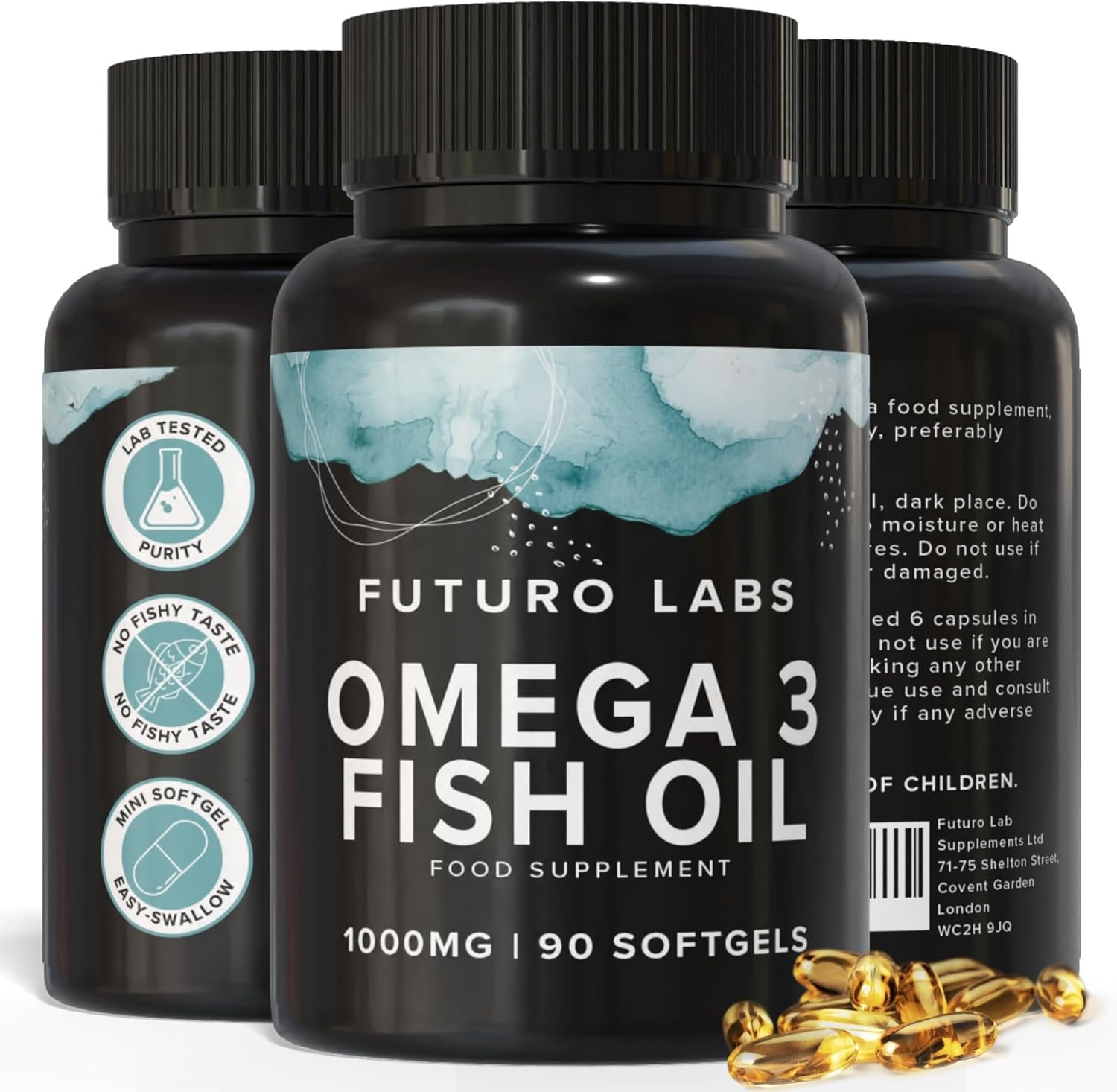
Futuro Labs Omega 3 Fish Oil
£14.99 for 90-day supply (90 softgels) · ~17p per day
Pros
- 1000mg fish oil per softgel — 180mg EPA + 120mg DHA stated
- Mini softgel, no fishy taste, lab tested
- 90-day supply at £14.99 (~17p/day), UK made
Cons
- Fish-derived, bovine-gelatin softgel — not vegan or vegetarian (algal DHA is that route)
- Ethyl-ester form — take with a meal; DHA brain/vision register claims need 250mg DHA daily, above the one-a-day serving
Available from: Amazon UK — £14.99
Finish-on-time — the storage rule nobody shelves
The quartet's quietest member gets the closing section because it beats the other three combined: time — every opened bottle is on a clock however well it's cupboarded, which makes the supply schedule itself a storage decision: a 90-day bottle taken daily finishes on time by design, retiring the lingering-bottle problem before it starts (Futuro Labs Omega 3's 90-count at one-a-day is this rule as packaging — the record, the quarterly logic), while the multi-hundred-count value giant lingers into its second year delivering the late-bottle sourness the rancidity page teaches you to catch. Travel note for completeness: a week's capsules in a small container survive any suitcase — heat-soaked car gloveboxes being the one venue to actually avoid. Gates as ever, since storage ends at swallowing: pregnancy, nursing or any medication → doctor first per the label (the conversation), and the with-meal rule travels to every venue (why). Fridge or cupboard, closed: cupboard-dark suffices, cold adds margin, the schedule outranks the shelf — and the freezer keeps its peas.
Frequently asked questions
Should fish oil capsules be kept in the fridge?
Optional, not required: sealed softgels in a cool, dark cupboard are properly stored — each capsule is its own sealed dose, and the fridge adds margin without being the rule. Where refrigeration genuinely earns its shelf: opened liquid fish oils (air contact makes cold storage sensible) and hot rooms in summer. The real rules are cheaper: lid on, light out, finished on time.
What actually degrades fish oil in storage?
The oxidation quartet: heat, light, air and time — a windowsill delivers two at once, a loose lid a third, and a bottle lingering past its schedule the fourth. Storage is just denying all four: cupboard-dark, properly closed, used daily so the supply finishes on schedule.
Can I freeze fish oil capsules?
You can — freezing doesn't harm sealed softgels and some use it to delay dissolution against repeats — but as the burps page files it: a capsule that only behaves frozen has answered a quality question, and the freezer is a diagnostic more than a storage upgrade. The cupboard remains home; the freezer stays for peas.