Subscriptions: Automate Decisions, Never Make Them
Teaser boxes, escape-room cancels and repriced commodity plans versus a flat £14.99 — the arithmetic defence and the honest sequence.
At a glance
- The reframe: a 90-day bottle is already a quarterly plan — without lock-in
- The honest sequence: manual first quarter → 90-day review → automate only what earned it
- Trap file: teaser boxes · escape-room cancels · repriced 'plans' · monthly-feels-small maths
- The model here: £14.99 flat, optional S&S, subscribed to nothing but the price
The subscription question, reframed by the bottle
Omega subscriptions sell convenience against forgetfulness, and this page's honest opening is that the category already solved that: a 90-day supply is a quarterly plan in bottle form — one purchase, three months of one-a-day, no lock-in, no renewal engine — which resets the real question from 'which subscription' to 'what would a subscription still add once the bottle handles cadence' (why 90 days is also the biology's own unit). The answer, sized honestly: automation of the reorder — a genuine convenience for a proven habit, worth the listing's standard Subscribe & Save discount when you'd have reordered anyway — and nothing else: no personalisation a commodity softgel can carry, no 'plan' a flat price doesn't already deliver (the value sum this must still pass).
The trap file — what this category's renewal engines run
The patterns an honest page names before recommending anything recurring: teaser economics — first boxes priced to acquire, renewals priced to recover, with the gap disclosed in grey text; escape-room cancellation — flows that answer 'cancel' with retention scripts, pause offers and support-ticket mazes, pricing your exit friction into their margins; repriced commodity — 'personalised omega plans' wrapping standard softgels in questionnaire theatre at multiples of shelf price (the payload line still decides — read it through any branding); and cadence psychology — monthly billing engineered to feel smaller than the quarterly sum it exceeds. The defence is this cluster's standing arithmetic: pence per condition-met day, subscription maths included — a renewal that can't beat £14.99 ÷ 90 on honest payload has priced its own convenience above your money (the listing-read that catches most of it).
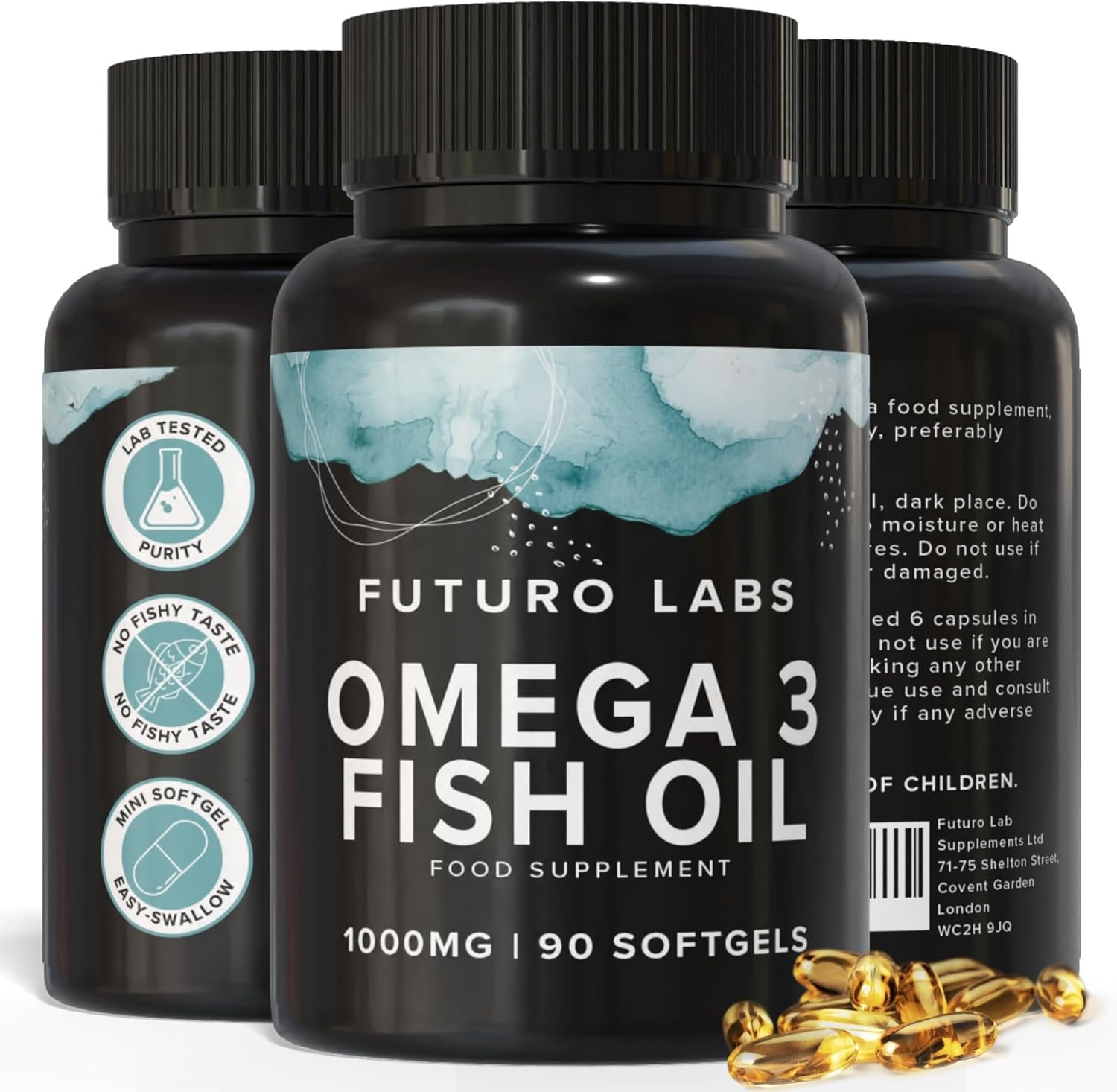
Futuro Labs Omega 3 Fish Oil
£14.99 for 90-day supply (90 softgels) · ~17p per day
Pros
- 1000mg fish oil per softgel — 180mg EPA + 120mg DHA stated
- Mini softgel, no fishy taste, lab tested
- 90-day supply at £14.99 (~17p/day), UK made
Cons
- Fish-derived, bovine-gelatin softgel — not vegan or vegetarian (algal DHA is that route)
- Ethyl-ester form — take with a meal; DHA brain/vision register claims need 250mg DHA daily, above the one-a-day serving
Available from: Amazon UK — £14.99
The honest sequence — and the close
How this site actually recommends buying the habit: manual first quarter — one 90-day bottle at £14.99, run daily with a meal (the chemistry), through the full tissue-loading window; the 90-day review — the question this cluster always sets: does the starting reason still stand (the plate still short of the oily-fish line, the base layer still wanted — that sort), with any medication changes reopening the pharmacist minute per the label (the standing gate); then automate only what earned it — Subscribe & Save on the listing at its standard discount removes the reorder chore for a proven habit, cancellable like any Amazon subscription rather than a bespoke maze. The stance, closing the best-of: Futuro Labs Omega 3 subscribes you to nothing except its own flat price — no teaser, no repricing, no escape room — because a base-layer nutrient's business model should be as boring as its biology (the record, the ranking). Best omega subscription: the bottle first, the review always, the automation last — and only for habits that passed.
Frequently asked questions
What's the best omega 3 subscription in the UK?
Reframed honestly: the best subscription for a one-a-day omega is often no subscription — a 90-day bottle already is a quarterly plan without the lock-in. Futuro Labs Omega 3's model: £14.99 flat for 90 days bought manually, with optional Subscribe & Save on the listing for those who want the automation once the habit's proven — the product subscribes you to nothing except its own price.
When does subscribing genuinely make sense?
After the proof, for the automation: run the first 90 days manually (the honest trial window matches the tissue clock), hold the review, and if the base layer earns its place, S&S removes the reorder chore at the listing's standard discount. Subscribing before the review just automates a decision you haven't made yet.
What subscription traps does this category run?
The classics: teaser first-boxes ballooning to premium renewals, cancel-flows built like escape rooms, 'personalised plans' repricing commodity softgels, and monthly cadences engineered to feel small while out-costing quarterly buying. The defence is arithmetic: pence per condition-met day, subscription maths included.