Eat Fish? This Page Might Close the Tab
The calendar audits, not the intention — with the capsule's honest niche at gap weeks and fishless plates, coexisting with salmon without arithmetic anxiety.
At a glance
- The maths: one oily portion ≈ 1-2g EPA+DHA — days of the condition in one dinner
- Covered plates exist: two portions weekly, one oily, most weeks = this aisle optional
- The capsule's honest niche: gap weeks and fishless plates — coverage, not addition
- The budget route: tinned sardines and mackerel count fully
The page that might talk you out of the purchase — the maths first
This is the cluster's food-first promise kept in full: the numbers that let a fish-eater close this tab — an oily-fish portion (roughly 140g cooked) carries approximately 1-2g of EPA+DHA depending on species and season: a single salmon or mackerel dinner banks four-to-eight days of the everyday 250mg condition in one sitting, which is why the widely followed UK shape — two fish portions weekly, at least one oily — leaves a genuinely compliant plate with its marine line covered most weeks and no capsule case to answer (the ladder this maths feeds, the full plate page). Said plainly because honest pages say it: if that's your table, you may not need this aisle — and a brand page telling you so is the credibility every other page here spends.
The sort — which eater are you actually?
The honest self-audit, three profiles: the genuinely covered — oily fish actually on the plate most weeks (the audit is the calendar, not the intention: 'we like salmon' and 'we had salmon' differ by the gap this page exists for): marine line covered, capsule optional, backup-bottle logic at most; the intermittent — fish some weeks, none others, the commonest UK pattern by far: the capsule's cleanest niche is exactly here — gap-week coverage, the condition met when the plate missed, with fish dinners and a daily softgel coexisting without arithmetic anxiety at these intakes (a 300mg softgel beside a salmon week raises no ceiling questions — where ceilings actually live); and the fishless — by taste, habit or kitchen reality: the base-layer case at full strength, one softgel daily as the line's whole supply (that reader's page, the case itself). The budget note that moves real households: tinned counts fully — sardines and mackerel at pantry prices are the sort's favourite answer, oily-tier nutrition without the fish-counter bill.
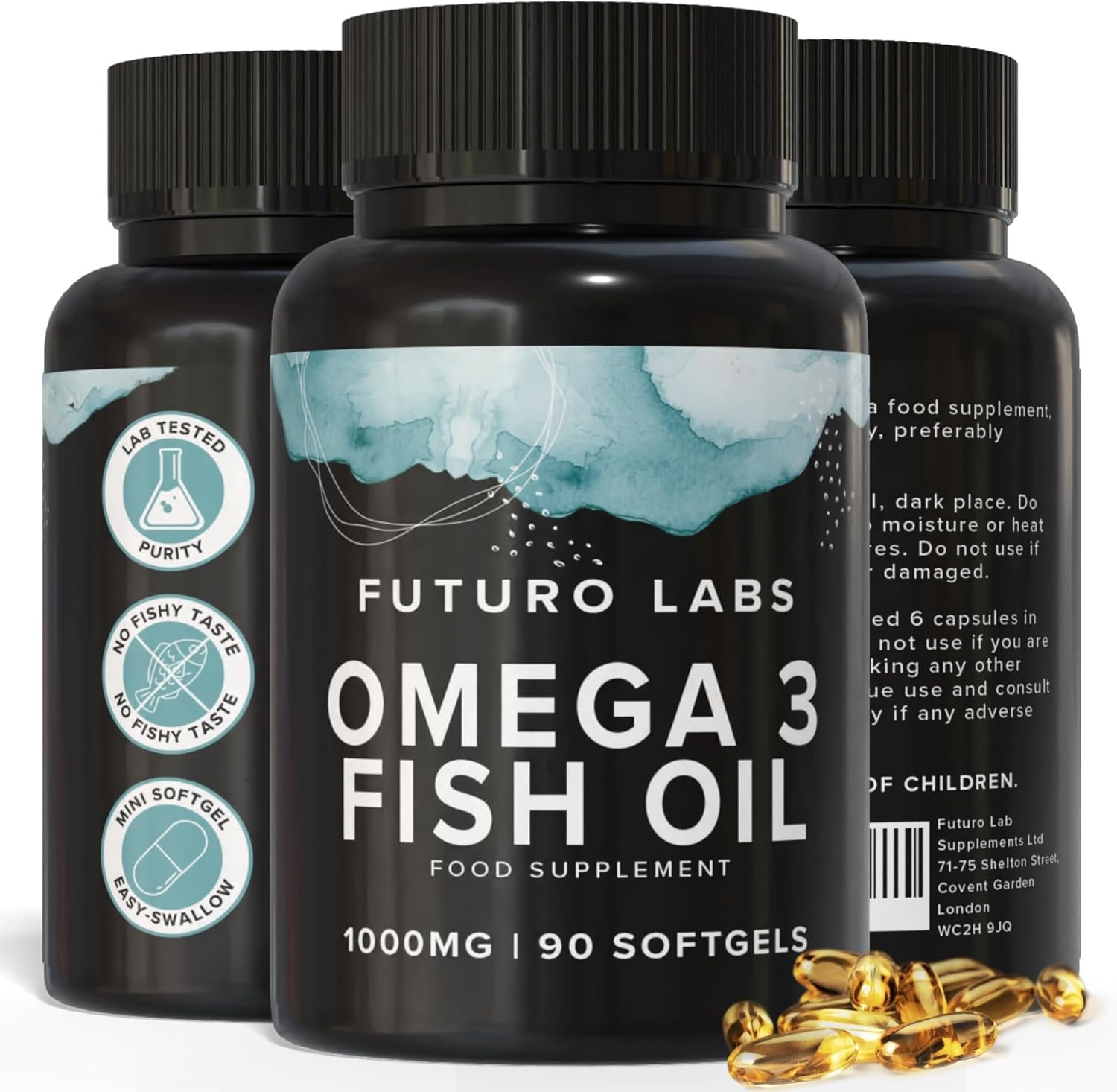
Futuro Labs Omega 3 Fish Oil
£14.99 for 90-day supply (90 softgels) · ~17p per day
Pros
- 1000mg fish oil per softgel — 180mg EPA + 120mg DHA stated
- Mini softgel, no fishy taste, lab tested
- 90-day supply at £14.99 (~17p/day), UK made
Cons
- Fish-derived, bovine-gelatin softgel — not vegan or vegetarian (algal DHA is that route)
- Ethyl-ester form — take with a meal; DHA brain/vision register claims need 250mg DHA daily, above the one-a-day serving
Available from: Amazon UK — £14.99
The edge cases — and the close
Completing the sort honestly: the white-fish plate — cod, haddock and kin are genuinely lower in EPA+DHA: healthy eating whose marine line still runs light, filing its owners with the intermittents; the pregnancy table — fish guidance changes shape in pregnancy (oily becomes a capped maximum, some species leave the menu) and the whole conversation routes professionally per that page's gate; and the fish-allergic — neither the counter nor this capsule serves you: fish is a major allergen, this is a fish product, and the algal door is the honest route. For the readers the sort lands on the capsule side: Futuro Labs Omega 3 does the gap-and-fishless job as built — 300mg EPA+DHA per softgel, the condition met at one, with a meal, ~17p across 90 days (the chemistry, the record). Gates as ever: pregnancy, nursing or any medication → doctor first per the label (the conversation). Do you need it if you eat fish, answered by the maths: covered plates don't, gap weeks do, fishless plates most of all — and a page that sorted you honestly either way.
Frequently asked questions
Do I need omega 3 supplements if I eat fish?
Run the honest maths: an oily-fish portion carries roughly 1-2g EPA+DHA — one salmon dinner banks several days of the 250mg everyday condition — so a plate genuinely hitting the widely followed two-portions-one-oily shape most weeks has its marine line covered and may not need this aisle at all. The capsule serves the gap weeks and the fishless plates; this page sorts which you are.
Which fish count, and how much is a portion?
The oily tier does the heavy lifting: salmon, mackerel, sardines, herring, trout — around 140g cooked as the standard portion, with tinned sardines and mackerel counting fully (the budget route the sort loves). White fish is genuinely lower in EPA+DHA: cod-and-haddock plates are healthy eating that still leaves the marine line light.
What about weeks I don't manage the oily portion?
That's the capsule's honest niche: gap-week coverage — the 250mg condition met on the weeks the plate missed, with nothing doubling on the weeks it didn't (fish dinners and a daily softgel coexist without arithmetic anxiety at these intakes). Consistent fish-eaters can even run the bottle as backup rather than routine.