Forms: The Gap Lives Where the Rule Already Forbids
The packaging matters most on the empty stomach this cluster's standing rule rules out — chemistry a real meal largely replicates for free.
At a glance
- The three forms: natural TG → ethyl ester (enables concentration) → optional re-esterified rTG
- The literature: TG absorbs better fasted · a real meal substantially narrows the gap
- The resolution: the with-food rule — chemistry a breakfast largely replicates for free
- Our position: EE, with-meal by design — stated plainly, priced accordingly
The three packagings — how one oil becomes three products
The forms debate starts with processing chemistry told straight: natural fish oil arrives as triglycerides — three fatty acids on a glycerol backbone, the fat structure food has always used; concentration requires conversion — enriching the EPA/DHA fraction via molecular distillation works on ethyl esters, so concentrated oils pass through (and often remain in) EE form: a single fatty acid bound to ethanol, pharmaceutically standard and the packaging behind most of the shelf including this label (the concentration page this pairs with); and some products spend again — re-esterifying back to triglyceride structure after concentration (rTG), restoring the food-native packaging at genuine extra processing cost: the premium form the debate's whole market runs on (its best-known advocate, reviewed).
The absorption literature — sized honestly, then resolved practically
What the comparative studies actually show, without either side's brochure: fasted, the forms separate — triglyceride oils absorb measurably better than ethyl esters on an empty stomach, a real and repeated finding the rTG premium legitimately cites; fed, the gap narrows substantially — a proper meal triggers the fat-digestion cascade (bile release, pancreatic lipases, micelle formation) that processes ethyl esters effectively, and fed-state comparisons show EE absorption rising toward — in several studies near — TG territory (that cascade's full page); and long-run status studies — where forms are compared over months at matched doses with food — show the tissue endpoint differences shrinking toward modest: the packaging matters most in exactly the state the standing rule already forbids. Which is the debate's practical resolution in one sentence: take any form with a real meal, and the form premium's benefit has largely been bought for free (the anchor habit).
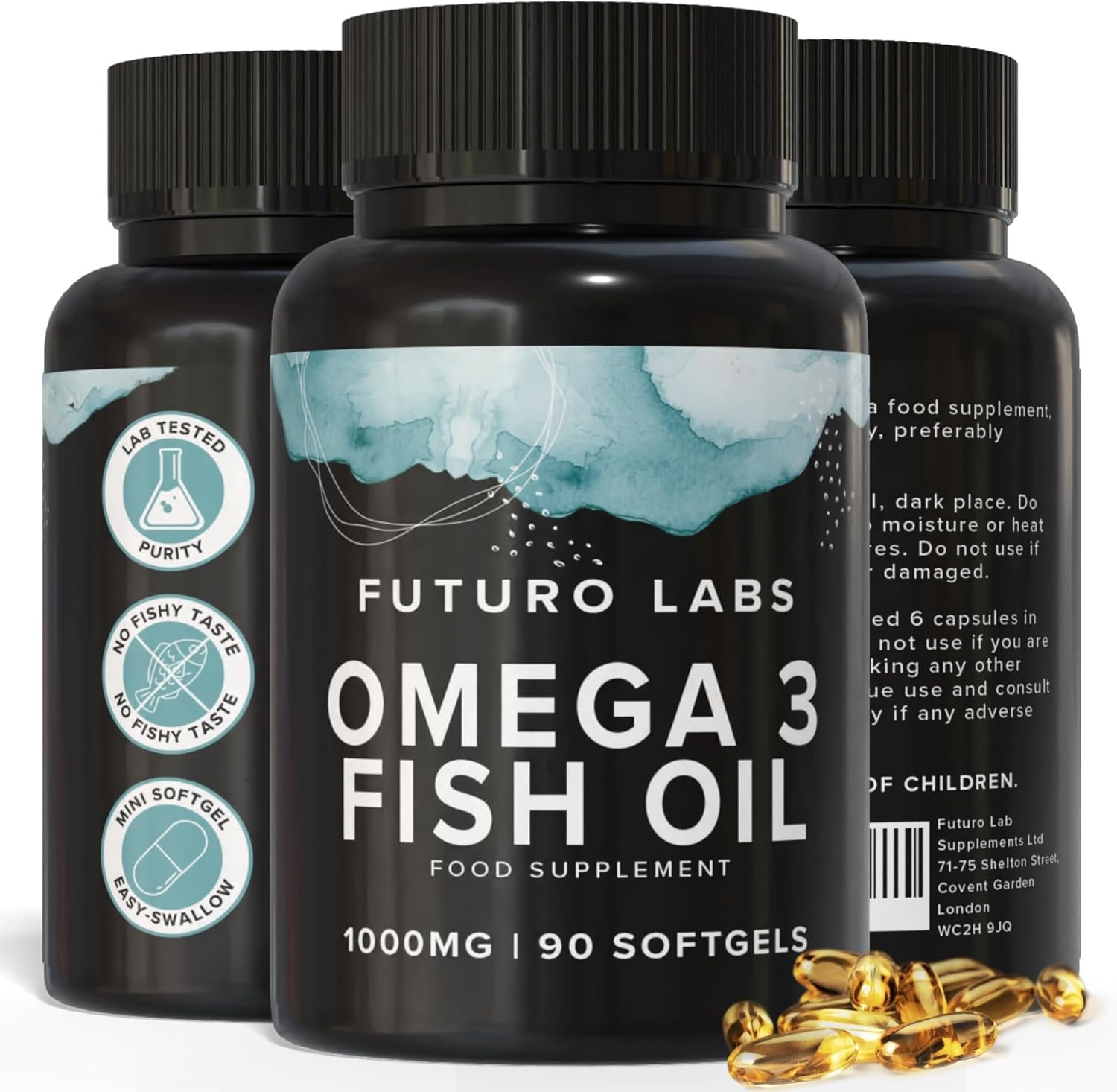
Futuro Labs Omega 3 Fish Oil
£14.99 for 90-day supply (90 softgels) · ~17p per day
Pros
- 1000mg fish oil per softgel — 180mg EPA + 120mg DHA stated
- Mini softgel, no fishy taste, lab tested
- 90-day supply at £14.99 (~17p/day), UK made
Cons
- Fish-derived, bovine-gelatin softgel — not vegan or vegetarian (algal DHA is that route)
- Ethyl-ester form — take with a meal; DHA brain/vision register claims need 250mg DHA daily, above the one-a-day serving
Available from: Amazon UK — £14.99
Our position, the honest rTG buyers, and the close
Where this label stands, stated the way this site states everything: Futuro Labs Omega 3 is an ethyl-ester product built around the fed-state resolution — the with-meal rule isn't a footnote here, it's the design: one softgel with a real plate, the cascade doing the form-gap's closing, 300mg of the pair delivered at ~17p, with the form disclosed on our own review rather than buried (the disclosure check). The rTG premium's honest customers, named without a strawman: the form-convinced — buying the fasted-state chemistry knowingly, as values purchases go; and the meal-unanchored — genuinely unable to pair capsules with food (shift patterns, appetite realities), for whom the structural fix is worth more because the behavioural one is unavailable. Constants across every ester: freshness the real war regardless of packaging (the war); the claims counting milligrams, never molecular forms (the ladder); gates as ever — pregnancy, nursing or any medication → doctor first per the label (the conversation). Triglyceride versus ethyl ester, closed at its real size: genuine chemistry, a fasted-state gap, and a breakfast that settles most of the argument before the premium gets asked for.
Frequently asked questions
What's the difference between triglyceride and ethyl ester fish oil?
The molecular packaging: natural fish oil arrives as triglycerides; concentration processing converts to ethyl esters (the form that enables distillation); some products re-esterify back to triglycerides afterwards (rTG) at extra cost. The absorption literature: TG forms absorb better fasted, and a real meal substantially narrows the gap — which is why the with-food rule is the debate's practical resolution.
Is ethyl ester fish oil worse?
Fasted, measurably; fed, modestly if at all — the meal-triggered fat-digestion cascade (bile, lipases, micelles) processes ethyl esters effectively, which is exactly why this cluster's with-meal rule exists and why our own EE product is built around it. The form premium buys chemistry a breakfast largely replicates.
Should I pay extra for rTG fish oil?
Two honest buyers: the form-convinced (paying for the fasted-state edge knowingly) and anyone who genuinely can't anchor capsules to meals (the fed-state fix unavailable makes the structural fix worth more). Everyone following the with-food rule is buying most of the benefit for free.