Timing: With Food Because Chemistry, Anchored Because Adherence
Meal-triggered digestion explained plainly — and the one folklore item individually retired: darkness doesn't rescue oxidising oil.
At a glance
- The answer: with your most reliable meal — anchor beats clock
- Why the meal matters here: ethyl-ester absorption is fat-dependent — with-food is chemistry
- The clock question: no morning-vs-evening file exists — folklore fills the silence
- Stacking: no choreography — one breakfast can carry the lot; medications gate separately
The rare timing page where 'with food' is doing real work
Most supplement timing advice is borrowed folklore; fish oil is the aisle's honest exception, and the mechanism deserves its paragraph: concentrated omega-3 oils — including the ethyl-ester form this product and most of the category use — show meaningfully better absorption taken alongside dietary fat, because the digestive machinery that processes them (bile release, enzymatic hydrolysis, micelle packaging) is meal-triggered: a softgel on an empty stomach meets a system that isn't running, while the same softgel beside eggs or yoghurt rides infrastructure a meal switched on (the dedicated mechanism page, the form debate this fact anchors). So the with-a-meal direction on the label is functional chemistry — and it quietly closes most of the practical gap the form debate argues about, which is why this cluster repeats it on every page: the meal is the method.
The clock question — folklore auditing, fish-oil edition
Morning versus evening gets the same audit every cluster here runs: the file is empty — no trial ties omega-3 outcomes to clock position, the tissue-loading model integrates weeks of daily intake and is indifferent to which hour any capsule lands (that clock), and the internet fills the silence with opposite-pointing rules ('morning for absorption', 'night for repair') whose mutual contradiction is the usual tell. The one folklore item worth individually retiring: bedtime dosing as a burp cure — it mostly relocates repeats to the small hours rather than removing them, because the actual variable is oil quality: purified, deodorised, fresh oil doesn't generate the problem, and oxidising bargain oil isn't rescued by darkness (the real fix-list, the freshness axis). The evidence-honest resolution is this site's standing one: anchor engineering — attach the softgel to the day's most reliable meal (breakfast for most; any proper meal works identically), because the pattern across months is the mechanism and the best time is definitionally the one your real life protects (the base-layer logic it serves).
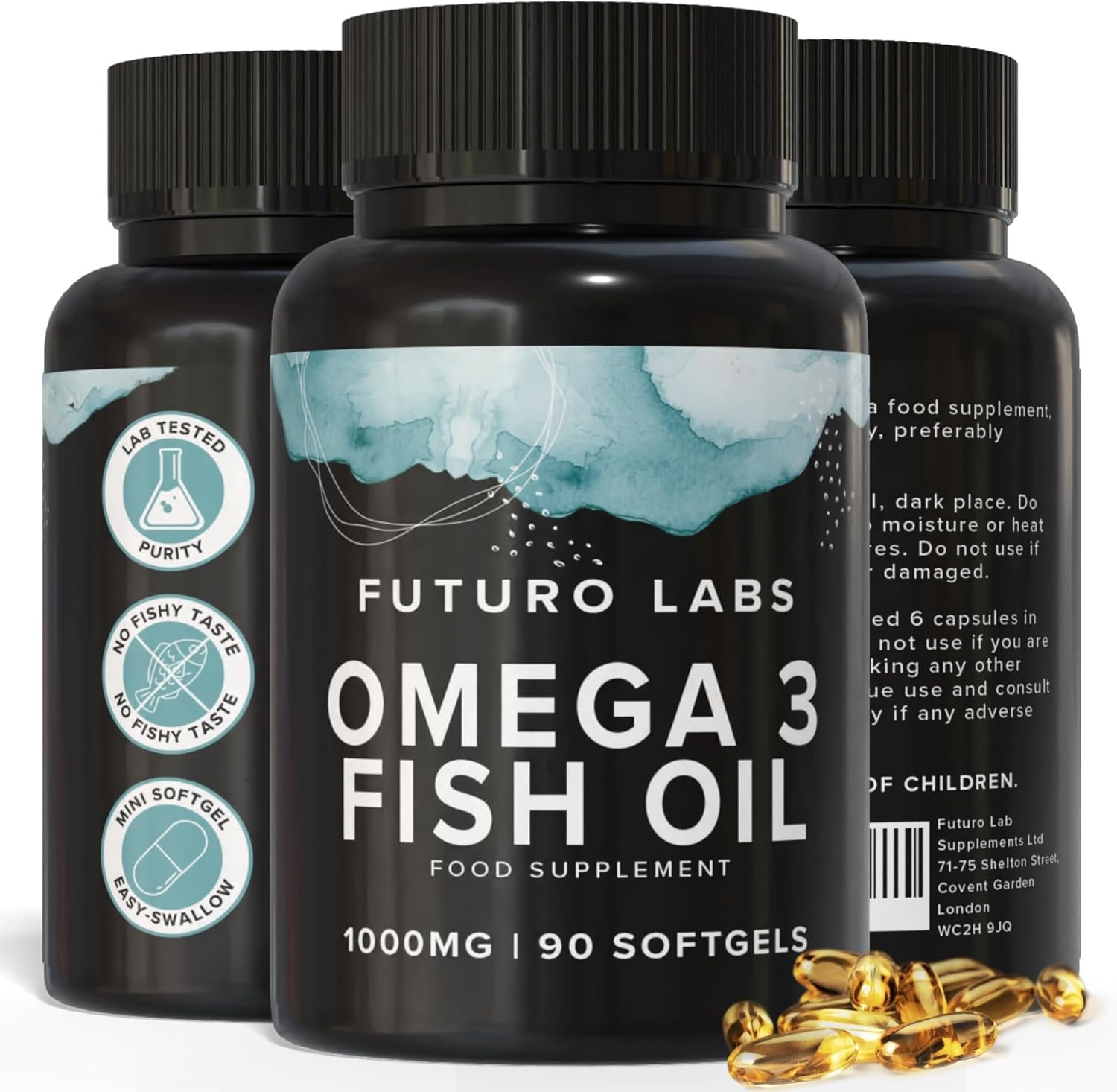
Futuro Labs Omega 3 Fish Oil
£14.99 for 90-day supply (90 softgels) · ~17p per day
Pros
- 1000mg fish oil per softgel — 180mg EPA + 120mg DHA stated
- Mini softgel, no fishy taste, lab tested
- 90-day supply at £14.99 (~17p/day), UK made
Cons
- Fish-derived, bovine-gelatin softgel — not vegan or vegetarian (algal DHA is that route)
- Ethyl-ester form — take with a meal; DHA brain/vision register claims need 250mg DHA daily, above the one-a-day serving
Available from: Amazon UK — £14.99
Stacking, travel, and the close
The residual logistics, settled at their honest sizes: the ordinary stack — no separation choreography applies: the omega softgel, a vitamin D, a multivitamin and the coffee can share one breakfast, and co-anchoring is the adherence-winning move rather than a compromise (the natural pairing's page — vitamin D being fat-soluble makes the shared fatty meal doubly sensible); the exceptions are medication-shaped — any prescription routes through the pharmacist minute before the first capsule per the label's own direction, with blood thinners the named classic (that page); missed days — resume, never double: a stores-style pattern forgives the odd gap and rewards the return (the same architecture every cluster here teaches); and travel — the anchor translates ('first proper meal wherever you wake'), and the bottle prefers shade to parked cars like every oil (the storage page to come). The product this page's answer was built around: Futuro Labs Omega 3 — one mini softgel with a meal, 300mg EPA+DHA, 90 days at £14.99 (~17p), the everyday claim's condition met on whichever plate anchors your day (the record). When to take omega 3, answered completely: with food because chemistry, at your anchor because adherence — and at no particular o'clock, because no file says otherwise.
Frequently asked questions
When is the best time to take omega 3?
With your most reliable meal — that's the complete evidence-honest answer, and for once the meal part is functional rather than folklore: concentrated fish-oil ethyl esters absorb meaningfully better alongside dietary fat, so 'with food' is doing chemistry, not ritual. Morning versus evening has no supporting file at all; anchor beats clock, as ever.
Does taking fish oil at night reduce burps?
The timing folklore's most popular claim, sized honestly: bedtime dosing mostly relocates repeats rather than removing them — the actual fix is oil quality (purified, deodorised, fresh) plus the with-meal habit. A good oil doesn't need hiding at midnight; a poor one isn't saved by it.
Can I take it with my other supplements and coffee?
Freely — no separation choreography applies to the ordinary stack: the softgel, a vitamin D, a multivitamin and the morning coffee can share one breakfast, and co-anchoring everything to the same meal is the adherence-winning move. The exceptions are medication-shaped, not supplement-shaped: any prescription routes through the pharmacist minute per the label.