Vitamin D: One Breakfast, Two Jobs, October's Cue
The mechanistically correct pairing — with body oil's D-free panel filed as a feature, not a gap.
At a glance
- The aisle's most natural pairing: both fat-soluble, one fatty breakfast, zero conflicts
- D's own case: real register entries + the widely followed autumn-winter 10mcg habit
- Body oil carries no D — deliberate dosing beats inherited bundles (and skips the retinol rider)
- The protocol: two capsules, one meal, October's calendar cue for the D
Why these two share a breakfast so well
Some supplement pairings are marketing; this one is chemistry: vitamin D and omega-3 are both fat-soluble — absorption for each rides the meal-triggered fat-processing cascade (bile, lipases, micelles) that this cluster's with-food pages map (the cascade) — making the shared fatty breakfast not a convenience but the mechanistically correct home for both: one meal switches on the machinery, two capsules ride it, and no interaction concerns exist between them at standard doses. The anchor logic completes it: co-anchoring to the day's most reliable meal is this site's standing adherence engineering (the timing page), and a two-capsule breakfast habit survives real life better than any staggered schedule ever written.
Vitamin D's own case — real entries and a national nudge
D earns its half of the pairing independently: the register holds genuine vitamin D sentences — contributions to the maintenance of normal bones, muscle function, and normal immune-system function among them — maintenance grammar as ever, and honestly D's to hold rather than omega's to borrow (the layers, applied fairly in both directions); and the habit has a national nudge behind it: UK latitude parks winter sun too low for meaningful skin synthesis roughly October through March, so widely followed guidance suggests adults consider 10 micrograms daily through autumn and winter — year-round for less-sun-exposed groups — the rare supplement pattern with that kind of institutional shape. The sourcing note that keeps this page in the family: body-oil fish oil carries no meaningful D (the vitamin concentrates in liver — cod liver oil's territory, retinol rider and all — that accounting), which this cluster files as a feature: dose D deliberately by season and need, rather than inheriting a bundle.
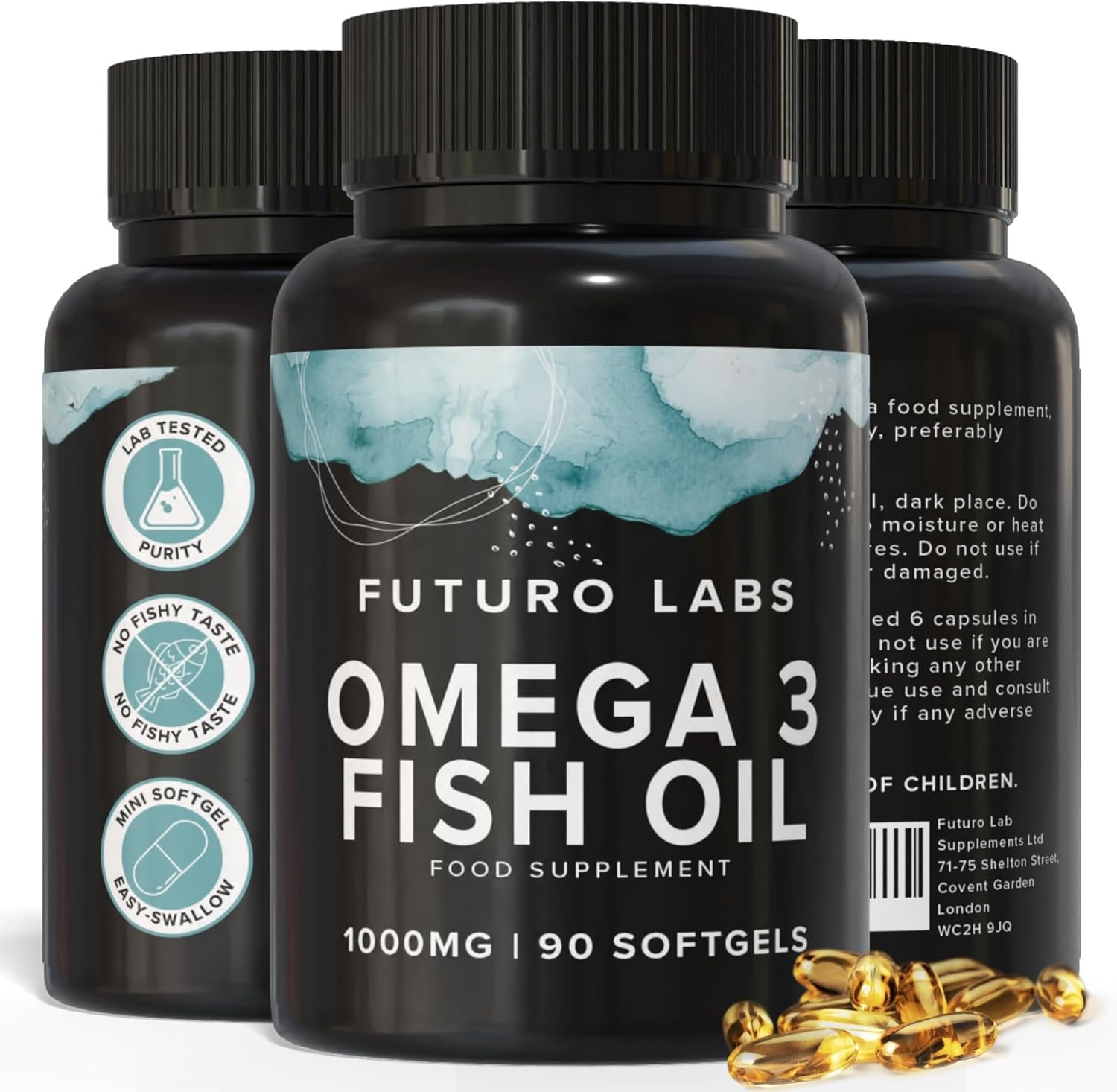
Futuro Labs Omega 3 Fish Oil
£14.99 for 90-day supply (90 softgels) · ~17p per day
Pros
- 1000mg fish oil per softgel — 180mg EPA + 120mg DHA stated
- Mini softgel, no fishy taste, lab tested
- 90-day supply at £14.99 (~17p/day), UK made
Cons
- Fish-derived, bovine-gelatin softgel — not vegan or vegetarian (algal DHA is that route)
- Ethyl-ester form — take with a meal; DHA brain/vision register claims need 250mg DHA daily, above the one-a-day serving
Available from: Amazon UK — £14.99
The protocol, the checks, and the close
The working routine, assembled: one Futuro Labs Omega 3 softgel plus one vitamin D (10mcg is the widely followed everyday shape) with the same real breakfast — the omega meeting its 250mg everyday condition at 300mg (the claim held), the D running its autumn-winter season with October's clock-change as a serviceable calendar cue, ~17p and pennies respectively, no choreography beyond eating first (the wider stack's same simplicity). The checks that keep it honest: D has genuine upper limits — more is not better, high-dose products deserve a reason and usually a professional conversation; anyone with kidney conditions, calcium disorders or on relevant medication routes D questions through their pharmacist or GP, and this product's own label routes all medication users to a doctor regardless (the standing gate, the label's words). Constants: the quiet clock on the omega side (the timeline), food-first on both (oily fish is one of D's few real food sources — the pairing exists in a sardine before any capsule). Omega 3 and vitamin D, closed: the aisle's most natural pairing — one breakfast, two jobs, and a calendar that tells you when the second capsule clocks on.
Frequently asked questions
Can I take omega 3 and vitamin D together?
Not just can — the pairing is the aisle's most natural: both fat-soluble, both best absorbed with a fatty meal, zero interaction concerns at standard doses, one shared breakfast serving both. Vitamin D even brings its own register entries (bones, muscle function, immune-system contributions) and its own widely followed UK autumn-winter habit.
Why does the UK advise vitamin D in autumn and winter?
Latitude: UK winter sun sits too low for meaningful skin synthesis roughly October through March, so widely followed guidance suggests adults consider 10 micrograms daily through those months (year-round for some groups). It's the rare supplement habit with a national nudge behind it — and it shares the omega capsule's breakfast perfectly.
Doesn't fish oil already contain vitamin D?
Body oils like ours: no meaningful amount — vitamin D concentrates in fish liver, so cod liver oil carries it while flesh-pressed body oils don't. That separation is a feature: dose your D deliberately by season and need rather than inheriting whatever a liver oil bundles (with its retinol rider attached).