Skin: A Covered Gap Looks Normal, Not Better
The marketing layer filed on sight, SPF crowned again — and the one supplement skin file that exists pointed to next door.
At a glance
- No skin claims exist — no glow, hydration or ageing sentences at any dose
- The honest biology: deficiency-shaped — frank EFA deficiency dries skin, and is rare
- Eczema/acne: mixed-thin research contexts — GP-led pathways, not promises
- Skin's real file: SPF · not smoking · retinoids — and collagen's bounded trials next aisle
The register read — and the biology at its honest size
Skin searches meet the standard opening: no authorised UK claims connect omega 3 to skin — no glow, hydration, clarity, elasticity or anti-ageing sentences at any dose — which files every 'skin-loving fatty acids' listing under the marketing layer immediately (the sort). The biology that survives, sized honestly: essential fats are structural throughout the body, skin membranes included, and frank essential-fatty-acid deficiency genuinely produces dry, flaky, fragile skin — a real mechanism with a limiting fact attached: such deficiency is rare on any remotely normal diet, making it an explanation for clinical states rather than a lever for cosmetic ones. Adequacy is the whole game — the base-layer logic this cluster runs everywhere (the family) — and adequacy doesn't glow: a covered gap looks like normal skin, not better skin.
The condition contexts — routed, not promised
The two research territories skin searches often mean: eczema — a real trial tradition with mixed-to-modest results and no mainstream guideline positioning fish oil in management: atopic skin belongs with GP-led care, emollient routines and evidence-based treatment ladders, where actual relief lives (and where any supplement question can be asked of the professional running the plan); and acne — a thin, inconclusive literature that supports curiosity and nothing else: acne care has real pathways (pharmacist first-line, GP escalation) that no softgel joins. The cross-aisle honesty this site can uniquely offer: the skin trial file that does exist in supplements lives next door — marine collagen's hydration-and-elasticity RCT record, bounded and un-glamorised on its own pages (that file, the pairing page for readers eyeing both) — a referral this page makes precisely because omega's own skin case can't carry the traffic honestly.
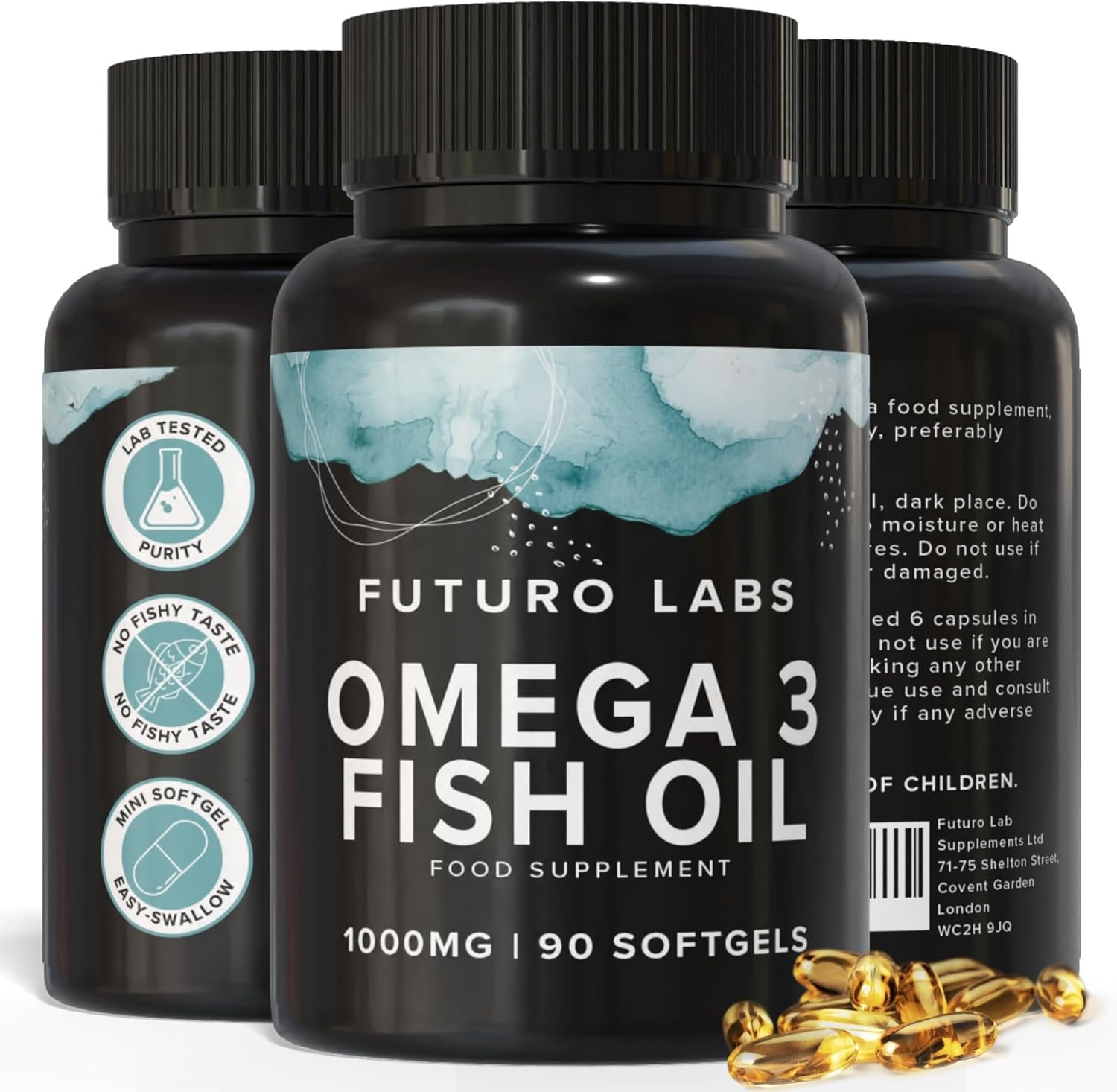
Futuro Labs Omega 3 Fish Oil
£14.99 for 90-day supply (90 softgels) · ~17p per day
Pros
- 1000mg fish oil per softgel — 180mg EPA + 120mg DHA stated
- Mini softgel, no fishy taste, lab tested
- 90-day supply at £14.99 (~17p/day), UK made
Cons
- Fish-derived, bovine-gelatin softgel — not vegan or vegetarian (algal DHA is that route)
- Ethyl-ester form — take with a meal; DHA brain/vision register claims need 250mg DHA daily, above the one-a-day serving
Available from: Amazon UK — £14.99
Skin's real canon — and the close
What dermatology would put on this page instead: daily SPF — the single best-evidenced skin intervention in existence, the line this site prints on every skin-adjacent page across every cluster, photoageing's one real brake; not smoking — among the largest modifiable skin-ageing factors; the boring routine — gentle cleansing, consistent moisturising, patience; targeted actives with files — retinoids above all for photoageing, chosen with pharmacist or GP guidance; and professional routing — anything diagnosed, spreading, or worrying goes to the GP, with mole changes on the urgent track always. The capsule's seat, unchanged by the aisle: Futuro Labs Omega 3 as the essential-fat base layer — 300mg EPA+DHA with a meal at ~17p, the heart condition met at one softgel (the sentence held), quiet on its months clock (the timeline) — bought for coverage while SPF does the skin's actual work. Gates as ever: pregnancy, nursing or any medication → doctor first per the label (the conversation). Omega 3 for skin, honestly: no claims, rare-deficiency biology, routed conditions — and the best skin product on this page costing whatever sunscreen does.
Frequently asked questions
Is omega 3 good for skin?
No authorised skin claims exist for omega 3 — no glow, hydration, clarity or anti-ageing sentences at any dose — and the general-population trial file is thin: the honest skin story is deficiency-shaped (frank essential-fat deficiency causes dry, flaky skin, and is rare on any normal diet) plus a mixed eczema research context that belongs with GP-led care. The best-evidenced skin product remains SPF.
What about omega 3 for eczema or acne?
Research contexts, honestly sized: eczema trials are mixed-to-modest with no guideline endorsement — management belongs with GP-led care and evidence-based treatment; the acne literature is thin and inconclusive. Neither supports aisle-level promises, and both conditions deserve professional pathways over supplement experiments.
What actually improves skin?
The dermatology-endorsed short list: daily SPF (the single best-evidenced intervention on any skin page), not smoking, gentle consistent cleansing and moisturising, and targeted actives with real files — retinoids for photoageing being the standout — plus GP or pharmacist routing for anything diagnosed. The collagen aisle holds this site's actual skin trial file, honestly bounded on its own pages.