Sea Moss vs Spirulina vs Multivitamin: Nutrient Density Compared
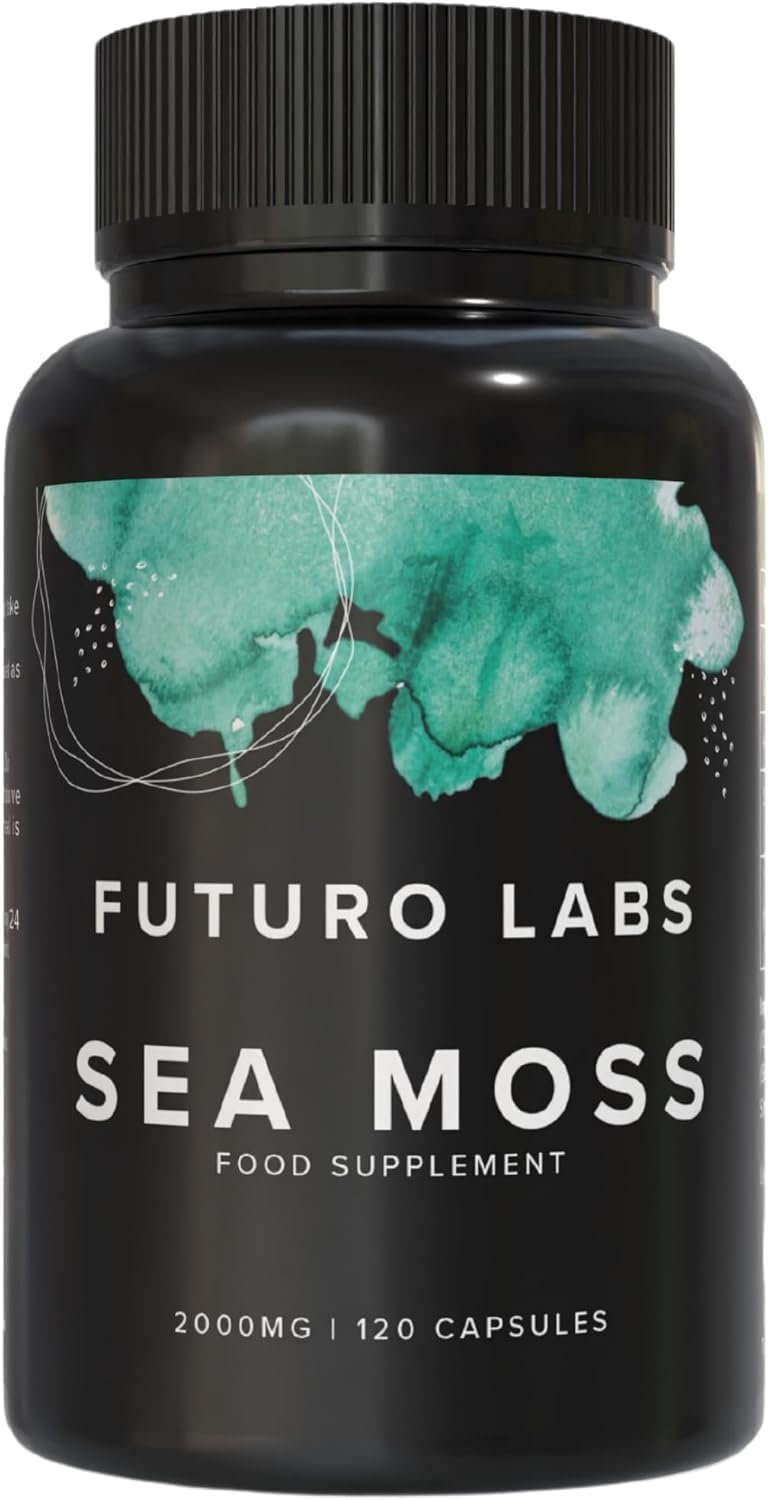
All three get sold as cover-everything products, and none of them is. Here is the honest job description for each — iodine and minerals, protein and pigments, precision vitamin doses — and how to pick by the gap you actually have.
At a glance
- Sea moss: iodine + trace minerals — Futuro Labs, £9.99 / 60 days
- Spirulina: dense protein + pigments, negligible iodine
- Multivitamin: precision doses of the vitamins seaweed doesn't carry
- Verdict: pick by the gap, not the hype — they do different jobs
Three products, three different jobs
This comparison only confuses people because all three get marketed as "cover everything" products. They don't. Sea moss — cold-water red algae, Chondrus crispus — is fundamentally an iodine and trace-mineral source, anchored by iodine's authorised claims (normal thyroid hormone production, normal energy-yielding metabolism, normal cognitive function). Spirulina is a cyanobacterium and one of the densest whole-food protein sources on the shelf, with its signature pigment phycocyanin — and almost no iodine. A multivitamin is not a food at all but an instrument: guaranteed milligram-and-microgram doses of vitamins D, B12, C, folate and friends — precisely the nutrients seaweed and algae cannot promise. Map your gap first, then shop.
Futuro Labs Sea Moss
£9.99 for 60-day supply (120 capsules) · under 17p per day
Pros
- North Atlantic wildcrafted Chondrus crispus — not pool-grown
- 15:1 extract = 2000mg raw sea moss equivalent per serving
- 60-day supply at £9.99 — under 17p per day
- Single-ingredient, vegan, no fillers
- UK GMP manufactured, independently lab tested
Cons
- Capsule format — traditionalists may prefer gel
- Extract rather than whole dried seaweed
Available from: Amazon UK — £9.99
Head-to-head
| Sea moss (Futuro Labs) | Spirulina | Multivitamin | |
|---|---|---|---|
| Core offer | Iodine + trace minerals | Protein + pigments | Precision vitamin doses |
| Authorised-claim anchor | Iodine (thyroid, energy metabolism) | None specific | Per included nutrient |
| Iodine | Natural source (varies by harvest) | Negligible | Stated dose if included |
| Vitamin D / B12 coverage | No | No (B12 analogues inactive) | Yes, stated |
| Cost/day | ~17p | 20-40p | 5-20p |
| Best for | Low-iodine diets, mineral base | Protein-dense whole food | Guaranteed baseline coverage |
One spirulina footnote worth knowing: its "B12" is largely pseudo-B12 analogues the human body can't use, so vegans should never count it as a B12 source. And one sea moss footnote repeated from our main guide: the "92 minerals" line is folklore, and Futuro Labs doesn't trade on it — 2000mg raw Irish sea moss equivalent per serving, £9.99 for 60 days, claims kept to what the register allows.
Where chlorella and greens powders fit
Two adjacent shelves complete the picture. Chlorella is spirulina's freshwater cousin — another dense green microalga, similar protein story, similarly negligible iodine, with a cell wall that needs "cracking" during processing to be digestible; treat it as a spirulina alternative rather than a sea moss one. Greens powders bundle a spoonful of everything — grasses, algae, fruit extracts, often a vitamin sprinkle — which makes them pleasant insurance and poor instruments: per-ingredient doses are usually too small to matter and too opaque to evaluate. The pattern across all of it holds: name the gap first. Low-iodine diet — sea moss, and Futuro Labs Sea Moss is the named-species, tested way to do it at 17p a day. Protein-dense whole food — spirulina or chlorella. Guaranteed vitamin baseline — a multivitamin. General enthusiasm — a greens powder, eyes open.
Frequently asked questions
Sea moss vs spirulina — which is better?
Different tools. Sea moss (red seaweed, Chondrus crispus) is the iodine-and-trace-minerals play — iodine contributes to normal thyroid hormone production and energy-yielding metabolism. Spirulina (a blue-green cyanobacterium) is a dense protein-and-pigment food with strong general-nutrition credentials but negligible iodine. Choose by the gap you're filling; they are not interchangeable.
Can sea moss replace a multivitamin?
No — and honest brands say so. The '92 minerals' framing implies multivitamin coverage, but most of those minerals appear at nutritionally trivial levels, and sea moss carries little of the vitamin content (D, B12, folate, C) a multivitamin exists to guarantee at stated doses. Sea moss is a whole-food iodine and trace-mineral source; a multivitamin is a precision-dose instrument. Different jobs.
Should I take sea moss and spirulina together?
You can — there is no known adverse interaction at label doses, and the profiles barely overlap (iodine and trace minerals versus protein and pigments). The usual discipline applies: add one at a time over 8-12 weeks so you can attribute anything you notice, and keep total iodine to one source.
Filling the iodine-and-minerals gap?
Futuro Labs Sea Moss — wildcrafted Chondrus crispus, 15:1 extract. £9.99 for 60 days.
Shop on Amazon UK