Sea Moss: The Job Description, Written Honestly
Strip the noise and the map is clean: maintenance-of-normal territory, the constituency whose diets under-supply it, margin-not-rescue for everyone else — and edges patrolled by explicit refusals.
At a glance
- The real job: whole-food iodine + trace-mineral contribution — nothing grander, nothing less
- The legitimate territory: iodine's authorised claim set — thyroid, cognition, metabolism, nerves, skin
- Best-fit users: the dietary gap-fillers — fish-free, dairy-light, plant-based patterns
- The refusals: no detox, no mucus lore, no transformations — the map's edges patrolled
The job description, written honestly
Strip the category's noise and sea moss has one real job: contributing iodine and trace minerals as a whole food — a measured daily serving adding to your baseline the way regular white fish or dairy would, inside the UK frame of ~140mcg need and 500mcg ceiling (the frame's page). The legitimate benefit territory is therefore iodine's authorised territory, and it's genuinely substantial: contribution to normal thyroid function and normal thyroid hormone production, normal cognitive function, normal energy-yielding metabolism, normal nervous-system function, and maintenance of normal skin — the claim set that makes adequate iodine quietly foundational rather than glamorous. Read those claims for what they are: maintenance-of-normal language, the biology of not-lacking — which is exactly what a nutritional contributor can honestly offer, and exactly what the transformation-sellers can't say in regulated words (the three-layer spine).
Who the map actually serves — the gap logic
Benefit follows gap, so the best-fit list writes itself from the UK's supply picture: fish does the heaviest national iodine carrying, dairy and eggs next, iodised salt barely (UK salt mostly isn't) — leaving the fish-free, the dairy-light and the fully plant-based doing least well, and making them sea moss's honest constituency: a measured serving addresses territory their week genuinely under-supplies (that page, the vegan angle — with the B12 myth flagged for its own retirement). The already-supplied — heavy fish-and-dairy eaters — get margin rather than rescue, which is fine and worth knowing before purchase. And the whole-food-preference crowd across both camps get the format's honest appeal: minerals via a food matrix at 17p rather than isolated tablets, a preference this site respects without overselling (that comparison when it lands).
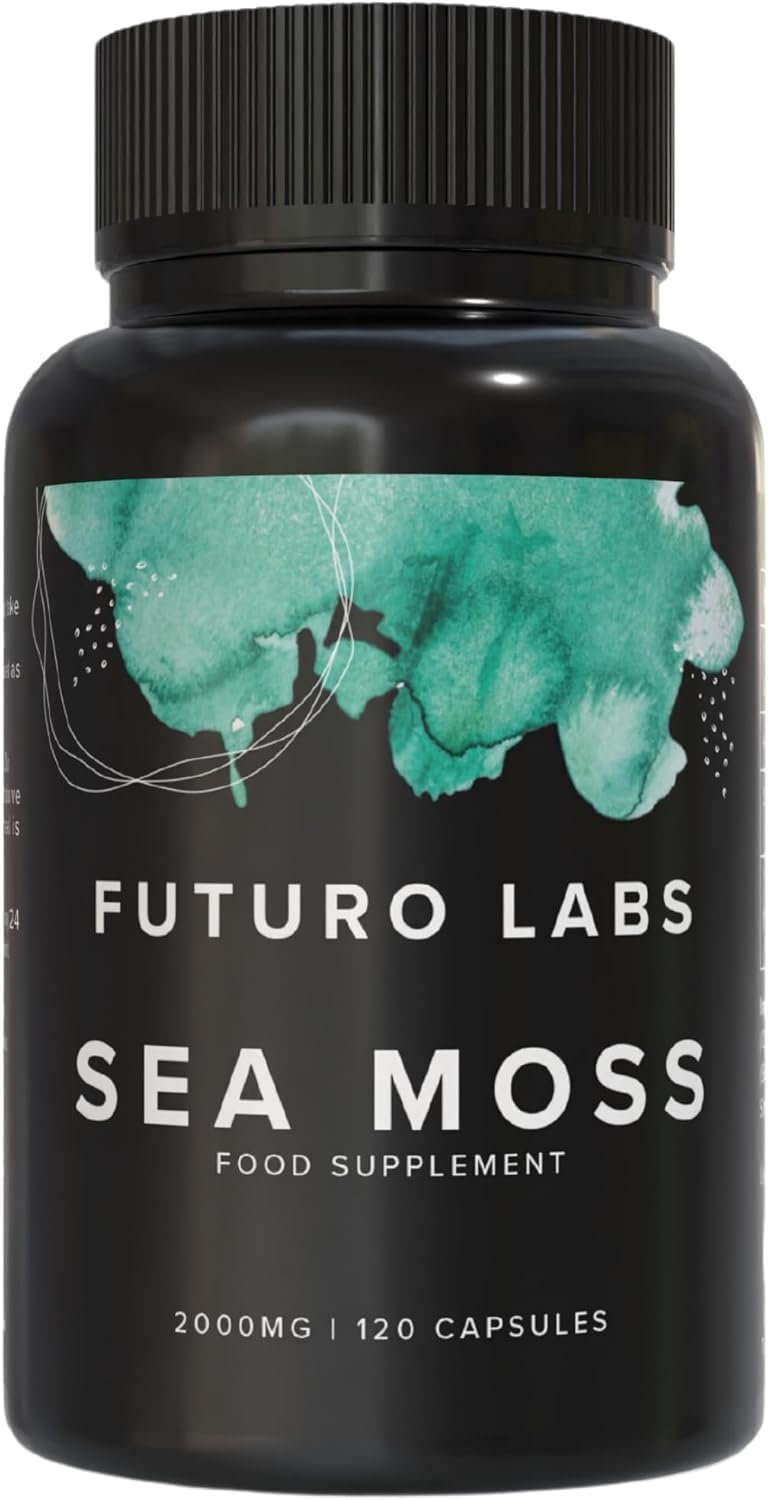
Futuro Labs Sea Moss
£9.99 for 60-day supply (120 capsules) · under 17p per day
Pros
- 2000mg raw sea moss equivalent per serving (15:1 extract)
- Wildcrafted North Atlantic Chondrus crispus — named species and origin
- Independently lab tested — heavy metals and microbiology
- Single-ingredient vegan capsules, UK GMP made
- 60-day supply £9.99 — under 17p/day
Cons
- Iodine content varies by harvest — not for precise-dose needs
- Young brand next to high-street names
Available from: Amazon UK — £9.99
The map's edges — refusals that keep it trustworthy
A benefits page earns trust by its refusals, so the edges get patrolled explicitly: sea moss doesn't detox — livers and kidneys do, uninstructed by seaweed, and 'detox symptoms' is discomfort rebranded (retired on its page); doesn't dissolve mucus — the lore examined honestly; doesn't drive weight loss, fix fertility or power libido beyond what correcting a genuine deficiency corrects (the truth pages handle each); isn't a vegan B12 source; and never replaces thyroid treatment or any medication — the gates stand at every entrance: thyroid conditions and medication, pregnancy, precision needs all route professional-first (the routing). What remains inside the patrolled edges is the honest purchase: a tested, measured, 17p-a-day whole-food contributor to territory your diet may under-supply — judged like all dietary support over 8-12 consistent weeks (the clock), and worth exactly that.
Frequently asked questions
What is sea moss actually good for?
The honest map: its real job is nutritional — a whole-food iodine and trace-mineral contributor, with iodine's authorised claims defining the legitimate territory (normal thyroid function and hormone production, cognitive function, energy-yielding metabolism, nervous system, skin); its best-fit users are the ones whose diets under-supply that territory (fish-free, dairy-light, plant-based patterns); and its traditional uses are heritage worth respecting as food culture. Everything beyond that map — detox, mucus, dramatic transformations — is the marketing layer this cluster declines.
Who benefits most from sea moss?
The gap-fillers: people whose weekly iodine carriers are thin — no fish, little dairy, no iodised salt — for whom a measured serving addresses a genuine shortfall territory; plus the whole-food-preference crowd who'd rather contribute minerals via a food matrix than isolated tablets. Heavy fish-and-dairy eaters are usually already supplied; for them sea moss adds margin, not rescue.
What does sea moss NOT do?
The refusals that keep the map honest: it doesn't detox anything (organs do that), doesn't dissolve mucus, doesn't drive weight loss, isn't a B12 solution for vegans (that myth has its own page), and doesn't replace thyroid treatment or any medication. It contributes nutrients; the body does everything else — and brands promising more have left the map.
Buying the map, not the noise?
Futuro Labs Sea Moss — measured contribution, 17p. £9.99.
Shop on Amazon UK