Does Sea Moss Work? The Three-Layer Answer
Sea moss earns its place through nutrition, not magic — and the category mostly sells the reverse. The established layer given full credit, tradition framed honestly, the memes refused, and the adult judging protocol.
At a glance
- Three layers: established (iodine's claim set) · traditional (heritage food) · marketing (declined)
- The direct trial file: thin — the honest case is nutritional, not herbal
- The judge: 8-12 weeks, one serving, dietary-support expectations
- The gate: thyroid conditions and medication → GP/pharmacist first, every time
Layer one — what's actually established
Sea moss earns its shelf place through nutrition, not magic: Chondrus crispus is a genuine whole-food source of iodine — the mineral with one of the strongest authorised claim sets in UK regulation: contribution to normal thyroid function and normal production of thyroid hormones, normal cognitive function, normal energy-yielding metabolism, normal functioning of the nervous system, and maintenance of normal skin — alongside trace minerals a seaweed accumulates from its water. That's the established layer, and it's genuinely substantial: iodine matters, UK intakes are patchy (fish and dairy do most of the carrying — the content page maps it), and a measured sea moss serving is a legitimate contributor. The immediate caveat the whole cluster carries: iodine is a both-directions mineral — too little and too much each disturb thyroid function — which is why the dose discipline and the professional-first gates below aren't small print.
Layers two and three — tradition respected, marketing declined
The traditional layer deserves its honest frame: generations of Caribbean and Irish use as a nourishing food — boiled into drinks and gels, valued through scarcity and recovery — is real heritage worth respecting as food culture (the two traditions), and it is not a trial record; tradition tells you something was valued, not what it measurably did. The marketing layer is where this cluster does its refusing: the 92-minerals meme (audited on its own page), mucus-dissolving and detox lore, weight-loss and libido promises — each gets the honest treatment where its page lands, and none survives contact with the evidence standard the established layer meets easily. A brand's relationship with layer three is the fastest character read in the category: the ones still selling the meme have told you how they'll handle everything else.
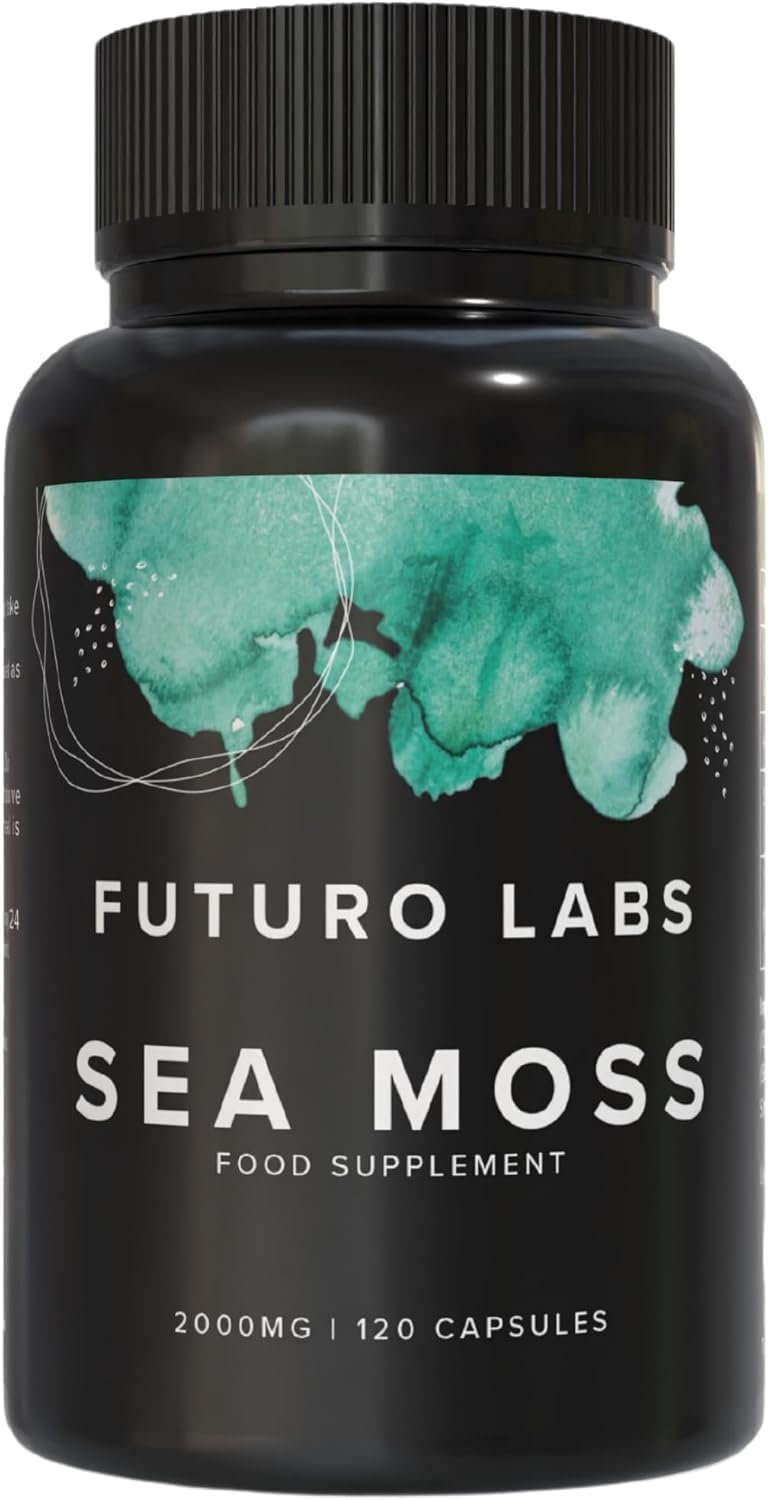
Futuro Labs Sea Moss
£9.99 for 60-day supply (120 capsules) · under 17p per day
Pros
- 2000mg raw sea moss equivalent per serving (15:1 extract)
- Wildcrafted North Atlantic Chondrus crispus — named species and origin
- Independently lab tested — heavy metals and microbiology
- Single-ingredient vegan capsules, UK GMP made
- 60-day supply £9.99 — under 17p/day
Cons
- Iodine content varies by harvest — not for precise-dose needs
- Young brand next to high-street names
Available from: Amazon UK — £9.99
Judging it like an adult — the protocol and the gates
The honest expectation-setting: sea moss is dietary support, so the judge is a nutrient clock, not an event horizon — one serving daily with food (Futuro Labs' 2000mg raw-equivalent via 15:1 extract, £9.99/60 days), 8-12 weeks before any verdict (the timeline page), expectations sized to what iodine-adequacy covers: normal function maintained, not transformation delivered — and standing scepticism toward any felt-in-days promise, which is layer-three marketing wearing layer-one's coat. The gates before any of it: anyone with a thyroid condition, on thyroid medication, or pregnant or breastfeeding routes through GP, pharmacist or midwife before the first capsule (the medication page and the safety file hold the full detail); and the one-product rule holds for everyone — a single sea moss format at label dose, never stacked with kelp or additional formats, because iodine adds up across sources. That's the whole honest answer: real nutrition, real rules, no magic — and a category that mostly sells the reverse.
Frequently asked questions
Does sea moss actually do anything?
Three honest layers: what's established — sea moss (Chondrus crispus) is a genuine whole-food source of iodine and trace minerals, and iodine holds real authorised claims (normal thyroid function, thyroid hormone production, cognitive function, energy-yielding metabolism, nervous system, skin); what's traditional — generations of Caribbean and Irish use as a nourishing food, respectable as heritage, unaudited as trials; what's marketing — the 92-minerals meme, mucus-dissolving, detox and libido lore, which this cluster declines page by page. The supplement case rests on layer one.
Is there clinical research on sea moss supplements?
Very little directly: Chondrus crispus itself has scattered small studies and in-vitro work, nothing at the scale that settles supplement questions — which is why honest sea moss content leans on its iodine and mineral contribution (where the nutrient science is solid) rather than on herb-level trial claims it doesn't have. Brands citing 'studies show' for sea moss specifically are usually citing iodine's biology or nothing.
How should I judge if sea moss is working for me?
As dietary support on a nutrient clock: 8-12 weeks at one label-dose serving daily, judged against what iodine-adequacy territory actually covers (steady energy and normal function, not events), with scepticism owed to any felt-in-days promise. The thyroid caveats come first for anyone they touch: GP or pharmacist before starting with any thyroid condition or medication.