Sea Moss vs Kelp: Moderate Band vs Strong Tool
An unusually clean comparison because one axis dominates. The daily verdict and its reason, the absolute stacking rule, and the wider ledger both seaweeds answer to.
At a glance
- The one-line difference: iodine concentration — kelp extreme, sea moss moderate
- The daily verdict: sea moss — the margin suits the contributor role
- The absolute rule: never both — iodine counts across all sources
- Kelp's honest lane: guided use or occasional food, not an unguided daily capsule
Two seaweeds, one axis that decides everything
Sea moss versus kelp is a comparison with an unusually clean answer, because one axis dominates: iodine concentration. Kelp — the brown Laminaria/Ascophyllum family — is the ocean's iodine accumulator par excellence: content per gram runs far beyond Chondrus crispus, high enough that a single enthusiastic serving of some kelp products can clear the UK's 500mcg daily ceiling on its own, which is why kelp supplements own most of the seaweed world's excess-iodine case reports and why 'natural iodine source' reads very differently across the two labels. Sea moss sits in the moderate band — meaningful contribution inside the ~140mcg-need frame without the single-serving overshoot risk (the frame's page) — and that margin, not any mineral romance, is the entire daily-use verdict.
The verdict by role — daily contributor vs targeted tool
Cast the two properly and the comparison resolves: the daily-contributor role — a measured serving joining your baseline for months, forgiving of diet-day variation, safe alongside a normal fish-and-dairy week — belongs to the moderate-band species: sea moss's job description as the honest map writes it, with variability printed and the 8-12 week clock attached (that page). The targeted-tool role — a deliberately strong iodine contribution in a professionally guided situation — is kelp's honest lane, alongside its blameless life as occasional food (kelp in miso soup is dinner, not dosing). What has no lane: kelp as an unguided daily capsule habit, where the concentration that makes it a tool makes it the category's genuine overdose route — both-directions thyroid disturbance included (the serious lever).
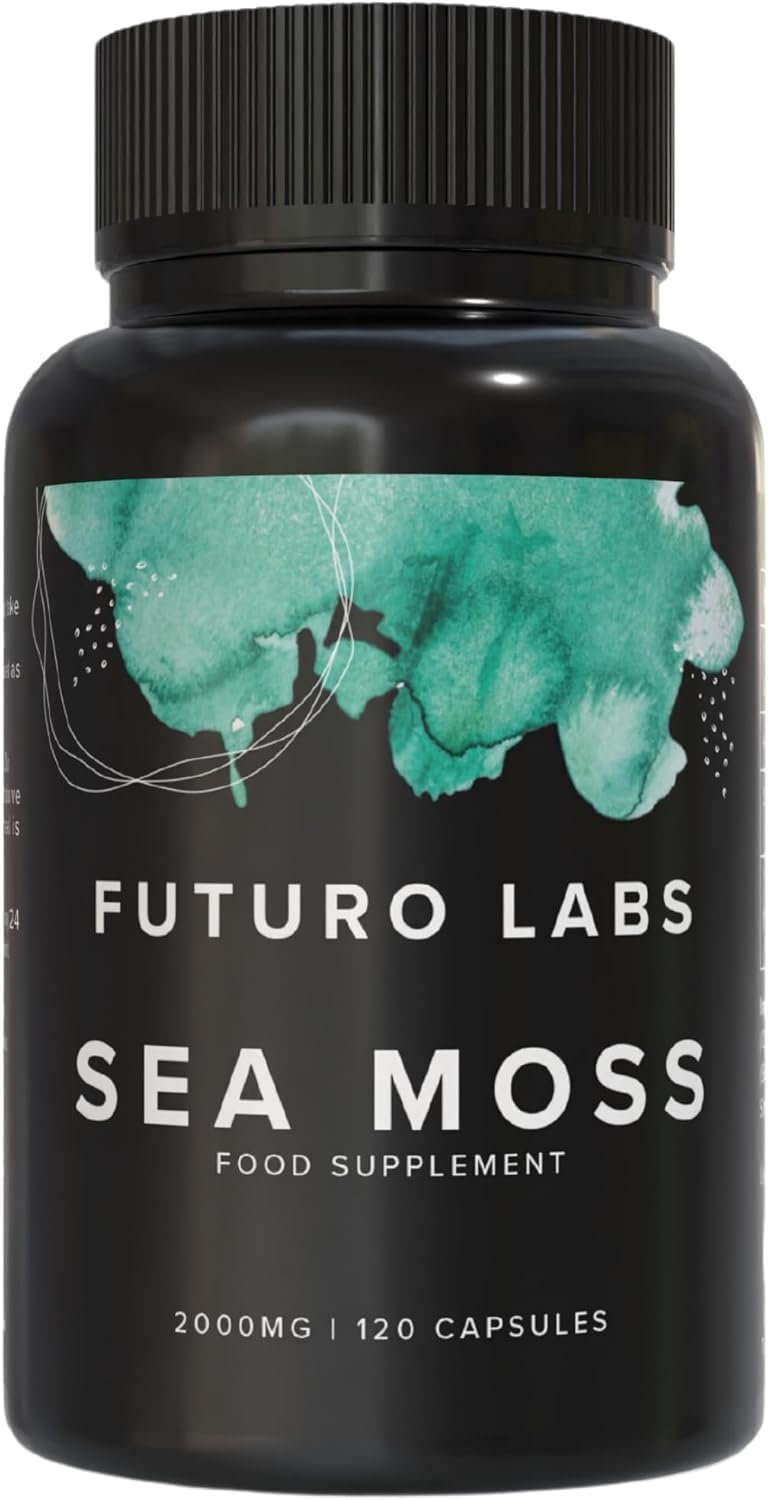
Futuro Labs Sea Moss
£9.99 for 60-day supply (120 capsules) · under 17p per day
Pros
- 2000mg raw sea moss equivalent per serving (15:1 extract)
- Wildcrafted North Atlantic Chondrus crispus — named species and origin
- Independently lab tested — heavy metals and microbiology
- Single-ingredient vegan capsules, UK GMP made
- 60-day supply £9.99 — under 17p/day
Cons
- Iodine content varies by harvest — not for precise-dose needs
- Young brand next to high-street names
Available from: Amazon UK — £9.99
The stacking rule — and the wider iodine ledger
The paragraph this comparison exists to deliver: never both. Iodine counts across all sources against one ceiling, kelp arrives already near it, and sea-moss-plus-kelp — or sea moss plus iodine tablets, plus iodised multivitamins, plus a second sea moss format — is arithmetic against your own thyroid dressed as wellness enthusiasm; one seaweed product at label dose is the whole permitted structure (the daily architecture). The wider ledger for completeness: your fish-and-dairy week already contributes (count it mentally), the gates stand regardless of species — thyroid conditions, thyroid medication and pregnancy route professional-first for kelp even more urgently than for sea moss (the routing) — and anyone needing precise micrograms needs the standardised supplement neither seaweed is. The closing cast list: sea moss the daily food, kelp the strong tool, and the ceiling the thing both answer to.
Frequently asked questions
Sea moss or kelp — which is better?
For daily use, sea moss — and the reason is the safety margin, not superiority: kelp species concentrate iodine to levels that can exceed the 500mcg daily ceiling in a single serving, making it the seaweed behind most excess-iodine case reports, while Chondrus crispus sits in a moderate band that suits the daily-contributor role. Kelp isn't bad; it's strong — a targeted tool where sea moss is a daily food.
Can you take sea moss and kelp together?
No — this is the cluster's hardest stacking rule: both contribute iodine, kelp contributes a lot, and combining them is arithmetic against your own thyroid inside a 500mcg ceiling that counts all sources. One seaweed product, label dose. The same rule covers sea moss plus iodine tablets, iodised multivitamins stacked on top, or multiple sea moss formats run together.
Is kelp ever the right choice?
In its lane: professionally guided situations where a stronger iodine contribution is deliberately wanted, or simply as an occasional food (kelp in miso or salads is eating, not supplementing). As an unguided daily capsule habit it carries the category's real overdose risk — which is exactly why the moderate-band species owns the daily role.