Sea Moss Side Effects: One Serious Lever, Managed Properly
Most reports are a fibre introduction; the file that matters is iodine's. Three tiers sorted honestly, the detox reframe refused, and stop-and-ask rules that cost nothing.
At a glance
- Common & mild: early digestive adjustment — usually settles within days
- The one serious lever: iodine — both-directions thyroid effects at sustained excess
- The sourcing risks: heavy metals & contamination — a supply-chain question lab testing answers
- The gates: thyroid conditions/meds · pregnancy · precise-dose needs → professional first
The mild tier — a fibre introduction, mostly
Most of what new users report is a whole-food adjustment story: sea moss brings soluble fibre and carrageenan-family polysaccharides the gut hasn't met, and early days can carry mild bloating, looseness or gurgle while the microbiome recalibrates — the same introduction pattern any new fibre source produces, typically settling within days at a consistent single serving (the dedicated page when it lands). The management is unexciting: label dose not double, with food, and patience through the first week; persistence beyond a couple of weeks, or anything more than mild, moves the question to a pharmacist rather than a bigger spoon. What this tier is not: the 'detox symptoms' the marketing layer sells — discomfort reframed as purification is the category's oldest trick, and its own page retires it properly.
The serious lever — iodine, both directions
Sea moss safety has one genuinely important file and it's iodine: sustained excess intake can disturb thyroid function in either direction — suppressing or overdriving, including unmasking problems in susceptible people — which is precisely why this cluster's rules read the way they do: one sea moss product at label dose; never stacked with kelp, iodine tablets or additional seaweed formats (the arithmetic); counted mentally alongside a fish-and-dairy-heavy diet's existing supply; and inside the UK frame of ~140mcg need and 500mcg upper level from all sources. The absolute gates attached: any thyroid condition or any thyroid medication means GP or pharmacist before the first capsule — levothyroxine interplay is real, timing matters, and the medication page exists because this paragraph deserves its own address. Warning signs on the mineral's territory — unexplained palpitations, heat or cold intolerance, marked energy or weight shifts — are stop-and-GP events, not push-through ones.
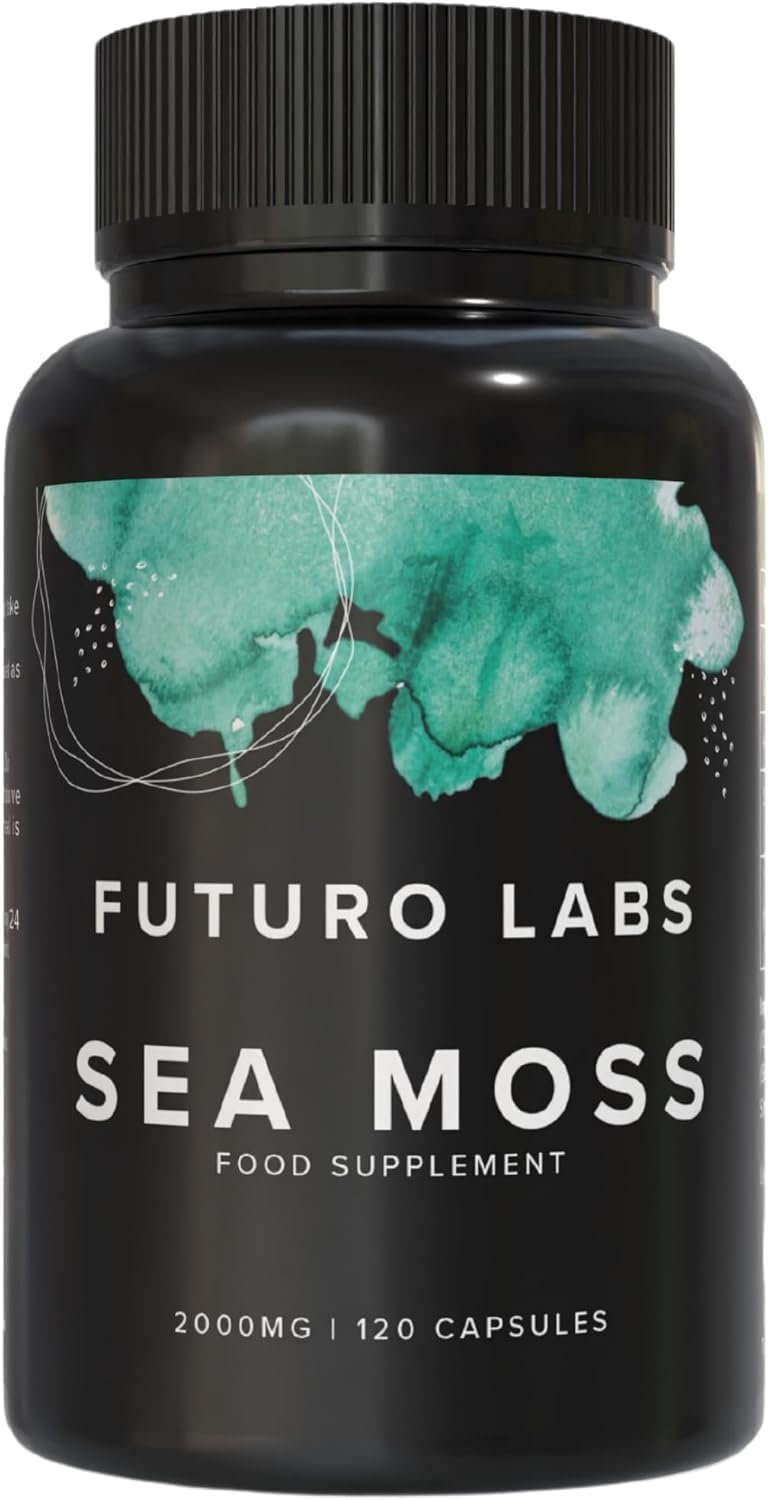
Futuro Labs Sea Moss
£9.99 for 60-day supply (120 capsules) · under 17p per day
Pros
- 2000mg raw sea moss equivalent per serving (15:1 extract)
- Wildcrafted North Atlantic Chondrus crispus — named species and origin
- Independently lab tested — heavy metals and microbiology
- Single-ingredient vegan capsules, UK GMP made
- 60-day supply £9.99 — under 17p/day
Cons
- Iodine content varies by harvest — not for precise-dose needs
- Young brand next to high-street names
Available from: Amazon UK — £9.99
The sourcing tier — and the whole file in four lines
The third tier belongs to supply chains, not seaweed: heavy metals and microbial contamination are accumulation risks for any sea vegetable grown in the wrong waters or processed carelessly — the category's genuine scandal material — and the answer is verification rather than fear: independent lab testing for heavy metals and microbiology, published origin, named species (the full page, the price-tells page). Futuro Labs' testing exists for exactly this tier — wildcrafted North Atlantic Chondrus crispus, independently tested, £9.99/60 days. The whole file, pocket-sized: mild digestive adjustment that settles; iodine as the one serious lever, managed by dose discipline and professional gates; sourcing risks answered by testing you can see; and the standing rule over everything — new, persistent or worrying symptoms after starting any supplement are a pharmacist-or-GP conversation, and stopping while you ask costs nothing (the daily-safety companion page).
Frequently asked questions
What are the side effects of sea moss?
The honest file in frequency order: digestive adjustment (fibre and polysaccharides meeting a new gut — mild bloating or looseness in early days, usually settling), the iodine ledger (the real one to respect: excess intake can disturb thyroid function in either direction, which is why one-product-label-dose is the rule), and the sourcing risks — heavy metals and contamination — that belong to unverified supply chains rather than the seaweed itself, and that lab testing exists to answer.
Can sea moss affect your thyroid?
Yes — in both directions, through iodine: sustained excess can push thyroid function around (including triggering problems in susceptible people), and this is the category's one serious lever. The rules that manage it: single product at label dose, no kelp or format stacking, and the absolute gate — any thyroid condition or thyroid medication means GP or pharmacist before starting, not after symptoms.
Who should not take sea moss?
The professional-first list: thyroid conditions (either direction) and thyroid medication — GP/pharmacist gate; pregnancy and breastfeeding — midwife or GP first (iodine needs shift and guidance beats guessing); anyone needing precise iodine dosing — standardised supplement instead; and anyone on medication where their pharmacist flags seaweed. Shellfish allergy is worth a note: sea moss is an alga, not a shellfish, but supply chains vary — the allergy-aware should check sourcing and consult first.
Discipline built in?
Futuro Labs Sea Moss — label dose, tested, gates stated. £9.99.
Shop on Amazon UK