Sea Moss Iodine: Numbers Against the Frame
Iodine numbers only mean anything against the frame — and seaweed's defining fact is variability. The moderate-band species story, the week-audit anyone can run, and the exit for precision needs.
At a glance
- The UK frame: ~140mcg/day adult need · 500mcg upper safe level from all sources
- The category fact: seaweed iodine varies by harvest — nothing raw is standardised
- The kelp contrast: Chondrus crispus moderate · kelp can be extreme — never stack
- Precision needs: a standardised iodine supplement, not any seaweed
The frame first — what UK guidance actually sets
Iodine numbers only mean anything against the frame: UK guidance puts adult need around 140mcg a day — the intake that keeps thyroid hormone production supplied — with 500mcg from all sources as the safe upper level, and the both-directions warning attached: chronic shortfall and chronic excess each disturb thyroid function, making iodine a mineral where more-is-better thinking fails specifically and fast. The UK's supply picture explains sea moss's relevance: fish, dairy and eggs do most of the national carrying, which leaves the fish-free, dairy-light and plant-based patterns doing the least well — the demographic logic behind the non-fish-eaters page and half this category's honest use case (the vegan angle).
The variability truth — and the kelp contrast that matters
The sentence every seaweed brand owes its buyers: iodine content varies — by harvest, waters, season and processing — and no raw seaweed product delivers a standardised microgram figure, ours included; a label printing one precise number for a wild-harvested material is describing an average at best. The species contrast inside that truth is the category's real safety story: Chondrus crispus (sea moss) accumulates iodine in a comparatively moderate band, while kelp species concentrate it to levels that can exceed the 500mcg ceiling in a single serving — the reason kelp carries most of the seaweed world's excess-iodine case reports, the reason the comparison page exists, and the reason the no-stacking rule is absolute: sea moss plus kelp plus iodised extras isn't enthusiasm, it's arithmetic against yourself. One seaweed product, label dose, counted alongside the fish-and-dairy iodine already in your week.
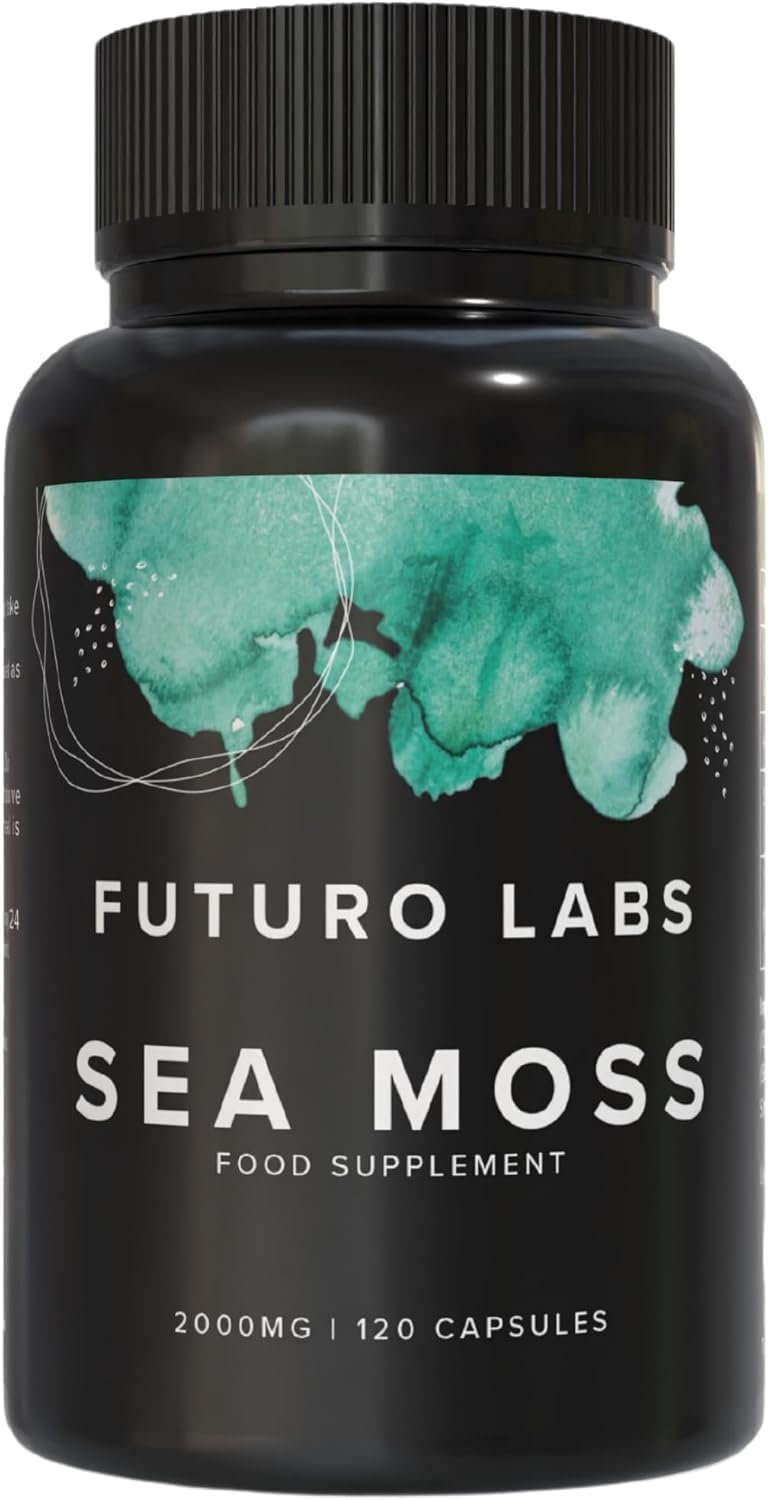
Futuro Labs Sea Moss
£9.99 for 60-day supply (120 capsules) · under 17p per day
Pros
- 2000mg raw sea moss equivalent per serving (15:1 extract)
- Wildcrafted North Atlantic Chondrus crispus — named species and origin
- Independently lab tested — heavy metals and microbiology
- Single-ingredient vegan capsules, UK GMP made
- 60-day supply £9.99 — under 17p/day
Cons
- Iodine content varies by harvest — not for precise-dose needs
- Young brand next to high-street names
Available from: Amazon UK — £9.99
Reading your own week — and the precision exit
The practical audit anyone can run: tally the week's iodine carriers — white fish (strong), dairy and eggs (steady), iodised salt if you use it — and place a sea moss serving as a contributor within the 140-500mcg frame rather than a solo act; heavy fish-and-dairy eaters are usually already supplied (sea moss adds margin, not rescue), while the fish-free patterns find their genuine gap here (the honest use-case map). The precision exit, stated as our own review states it: anyone who needs an exact daily microgram figure — a clinical target, a GP-set intake, a monitored condition — needs a standardised iodine supplement, not any seaweed; whole-food variability is a feature for dietary support and a disqualifier for dosing precision, and a brand that says so is telling you its relationship with the truth. The gates as ever: thyroid conditions, thyroid medication, pregnancy — GP, pharmacist or midwife before the first serving (the full page).
Frequently asked questions
How much iodine is in sea moss?
Honestly: it varies — by harvest, waters, season and processing, which is the seaweed category's defining fact. Chondrus crispus runs meaningfully lower than kelp (whose iodine can be extreme) but no raw seaweed product delivers a standardised microgram figure, which is why UK guidance frames matter: adults need around 140mcg a day, with 500mcg set as the safe upper level from all sources. A sensible sea moss serving contributes within that frame; anyone needing a precise dose needs a standardised iodine supplement instead.
Is sea moss high in iodine compared to kelp?
Substantially lower, and the difference is the safety story: kelp species concentrate iodine to levels that can blow through the 500mcg upper limit in a single enthusiastic serving, while Chondrus crispus sits in a more moderate band — one reason sea moss is the more forgiving seaweed for daily use, and why stacking sea moss with kelp products defeats the entire logic.
Who needs to be careful with iodine?
The list this cluster prints everywhere: anyone with a thyroid condition (either direction), anyone on thyroid medication (levothyroxine especially — timing and dose interplay are GP territory), and pregnancy and breastfeeding (iodine needs rise but so does the case for professional guidance — midwife first). For everyone else the rules are one product, label dose, no seaweed stacking.
Contributor, not solo act?
Futuro Labs Sea Moss — moderate band, tested, 17p. £9.99.
Shop on Amazon UK