Non-Fish-Eaters: The Real Gap, The Measured Fix
This demographic is the category's clearest-case constituency, not a marketing invention. The supply map, the route-picking logic that names the standardised exit, and the gates that don't flex for diet.
At a glance
- The UK supply map: fish first, dairy second, iodised salt barely — the gap follows the diet
- The genuine-gap profile: fish-free AND dairy-light — the cluster's clearest constituency
- Three honest routes: deliberate dairy/eggs · measured seaweed serving · standardised supplement
- The rules travel: one product, label dose, gates respected — gap doesn't suspend them
The supply map — why this page has a constituency
UK iodine arrives through a short list: white fish and seafood carry the most per serving; milk, yoghurt, cheese and eggs do the quiet volume work across the population; and iodised salt — the fix many countries lean on — barely features because UK salt mostly isn't. Run any week through that map and the gap profiles write themselves: the fish-eating, dairy-drinking week is generally supplied; the fish-free but dairy-regular week usually manages; and the fish-free, dairy-light or fully plant-based week can genuinely under-run the ~140mcg daily need — the pattern public-health surveys keep flagging in exactly these groups, and the reason this demographic is sea moss's clearest-case constituency rather than a marketing invention (the gap logic, the frame).
The three honest routes — and how to pick between them
Filling the gap has three legitimate shapes: food-first — where dairy and eggs are eaten, letting them work deliberately (regular milk and yoghurt is genuine iodine policy, not just breakfast); the whole-food supplement route — a measured sea moss serving contributing inside the frame, vegan by nature, moderate-band by species (the kelp overshoot risk is exactly what this constituency doesn't need — that axis), suiting the whole-food-preference buyer at 17p a day; and the standardised route — an iodine supplement with exact micrograms, the right answer wherever precision matters: pregnancy planning and pregnancy itself (midwife-guided — needs rise and guidance beats guessing), clinical situations, or simply a preference for counted intake. Picking honestly: the routes rank by your need for precision, not by naturalness points — and this site, selling the middle route, names the third one anyway because layer-one honesty is the whole brand.
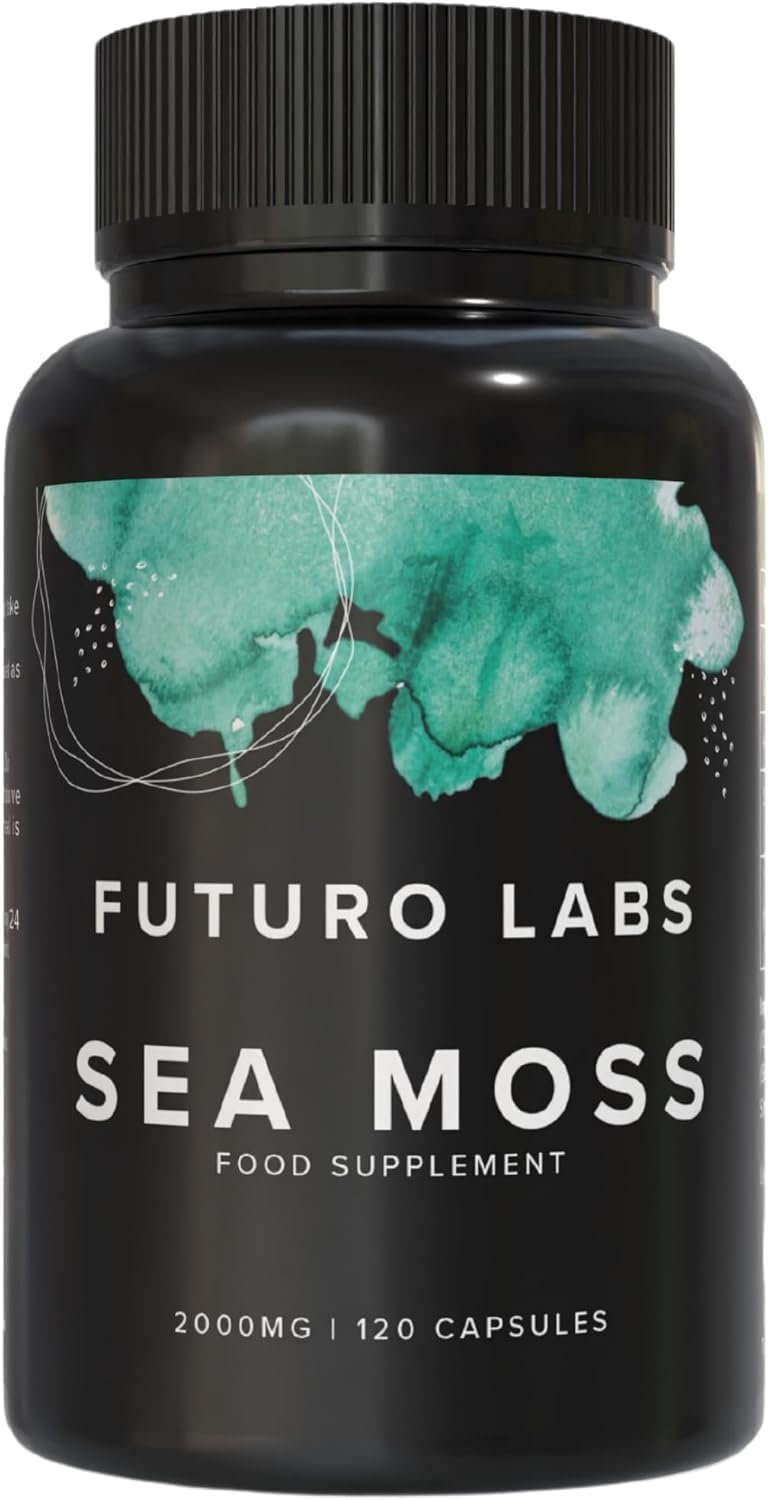
Futuro Labs Sea Moss
£9.99 for 60-day supply (120 capsules) · under 17p per day
Pros
- 2000mg raw sea moss equivalent per serving (15:1 extract)
- Wildcrafted North Atlantic Chondrus crispus — named species and origin
- Independently lab tested — heavy metals and microbiology
- Single-ingredient vegan capsules, UK GMP made
- 60-day supply £9.99 — under 17p/day
Cons
- Iodine content varies by harvest — not for precise-dose needs
- Young brand next to high-street names
Available from: Amazon UK — £9.99
The plant-based specifics — B12 firewall included
For the fully plant-based reader, the completions this page owes: the audit is quickest for you (no fish, and dairy's carrier role gone means the gap is structural, not occasional — a measured daily contribution has its clearest case here, judged over the standard 8-12 weeks — the clock); the firewall matters — sea moss is not a B12 source and the category's suggestion otherwise is a myth with its own retirement page (that page): B12 supplementation remains its own non-negotiable line on a vegan checklist, unrelated to any seaweed; and the gates don't flex for diet — thyroid conditions, thyroid medication and pregnancy route professional-first here as everywhere (the routing), with the one-product rule standing (the vegan rankings apply the same tests). The closing sentence for the constituency: your gap is real, the fix is measured and cheap, and nothing about either requires believing a single myth this category tells.
Frequently asked questions
How do non-fish-eaters get enough iodine?
The UK's iodine supply runs through fish first and dairy second — so the fish-free week leans on dairy, eggs and little else (UK salt is mostly not iodised), and the fully plant-based week can genuinely under-supply. The honest options: dairy and eggs doing deliberate work where they're eaten, a measured seaweed serving as whole-food contribution, or a standardised iodine supplement where precision or professional guidance calls for it.
Is sea moss a good iodine source for vegetarians and vegans?
It's the honest whole-food route: a measured Chondrus crispus serving contributes meaningfully inside the 140-500mcg frame, vegan by nature, without kelp's overshoot risk — which is why this demographic is the category's clearest-case constituency. The rules travel: one product, label dose, variability understood, and the standardised-supplement exit named for anyone needing exact micrograms.
Do I need to worry about iodine if I eat dairy?
Less — dairy is the UK's quiet second carrier, and regular milk-yoghurt-cheese eating plus eggs covers many fish-free weeks adequately. The audit is quick: tally your week's carriers honestly; a dairy-light, fish-free pattern is where the genuine gap lives and where a measured contribution earns its place.