Sea Moss Results: The Clock of Contribution
No acute effect exists to feel — supply meets need quietly, on repeat. The week-zero note, the settling-versus-signal sort, the gap-filler advantage, and the exit that stays open.
At a glance
- The clock: 8-12 weeks, one serving daily — nutrient status moves in weeks
- The expectation: maintenance-of-normal — adequacy feels like absence-of-problem
- Felt-in-days claims: marketing (or the fibre introduction settling)
- The verdict method: week-zero note → week-12 comparison → continue or exit clean
Why the clock is weeks — the biology of contribution
Sea moss works, when it works, by contribution: a measured serving adds iodine and trace minerals to your baseline, and baselines move on nutrient time — body pools adjusting over weeks as intake patterns hold, thyroid hormone production running on supplied raw material rather than responding to single doses (the frame). That's why 8-12 consistent weeks is the honest judging window across this cluster and why day-counting misreads the mechanism entirely: there is no acute effect to feel, no compound crossing into circulation to announce itself — just supply meeting need, quietly, on repeat. The first week's genuine sensations belong to a different system: the fibre-and-polysaccharide introduction the gut runs on any new whole food (the mild tier) — settling noise, not signal.
What 'working' honestly looks like
The expectation-setting most of the category refuses: adequacy territory mostly feels like nothing — thyroid function supplied, energy metabolism running normally, cognition and skin maintained — because maintenance-of-normal is the biology of not-lacking, and not-lacking is famously unspectacular. Who gets the clearest read: the gap-filler constituency — fish-free, dairy-light, plant-based patterns whose weeks genuinely under-supply iodine (their page) — where correcting a real shortfall can register as steadier energy and function over the window; the already-supplied get margin, and were told so at the honest map. And the standing scepticism, restated: brands promising felt-effects in days are selling layer three (the spine), and testimonials describing week-one transformations are describing enthusiasm, placebo or the settling gut — all real experiences, none of them iodine.
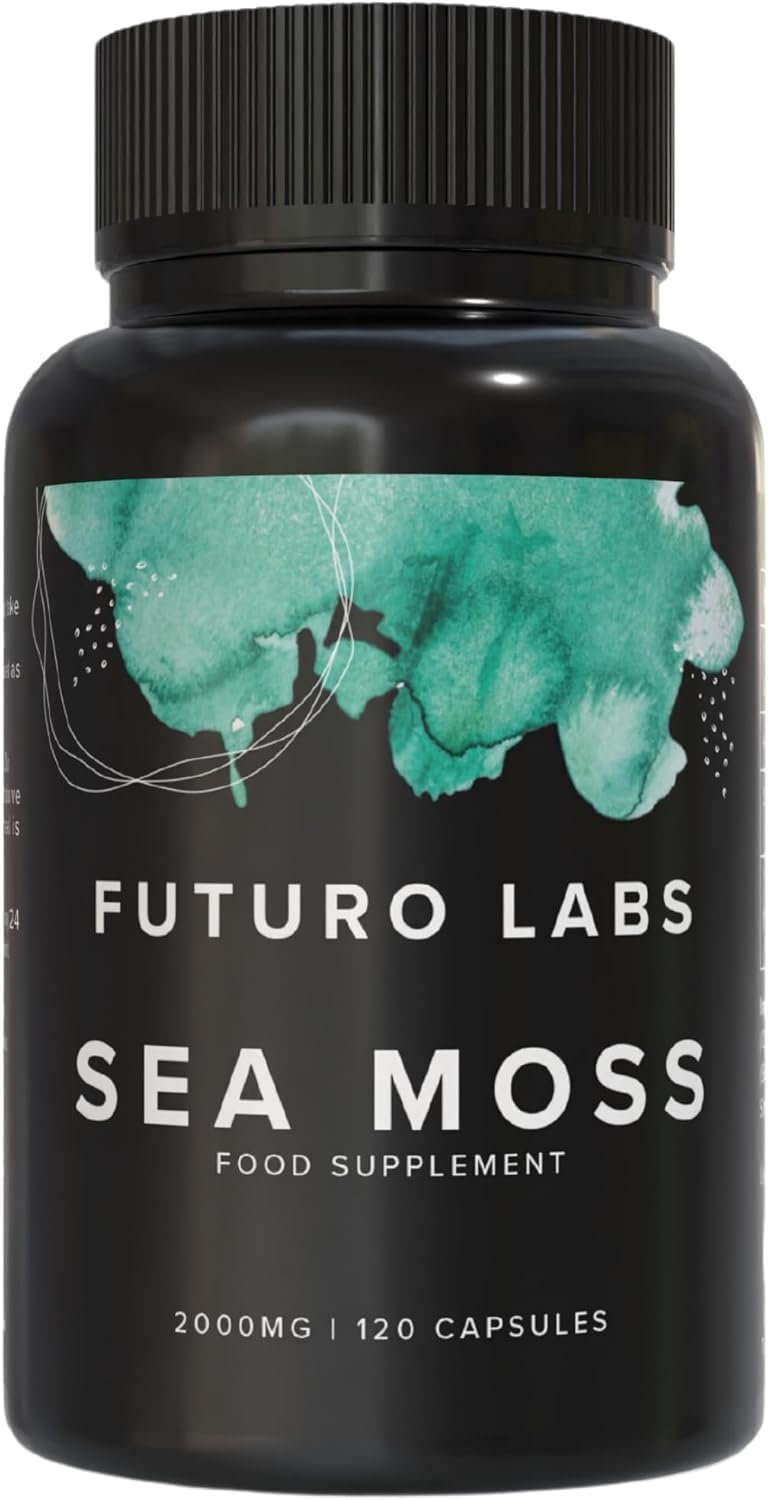
Futuro Labs Sea Moss
£9.99 for 60-day supply (120 capsules) · under 17p per day
Pros
- 2000mg raw sea moss equivalent per serving (15:1 extract)
- Wildcrafted North Atlantic Chondrus crispus — named species and origin
- Independently lab tested — heavy metals and microbiology
- Single-ingredient vegan capsules, UK GMP made
- 60-day supply £9.99 — under 17p/day
Cons
- Iodine content varies by harvest — not for precise-dose needs
- Young brand next to high-street names
Available from: Amazon UK — £9.99
Running the twelve weeks properly — and calling it
The protocol that makes week 12 mean something: a week-zero note — two lines on current energy, digestion and general function, written before the first capsule (memory rewrites itself; paper doesn't); one serving daily with food, anchored to a fixture (the habit is the mechanism — a bottle that lasts its 60 days on schedule is the compliance record); no other changes launched simultaneously if you want attribution; and the gates standing throughout — thyroid conditions, medication and pregnancy routed professional-first before day one (the routing), warning-territory symptoms stopping the trial promptly. Calling it: baseline maintained-or-better plus habit held = a quiet positive worth continuing at £9.99 a bottle; a genuine null after honest weeks = the clean exit this site keeps open on every product it sells — dietary support that didn't move your dial owes no loyalty (the daily companion). Either verdict, reached this way, is yours — which was the point of the clock all along.
Frequently asked questions
How long does sea moss take to work?
Set the clock to what it is — dietary support, not an event: nutrient status shifts over weeks, so the honest protocol is one serving daily for 8-12 consistent weeks before any verdict, judged against maintenance-of-normal expectations (steady function, not fireworks). Anything a brand promises in days is layer-three marketing; anything you feel in days is more likely the fibre introduction settling than iodine biology announcing itself.
What should I actually expect to notice?
Honestly: possibly nothing dramatic — and that can be the product working. Adequacy territory (thyroid function supplied, energy metabolism running normally) mostly feels like absence-of-problem, which is why the gap-filler constituency (fish-free, dairy-light diets) has the clearest case: they're correcting a real shortfall territory. The already-supplied should expect margin, not transformation — and were told so before buying here.
How do I judge it at week 12?
Like dietary support: did the consistent serving hold through 12 weeks (the habit test), does your energy-and-function baseline feel maintained or improved against a week-zero note you wrote down, and did nothing on the warning territory appear? A quiet positive continues at £9.99/60 days; a genuine null exits without ceremony — sea moss owes you nothing it didn't promise.