The 92-Minerals Meme: Counted-Sounding, Never Counted
A rhetorical riff calcified into common knowledge — and the gap between meme and analysis is the category's most useful purchasing information. The paper trail, the real profile, the reverse audit.
At a glance
- The meme: '92 minerals' — a rhetorical riff, never a lab analysis
- The reality: iodine headlining a genuine but ordinary trace-mineral profile
- The tell: brands leading with 92 have announced their evidence standards
- The useful question: not how many minerals — how much of the ones that count
Where 92 came from — the meme's paper trail
The category's founding number has a traceable, embarrassing history: it descends from a rhetorical claim that the human body contains 102 minerals and sea moss supplies 92 of them — a riff popularised through wellness lore rather than laboratory work, resting on a body-mineral count that isn't itself scientific, and never accompanied by an actual certificate of analysis showing 92 anything in Chondrus crispus. Repeat it enough decades and it calcifies into 'common knowledge': listings lead with it, social clips chant it, and the number's very specificity does the persuading — 92 sounds counted. It wasn't. No published compositional analysis of sea moss produces the meme; what analysis produces is the next section — and the gap between the two is the most useful purchasing information in this category (the three-layer spine files the meme under marketing, where it lives).
What the analyses actually show
Real compositional work on Chondrus crispus describes a genuine, unglamorous seaweed: iodine as the defining contribution — the mineral with the authorised claim set, the reason the category has a legitimate core at all (its frame and variability) — surrounded by trace accumulations of what its seawater held: potassium, magnesium, calcium, iron, zinc and a supporting cast at levels that contribute to daily intake without individually starring; plus the polysaccharide (carrageenan-family) matrix that gives the food its gelling identity and its fibre-adjacent behaviour (that file when it lands). Read as food, that's a respectable profile — a mineral-contributing sea vegetable with one headline act. Read against the meme, it's the audit: the pattern is contribution, the roster is ordinary, and 'how many minerals' was always the wrong question — how much of the ones that count is the label line worth finding (the nutrition-facts page when it lands).
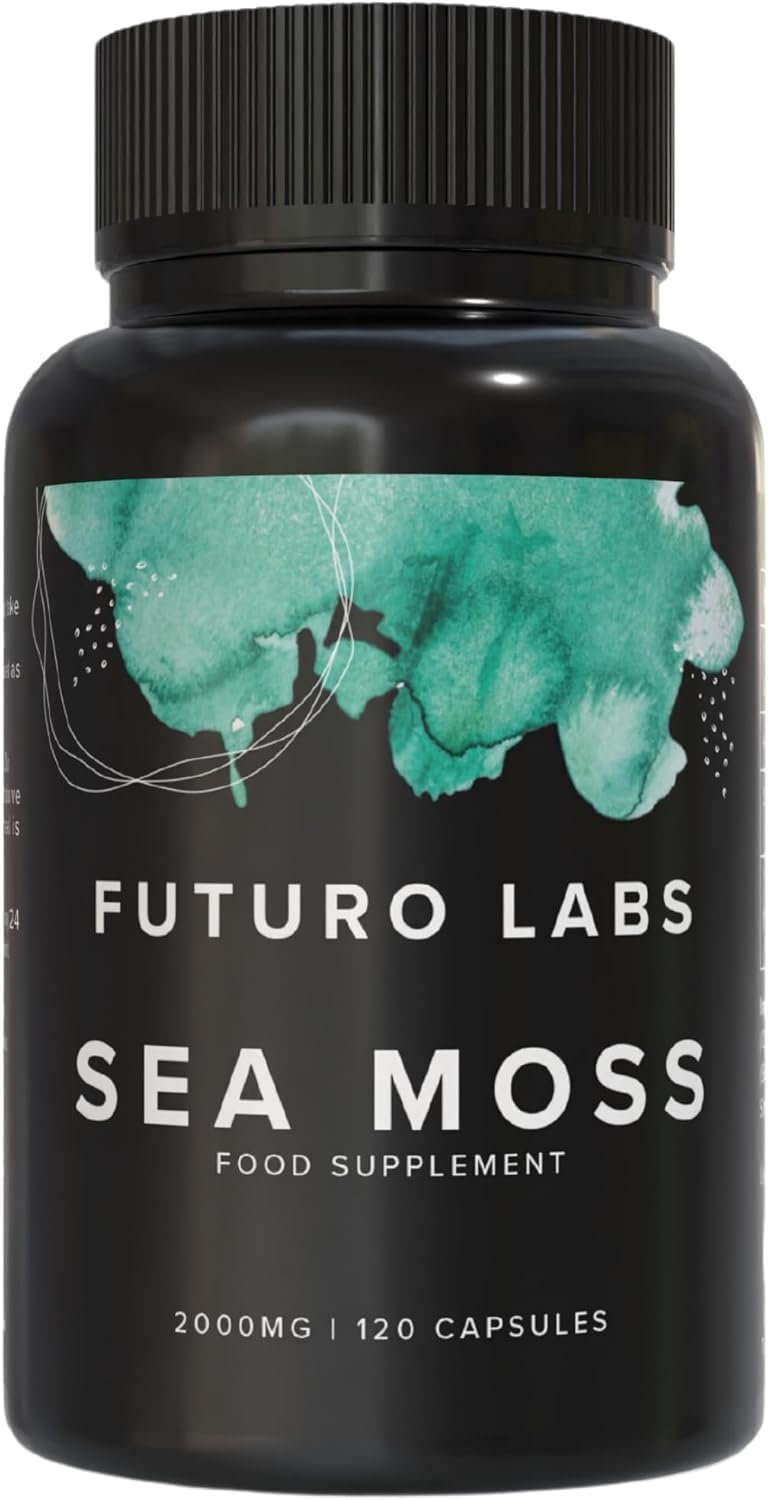
Futuro Labs Sea Moss
£9.99 for 60-day supply (120 capsules) · under 17p per day
Pros
- 2000mg raw sea moss equivalent per serving (15:1 extract)
- Wildcrafted North Atlantic Chondrus crispus — named species and origin
- Independently lab tested — heavy metals and microbiology
- Single-ingredient vegan capsules, UK GMP made
- 60-day supply £9.99 — under 17p/day
Cons
- Iodine content varies by harvest — not for precise-dose needs
- Young brand next to high-street names
Available from: Amazon UK — £9.99
Using the meme in reverse — the shopper's dividend
The 92-minerals claim survives because it converts, and its persistence pays you a dividend if you flip it: a brand front-loading the meme has announced its evidence standards for everything else on the label — the sourcing claims, the testing claims, the serving maths — and the announcement is admissible. The reverse audit: brands that decline the number and state the honest shape (iodine-led whole-food contribution, variability printed, testing shown) have passed the category's cheapest character test — Futuro Labs' label runs that shape deliberately: wildcrafted North Atlantic Chondrus crispus, 2000mg raw equivalent per serving, independently tested, iodine's authorised territory claimed and nothing beyond it, £9.99/60 days (the record). The closing reframe for the whole search: sea moss never needed 92 minerals to justify a place in a fish-free week — it needed one, verified, at a measured dose — and the brands still counting to 92 are telling you they don't know that, or hope you don't (the choosing framework when it lands, the honest map meanwhile).
Frequently asked questions
Does sea moss really contain 92 minerals?
No — the 92-minerals claim is the category's founding meme, not an analysis: it traces to a rhetorical riff on the body containing 102 minerals (itself unscientific), was never a lab result for Chondrus crispus, and survives because it sells. What analysis actually shows: a genuine but ordinary seaweed profile — iodine as the headline, plus meaningful trace contributions — impressive as food, unrecognisable as the meme.
What minerals does sea moss actually provide?
The honest shortlist: iodine (the defining contribution — the reason the category exists), plus trace amounts of minerals seaweeds accumulate from seawater: potassium, magnesium, calcium, iron, zinc and others at levels that contribute to intake without individually starring. The pattern matters more than the roster: whole-food trace contribution, headlined by one mineral that genuinely counts.
Why do brands still use the 92-minerals claim?
Because it converts: a big specific number reads as science to a scrolling buyer, the claim is old enough to feel established, and the category's review culture never audited it. Its persistence is useful to you in reverse — a brand front-loading 92 minerals has announced its evidence standards, and the label's actual analysis line (or absence) tells the rest.
One mineral, verified, measured?
Futuro Labs Sea Moss — iodine's territory, tested. £9.99.
Shop on Amazon UK