Carrageenan: The Conflation, Corrected
Whole-food servings sit two steps removed from the scary findings — a food containing its natural structure, not an isolated additive at industrial exposure. The edges named, the verdict plain.
At a glance
- The distinction: native food-matrix carrageenan vs degraded poligeenan — different molecules, different files
- The panic's error: citing degraded-material research against whole-food servings
- The honest edges: IBD-sensitive guts (individual response) · the additive debate (a different question)
- The verdict: whole-food sea moss at label dose = ordinary-food category
One word, two molecules — the conflation the panic runs on
The carrageenan controversy is mostly a naming accident: carrageenan — the native, high-molecular-weight polysaccharide family that gives sea moss its gel and the food industry its thickener — shares a headline with poligeenan, a deliberately acid-degraded, low-molecular-weight material produced for industrial and laboratory purposes, not permitted as a food additive, and responsible for the bulk of the alarming inflammation and gut-damage findings the panic circulates. The research file, sorted honestly: degraded-material studies (poligeenan, or lab conditions that degrade carrageenan in ways digestion doesn't replicate) generate the scary results; native food-grade carrageenan's file is far more ordinary, and whole-food sea moss — the intact matrix eaten as generations of Irish and Caribbean tradition ate it — sits another step removed again, a food containing its natural structure rather than an isolated additive at industrial exposure (where the gut page already placed it).
The whole-food position — and the debates that don't touch it
Locating a label-dose serving precisely: whole-food sea moss delivers native carrageenan inside its matrix at gram-scale food quantities — the exposure category of traditional eating, where the safety record is the tradition itself plus the absence of any signal from actual food use; the two live debates sit elsewhere and deserve naming so they can't be borrowed against the seaweed: the additive debate — isolated carrageenan in processed foods (plant milks, meats) at industrial inclusion levels, a genuinely contested regulatory conversation about a different exposure pattern; and the degradation question — whether digestion meaningfully converts native to degraded forms, where the evidence keeps landing on 'not to any exposure that matters', which is precisely why food authorities keep permitting the native material. Neither debate describes a spoonful of gel or a capsule serving, and content citing poligeenan findings against sea moss has confused its molecules — the tell of an author who read headlines, not files (the three-layer standard, applied to fear as to hype).
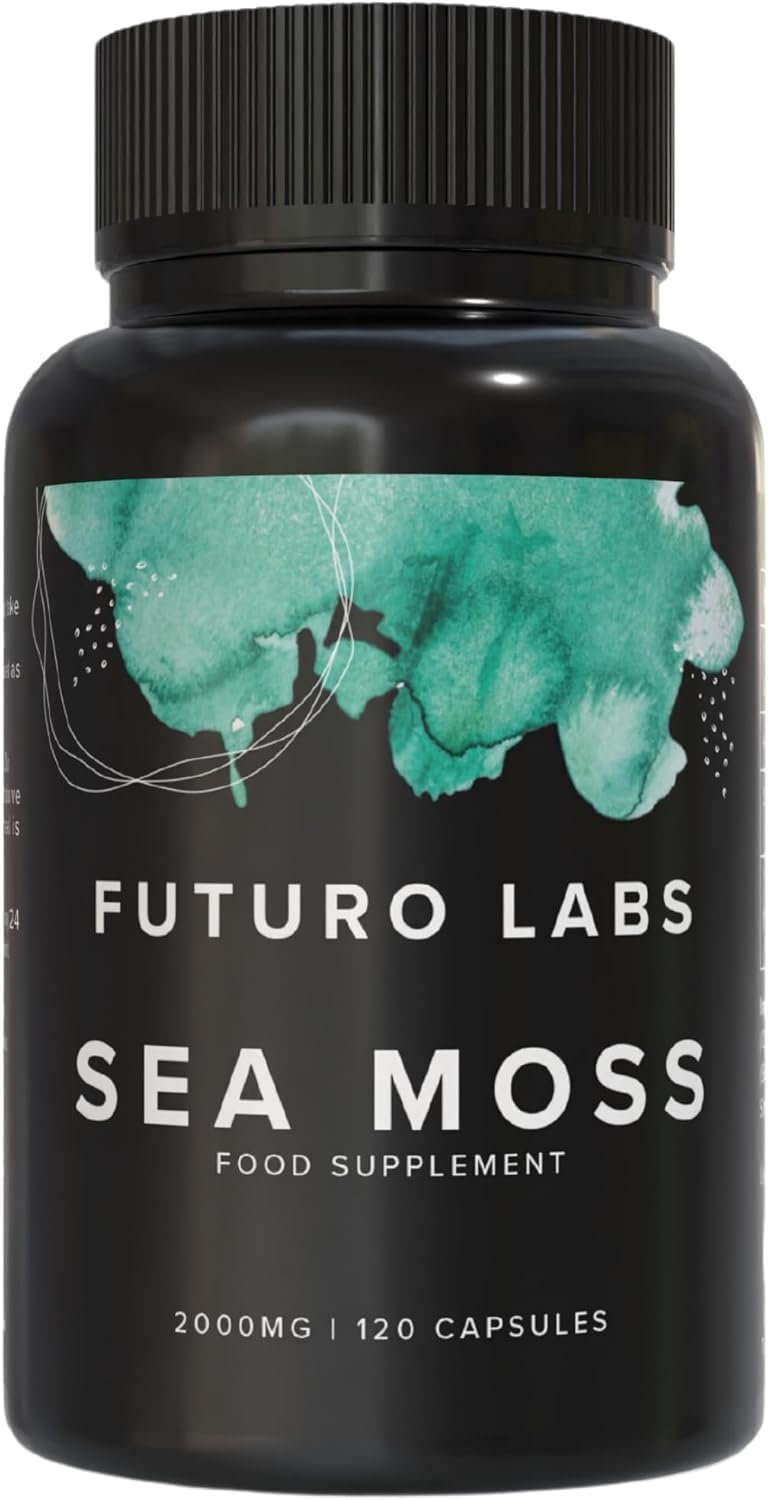
Futuro Labs Sea Moss
£9.99 for 60-day supply (120 capsules) · under 17p per day
Pros
- 2000mg raw sea moss equivalent per serving (15:1 extract)
- Wildcrafted North Atlantic Chondrus crispus — named species and origin
- Independently lab tested — heavy metals and microbiology
- Single-ingredient vegan capsules, UK GMP made
- 60-day supply £9.99 — under 17p/day
Cons
- Iodine content varies by harvest — not for precise-dose needs
- Young brand next to high-street names
Available from: Amazon UK — £9.99
The honest edges — and the verdict in plain terms
Where caution legitimately lives: inflammatory bowel conditions — IBD-sensitive guts respond individually to many fibres and additives, carrageenan included in some people's experience, and the governing authority there is your own response plus your GP or dietitian, not internet verdicts in either direction (a flare-prone gut trialling anything new deserves professional company); genuine fibre intolerance — the same individual-response logic at lower stakes (the settling protocol and its flags); and the standing cluster rules that apply to everything regardless of molecule (the file, the architecture). The verdict, plainly: whole-food sea moss at label dose belongs in the ordinary-food category — the panic cites the wrong molecule, the tradition ate the right one for generations, and the only carrageenan question a capsule buyer actually faces is whether their supplier verified the seaweed itself (the file that genuinely matters, the framework).
Frequently asked questions
Is the carrageenan in sea moss safe?
The distinction that settles most of it: whole-food sea moss contains native carrageenan in its intact food matrix — eaten traditionally for generations — while the alarming research headlines overwhelmingly concern degraded carrageenan (poligeenan, a different acid-processed material not permitted in food) and high-exposure additive models. Whole-food servings at label dose sit in the ordinary-food category; the internet's carrageenan panic mostly cites the wrong molecule.
What's the difference between carrageenan and poligeenan?
Molecular weight and processing: food-grade carrageenan is the large native polysaccharide (the gelling agent, and sea moss's natural matrix); poligeenan is deliberately acid-degraded into small fragments for industrial and lab uses — it's the material behind most inflammation findings, it isn't a food additive, and conflating the two is the error the panic runs on.
Should anyone still be cautious?
Reasonable edges: people with inflammatory bowel conditions sometimes find their gut sensitive to many fibres and additives, carrageenan included — individual response governs, and a GP or dietitian conversation beats internet verdicts; and the additive debate (isolated carrageenan in processed foods at industrial doses) remains genuinely contested territory that whole-food servings simply don't inhabit.