Choosing Sea Moss: Five Checks Pick the Product
Every buying page in the cluster compresses to five checks that feed each other. The fork, the lexicon where one tell is a question and two are a verdict, and the rules no purchase escapes.
At a glance
- Five checks: species+waters · testing shown · serving maths · single-ingredient · pence/day
- The format fork: extract ratios vs raw-powder multiplication — maths either way
- Red flags: 92 minerals · no Latin name · unverified wildcrafted · detox talk · hidden blends
- The gates ride along: thyroid/meds/pregnancy → professional first, whatever you buy
The five checks — the whole framework in one pass
Every buying page in this cluster compresses to five checks, run in order because each gate feeds the next. One — species and waters: Chondrus crispus named in Latin, North Atlantic origin stated; this single line retires the warm-water substitution that dominates the budget shelf (the gate's full page). Two — testing shown: independent lab results for heavy metals and microbiology, available rather than claimed, because seaweed concentrates its water and certificates are the only answer (the accumulator's file) — this check doubles, never relaxes, for wildcrafted labels (the triad). Three — serving maths honest: extracts stating their ratio and raw-equivalent, raw powders letting you count per-capsule milligrams toward a real serving. Four — single-ingredient unless a blend was your knowing choice (bladderwrack-and-burdock is a legitimate traditional product; sea moss hiding in a proprietary total is not). Five — pence per day, converted (the unit that makes cheap mean something).
The format fork, and the red-flag lexicon
Inside the five checks sits one fork and one vocabulary lesson. The fork — extract versus raw powder: concentration is the honest difference (a 15:1 extract packs 2000mg raw equivalent into a single capsule serving; raw powder delivers its stated milligrams straight, usually needing multiples per meaningful serving), and neither format lies — but the raw route's bottle-count value optics invite the multiplication most buyers skip, while the extract route owes you the ratio stated plainly (the decode, the wider format fold with gels included). The red-flag lexicon, each tell doing a check's work in reverse: '92 minerals' anywhere (announced standards); no Latin name; wildcrafted-without-waters-or-testing; detox and cleanse framing (layer three showing); and too-cheap prices whose mechanisms are always the same three (the decode page). One tell is a question; two together is a verdict.
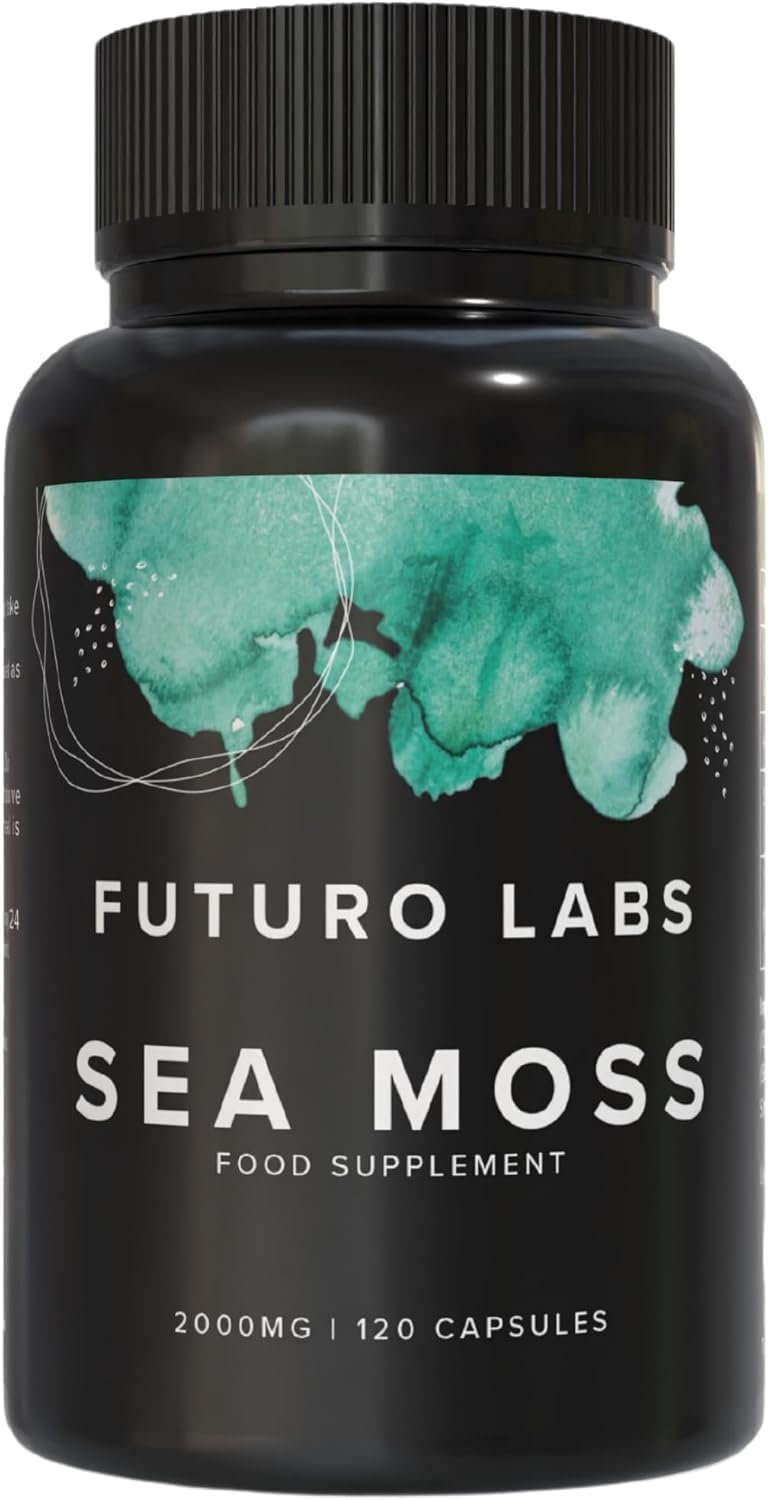
Futuro Labs Sea Moss
£9.99 for 60-day supply (120 capsules) · under 17p per day
Pros
- 2000mg raw sea moss equivalent per serving (15:1 extract)
- Wildcrafted North Atlantic Chondrus crispus — named species and origin
- Independently lab tested — heavy metals and microbiology
- Single-ingredient vegan capsules, UK GMP made
- 60-day supply £9.99 — under 17p/day
Cons
- Iodine content varies by harvest — not for precise-dose needs
- Young brand next to high-street names
Available from: Amazon UK — £9.99
| Futuro Labs Sea Moss | Typical raw-powder capsules | Traditional gel | |
|---|---|---|---|
| Sea moss per serving | 2000mg raw equivalent (15:1 extract) | Raw milligrams per capsule — check maths | Varies spoon to spoon |
| Species & origin stated | Wildcrafted N. Atlantic Chondrus crispus | Varies by brand | Varies — heritage brands strongest |
| Lab testing | Independent — heavy metals & microbiology | Varies | Rarely published |
| Storage | Cupboard — no fridge | Cupboard | Fridge, weeks-long life |
| Cost basis | £9.99 / 60 days (~17p/day) | Low per bottle — audit per serving | Typically 60-80p+/day |
The framework applied — and the rules no purchase escapes
Run our own label through the machine, since a framework that can't audit its maker isn't one: species and waters — wildcrafted North Atlantic Chondrus crispus, named; testing — independent, heavy metals and microbiology; serving maths — 15:1 extract, 2000mg raw equivalent per serving, stated; single-ingredient vegan capsule, no fillers; cost — £9.99 across 60 days, under 17p (the maker's review holds the limitations too: variability by harvest printed, precision-dose needs routed to standardised iodine). And the rules that ride along whatever passes your five checks: one product at label dose, never stacked with kelp or extra formats (the arithmetic); the 8-12 week judge (the clock); and the gates — thyroid conditions, thyroid medication, pregnancy and breastfeeding route through GP, pharmacist or midwife before capsule one (the routing). Five checks pick the product; the rules keep the person — this cluster in two clauses.
Frequently asked questions
How do I choose a good sea moss supplement?
Five checks in order: species and waters named (Chondrus crispus, North Atlantic — the substitution gate); independent testing shown (heavy metals + microbiology — the accumulator's non-negotiable); serving maths honest (raw-equivalent stated for extracts, per-capsule milligrams counted for raw powder); single-ingredient unless you chose a blend knowingly; and daily cost converted to pence-per-serving. A label passing all five is shoppable; one dodging any has answered a different question.
Extract or raw powder capsules — which should I pick?
The maths decides: extracts concentrate (a 15:1 ratio delivering 2000mg raw equivalent per serving in capsule form), raw powders don't (per-capsule milligrams are what they say, usually modest, needing multiples per real serving). Neither is dishonest; the raw route just requires you to do the multiplication the bottle count obscures — and the extract route requires the ratio stated plainly.
What are the red flags on a sea moss label?
The recurring set: '92 minerals' anywhere on the listing (announced evidence standards), no Latin species name, 'wildcrafted' with no waters or testing, detox and cleanse language, blends where sea moss milligrams hide behind proprietary totals, and prices that only work via substitution or dilution. Each is one tell; two together is a verdict.