Wildcrafted Sea Moss: Audited, Not Admired
The category's most borrowed word, and three lines separate earners from decorators. What the premium genuinely buys, what it never bought automatically, and the honest farming contrast.
At a glance
- The word means: wild ocean stands, not pools or ropes — where the alga evolved
- The word's worth: verification — species + waters + testing, or it's decoration
- The honest contrast: pool-grown is legitimate too — the sin is substitution, not farming
- The testing rule doubles: wild waters aren't automatically clean waters
What the word actually buys — and what it doesn't
Wildcrafted describes a harvest, not a halo: sea moss gathered from wild ocean-grown stands — the alga where it evolved, in moving cold seawater, building the mineral profile its environment supplies — as against pool- and rope-farmed production, the controlled-crop route that dominates warm-water supply. What the wild premium genuinely buys: provenance (real waters, seasonal harvests, the traditional gathering the category's heritage describes — the harvest page when it lands) and the ocean-accumulation story that is sea moss's whole nutritional identity. What it doesn't buy automatically: purity — wild waters aren't clean waters by definition, coastal contamination is real, and the heavy-metals question attaches to wild harvest at least as firmly as to farms (that file) — which is why the testing requirement doubles rather than relaxes when the label says wild.
The verification triad — turning a vibe into a spec
Wildcrafted is the category's most borrowed word, and three lines separate the earners from the decorators: species — Chondrus crispus named in Latin, because the cold-water article is what wild-Atlantic harvesting produces and the warm-water species wearing the word is the standing substitution (the species gate); waters — North Atlantic origin stated (Irish, Scottish, Atlantic-Canadian coasts share the fishery), because 'ocean-harvested' without a sea is a sentence about nothing; and testing — independent lab results for heavy metals and microbiology, published or produced on request, because the triad's whole point is that provenance claims get audited, not admired. Beach photography, hand-gathering imagery and heritage typography are pleasant and prove nothing; the triad proves the word (the testing decode when it lands, and the economics of faking it).
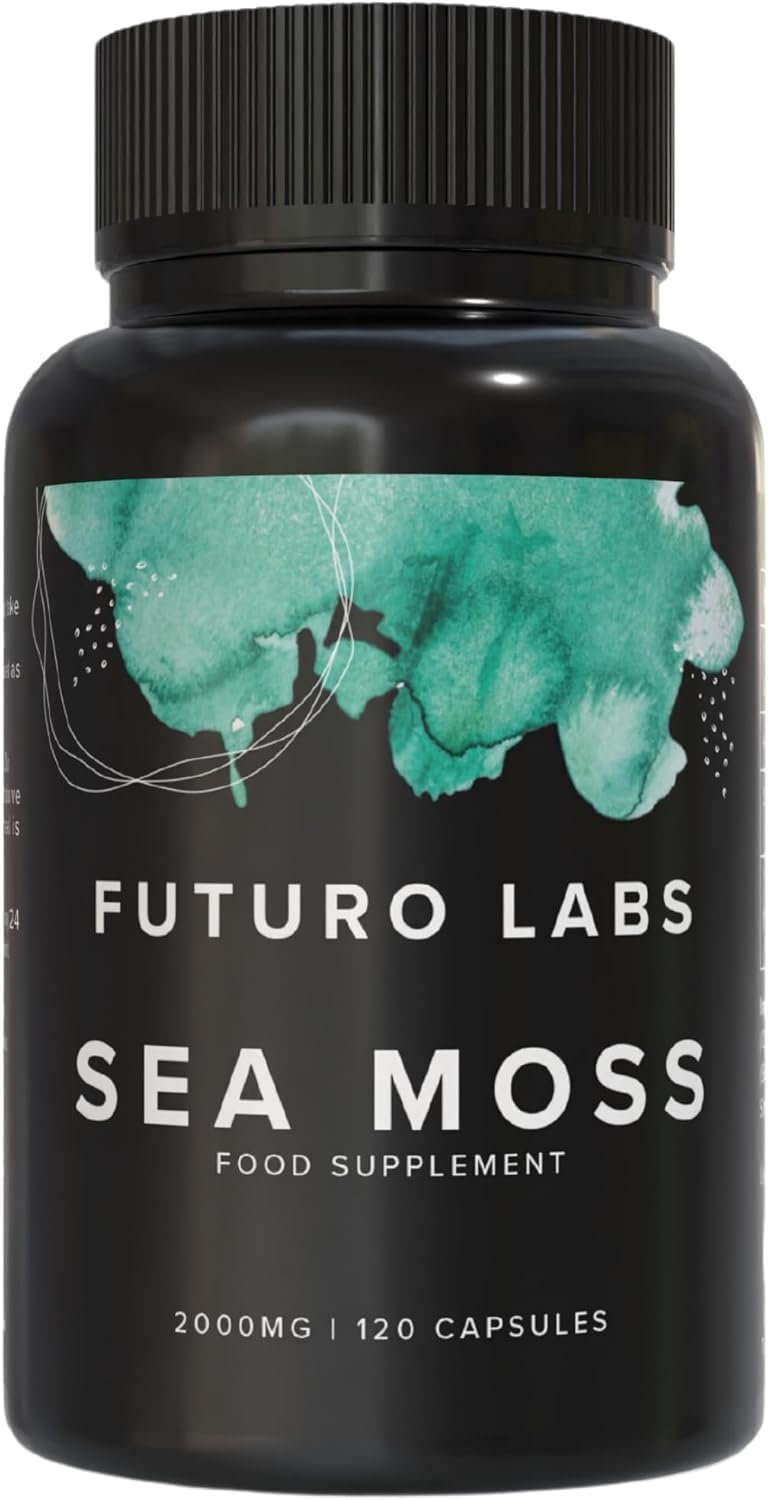
Futuro Labs Sea Moss
£9.99 for 60-day supply (120 capsules) · under 17p per day
Pros
- 2000mg raw sea moss equivalent per serving (15:1 extract)
- Wildcrafted North Atlantic Chondrus crispus — named species and origin
- Independently lab tested — heavy metals and microbiology
- Single-ingredient vegan capsules, UK GMP made
- 60-day supply £9.99 — under 17p/day
Cons
- Iodine content varies by harvest — not for precise-dose needs
- Young brand next to high-street names
Available from: Amazon UK — £9.99
The rankings this search deserves — by format, gates applied
With the triad as the entry bar, the wildcrafted field sorts by format: capsules — our lane and our pick: Futuro Labs' wildcrafted North Atlantic Chondrus crispus at 2000mg raw equivalent per serving (15:1 extract), independently tested, single-ingredient, £9.99/60 days — the triad complete at the category's lowest serious daily cost (the record); gels — the small-batch cold-water makers are wildcrafted's heartland, triad-verified ones worth their premium for ritual loyalists (that comparison); raw powders — verify harder, since the format's economics invite the substitution most. The honest closing contrast: pool-grown, honestly labelled, remains a legitimate product at a legitimate price — the category's sin was never farming, it was farming sold as foraging — and the buyer armed with the triad can shop any shelf without being anyone's mark (the full choosing framework when it lands, the format fork meanwhile).
Frequently asked questions
What does wildcrafted sea moss mean?
Harvested from wild ocean-grown stands rather than pool- or rope-farmed — the alga growing where it evolved, in moving seawater, accumulating its mineral profile from real ocean conditions. The term's value depends entirely on verification: named waters, named species and lab testing turn 'wildcrafted' from a vibe into a spec; without them it's the category's most borrowed word.
Is wildcrafted sea moss better than pool-grown?
Different products honestly: wild cold-water Chondrus crispus carries the mineral-accumulation story its ocean growth implies; pool-grown warm-water species are a controlled, cheaper crop with their own legitimacy — the dishonesty is only in selling the second as the first. The wildcrafted premium buys provenance and profile; the testing requirement applies to both (wild waters aren't automatically clean waters).
How do I verify a wildcrafted claim?
The three-line check: species named (Chondrus crispus for the cold-water article), waters stated (North Atlantic regions), and independent lab results published or available — because wild harvesting from unspecified seas is exactly where the heavy-metals question lives. A brand that shows all three has earned the word; one leaning on beach photography hasn't.