Harvest: The Chain Behind the Label
The imagery minus the filter, the honest cultivation comparison that refuses the usual framing, and the buyer's residue: whichever harvest fed your bottle, the label proves it or it doesn't.
At a glance
- Two worlds: wild cold-coast hand-harvest vs warm-water rope-and-pond cultivation
- The method shapes everything: species, mineral environment, price
- The right axis: not wild-vs-farmed but verified-vs-not — either can be honest
- The label test: harvest claims owe species and waters — silence answers
The wild harvest — how the cold-water article reaches a bottle
The traditional method is genuinely what the imagery suggests, minus the romance filter: gatherers work cold-coast shorelines — Irish, Scottish, Atlantic-Canadian waters sharing the fishery — at low tide and in season, hand-cutting or picking Chondrus crispus from the rocks and shallows it colonises, a practice centuries of coastal communities refined into local knowledge about beds, tides and sustainable take (the heritage's fuller story). From shore, the chain runs washing, drying (traditionally sun-and-air, commercially controlled), and either sale as raw dried moss or processing onward — including the extraction route that concentrates it (the ratio page). What the method delivers: the cold-water species in its wild mineral environment — the identity this cluster's species gate protects (that gate) — at the labour costs hand-work honestly carries.
The cultivated supply — and the honest comparison
The other world feeds most of the market: warm-water species — Eucheuma cottonii and Gracilaria predominantly — cultivated at scale on rope lines and in coastal ponds across Southeast Asia and the Caribbean, harvested on farming cycles rather than wild seasons, and supplying the volume economics behind the budget shelf. The honest comparison refuses the usual framing: cultivation is legitimate agriculture — consistent, scalable, lower-cost — and its product is a real seaweed with real uses; the category's sin was never farming but mislabelling: warm-water crop sold under cold-water names at cold-water-adjacent prices, the substitution this cluster's checks exist to catch (mechanism one). And the axis that actually decides quality is method-independent: verification — because wild waters aren't automatically clean and farm waters aren't automatically dirty; the accumulator concentrates whatever it grew in, and only testing knows (the certificate rule for both worlds).
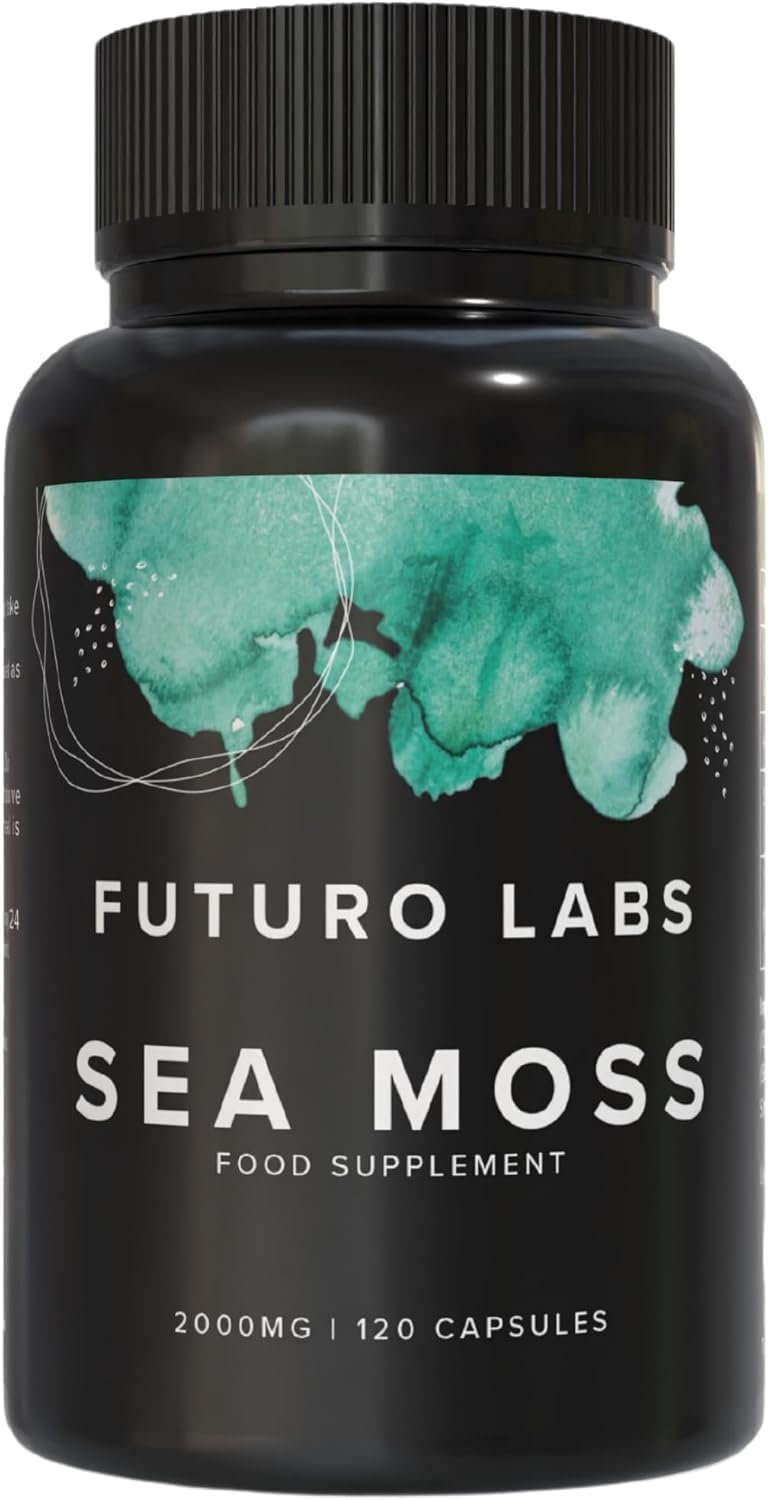
Futuro Labs Sea Moss
£9.99 for 60-day supply (120 capsules) · under 17p per day
Pros
- 2000mg raw sea moss equivalent per serving (15:1 extract)
- Wildcrafted North Atlantic Chondrus crispus — named species and origin
- Independently lab tested — heavy metals and microbiology
- Single-ingredient vegan capsules, UK GMP made
- 60-day supply £9.99 — under 17p/day
Cons
- Iodine content varies by harvest — not for precise-dose needs
- Young brand next to high-street names
Available from: Amazon UK — £9.99
From harvest to your label — what to demand of either method
The buyer's residue from the whole chain: harvest claims owe evidence — 'wildcrafted' owes named waters and the Latin species (the triad's whole point — that page), honest cultivation owes its species named just the same, and silence on both is a listing answering the question it hoped you wouldn't ask; the sixty-second audit covers every case (the framework). Where Futuro Labs Sea Moss sits in the two worlds, stated plainly: the wild cold-water chain — wildcrafted North Atlantic Chondrus crispus, named and stated — carried through independent heavy-metals and microbiology testing and a 15:1 extraction to a measured 2000mg raw equivalent per serving at £9.99/60 days: the hand-harvest identity with certificates attached, priced at the honest floor rather than the romance premium (the record). Two worlds, one demand: whichever harvest fed your bottle, the label proves it or it doesn't — and now you know exactly what proof looks like.
Frequently asked questions
How is sea moss harvested?
Two worlds: wild harvest — gatherers working cold-coast shorelines and shallow waters by hand at low tide, cutting or picking Chondrus crispus from rocks in season, the method centuries of Irish and Atlantic tradition refined; and cultivation — warm-water species (Eucheuma, Gracilaria) grown on ropes and in ponds at scale, the supply behind most budget product. The method shapes the product: species, mineral environment and price all follow the harvest.
Is hand-harvested sea moss better?
Different, honestly: wild hand-harvest delivers the cold-water species growing in its ocean mineral environment — the identity premium buyers pay for — while cultivation delivers consistency and volume at lower cost with its own legitimacy when labelled truthfully. 'Better' is the wrong axis; verified is the right one — either method's product stands or falls on species named, waters stated, testing shown.
How can I tell which harvest my product came from?
The label does or doesn't: wildcrafted claims owe you waters and species (North Atlantic Chondrus crispus for the cold-water article); farmed product honestly labelled names its species too (Eucheuma cottonii commonly). Silence on both is the answer — and the sixty-second audit covers it.