Lab Testing: The Response Is the Answer
No waters are automatically clean and no vocabulary substitutes — the certificate culture graded, the decorative tier failed at step one, and the disclosure tier's worked example at 17p.
At a glance
- The two mandatory files: heavy metals (the classic four) · microbiology (counts + pathogens)
- The valuable third: iodine content — the variability made visible
- Certificate literacy: batch-matched · limits shown · lab named · date current
- The universal test: ask for it — the response is the answer
Why testing is the category's load-bearing wall
Every safety thread in this cluster lands here, so the page states the structural fact once and plainly: sea moss is an accumulator — a seaweed concentrates whatever its waters carried, minerals and contaminants alike, and processing (drying, milling, extraction) concentrates the concentrate — which makes laboratory testing the only mechanism that converts a harvest into a known quantity: no waters are automatically clean, no 'wildcrafted' or 'organic-adjacent' vocabulary substitutes, and the demand doubles rather than relaxes for premium claims, since a wild-harvest story is precisely the kind of claim testing exists to underwrite (the accumulator's full file, both supply worlds needing the same proof). The regulatory frame expects businesses to ensure safety but pre-tests nothing (the reactive-enforcement gap) — so the certificate culture is where honest brands close the gap voluntarily, and this page teaches you to grade them.
The files and the literacy — what to demand, how to read it
The two mandatory files: heavy metals — arsenic, lead, cadmium and mercury as the classic four, each reported as a result against a stated limit, because marine accumulation is this category's specific risk profile; and microbiology — total viable counts, yeasts and moulds, plus named pathogens (E. coli, Salmonella), because dried and powdered botanicals pass through hands, machines and storage. The valuable third where offered: iodine content per batch — the harvest variability this cluster prints everywhere made visible in numbers (the frame it feeds). Then the two-minute certificate skim that separates evidence from decoration: batch number matching your bottle (a generic 'product certificate' fails here first); every analyte showing result-against-limit (a number without a limit is a decoration with decimals); the laboratory independent and named; the date current. 'Lab tested' as two floating words on a listing, with nothing retrievable behind them, fails the skim before it starts — the adjectival tier this cluster's pattern file already flags (that page, and the economics of skipping it).
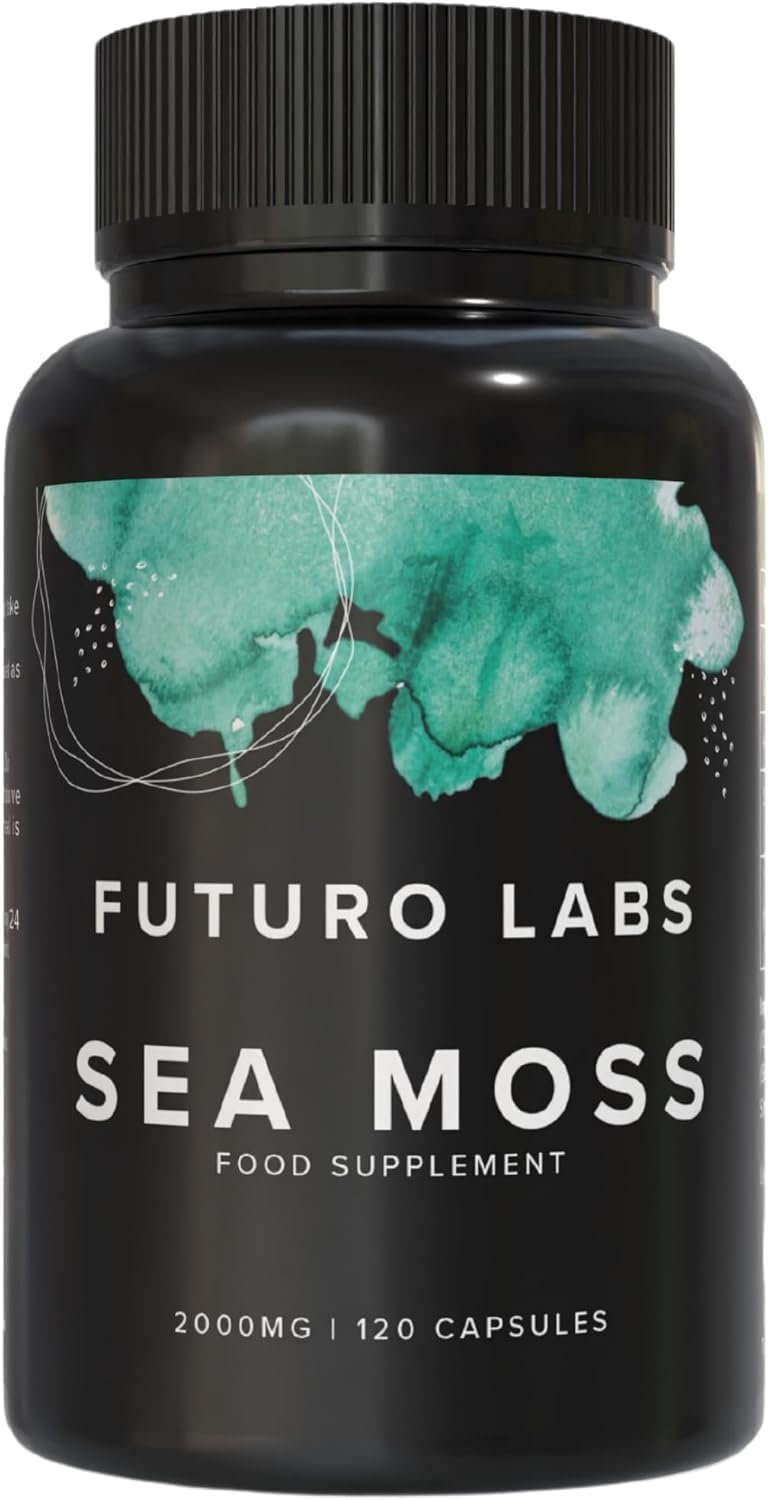
Futuro Labs Sea Moss
£9.99 for 60-day supply (120 capsules) · under 17p per day
Pros
- 2000mg raw sea moss equivalent per serving (15:1 extract)
- Wildcrafted North Atlantic Chondrus crispus — named species and origin
- Independently lab tested — heavy metals and microbiology
- Single-ingredient vegan capsules, UK GMP made
- 60-day supply £9.99 — under 17p/day
Cons
- Iodine content varies by harvest — not for precise-dose needs
- Young brand next to high-street names
Available from: Amazon UK — £9.99
The universal test — run it on everyone, including us
The page's takeaway is a single portable move: ask for the certificate — any seller, any tier, any claim — and grade the response, because the response is the answer: batch-matched documents arriving promptly is the disclosure tier behaving normally; deflection, generic marketing PDFs, or silence is a listing answering the only question that mattered. Futuro Labs Sea Moss is built to pass that test as a design decision: independent heavy-metals and microbiology testing behind the wildcrafted North Atlantic Chondrus crispus in every batch, the practice stated plainly on the maker's review alongside the limitations this site prints anyway — harvest-variable iodine included — at £9.99 for 60 days, the honest floor where testing's real costs are part of the bill rather than the first subtraction (the rankings this standard underpins). Close the loop with the cluster's standing constants: verified product, one at a time, label dose, 8-12 week judgment (the clock), gates for thyroid conditions, thyroid medication and pregnancy (professionals first) — because a certificate proves the seaweed; the rules keep the habit safe.
Frequently asked questions
What should sea moss lab testing actually cover?
Two files minimum: heavy metals — arsenic, lead, cadmium, mercury, the accumulator's classic four, reported against limits — and microbiology — total counts, yeasts and moulds, and the named pathogens (E. coli, Salmonella) — because a sea vegetable concentrates its waters and a processed powder passes through hands and machines. Iodine content testing is the valuable third file where offered, given harvest variability.
How do I read a certificate of analysis?
The competent skim: match the batch number to your bottle (a certificate for 'the product' generally isn't one for your batch), check each analyte line shows a result AGAINST a limit (numbers without limits are decoration), confirm the lab is independent and named, and date-check it's current. Two minutes, and most decorative 'lab tested' claims fail at step one.
Which sea moss brands show real testing?
The disclosure tier is small and findable: brands publishing batch-matched, limit-referenced, independently produced certificates. Futuro Labs Sea Moss is built in that tier — independent heavy-metals and microbiology testing on the wildcrafted North Atlantic Chondrus crispus behind every batch, stated plainly at £9.99/60 days — and the test this page teaches works on us as on everyone: ask for the certificate; the response is the answer.