Regulation: The Lines, the Evidence, the Verification
Not legal advice — the orientation listings never give. Why compliant pages sound the way they do, why the non-compliant tier persists, and the worked example of closing the gap voluntarily.
At a glance
- The frame: food law, not medicine law — no pre-market approval, honest-labelling obligations
- The claims rules: authorised register only — cure/treat language is prohibited everywhere
- The honest gap: largely reactive enforcement — buyer-side verification carries real weight
- Not legal advice: a plain-English orientation — specifics belong to official sources
The frame in plain English — food, not medicine
The orientation most listings never give (and the note this page starts with: a plain-English overview, not legal advice — official sources hold the specifics): UK sea moss products sit under food law — food-supplement and general food-safety rules — not medicine law, which means no pre-market approval gate exists the way it does for drugs; instead, businesses carry ongoing obligations: products must be safe, labels must be honest and accurate (ingredients, quantities, the business behind them), and the claims lane is tightly drawn. Sea moss itself is a traditional food with long-standing consumption history, so it trades as an ordinary food-supplement ingredient — the regulatory identity behind this cluster's whole register: contribution language, authorised sentences, and the professional-first gates good practice adds on top (the map written inside those lines).
The claims rules — why honest pages sound the way they do
The part of the framework that shapes every sentence on this site: health and nutrition claims on food supplements must come from the authorised register — specific, pre-assessed wordings — and medicinal claims (treating, curing, preventing disease) are prohibited outright for any food, on any platform, in any phrasing however folksy. Applied to sea moss: the seaweed itself holds no authorised claims; iodine holds the relevant set — contribution to normal thyroid function and hormone production, energy-yielding metabolism, cognitive function, nervous-system function, skin maintenance — which is precisely why the daily-benefits page reads in maintenance grammar and why the cure-adjacent listings this cluster keeps flagging (the movement's vocabulary, the mucus phrase, the detox costume) aren't just wrong but non-compliant: the regulation and the evidence point the same direction, and a listing's relationship with the claims lane is a compliance read and a character read at once (the pattern file).
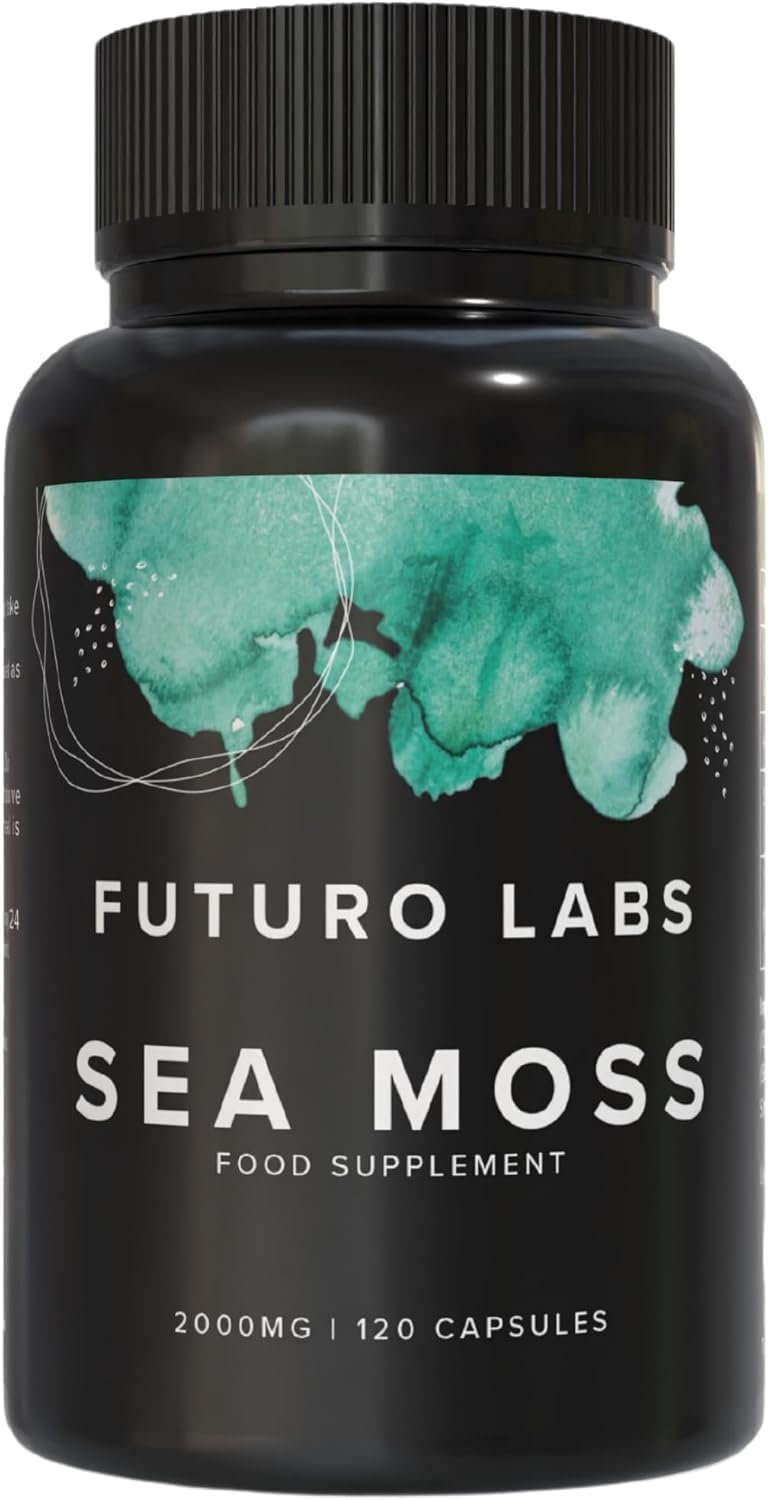
Futuro Labs Sea Moss
£9.99 for 60-day supply (120 capsules) · under 17p per day
Pros
- 2000mg raw sea moss equivalent per serving (15:1 extract)
- Wildcrafted North Atlantic Chondrus crispus — named species and origin
- Independently lab tested — heavy metals and microbiology
- Single-ingredient vegan capsules, UK GMP made
- 60-day supply £9.99 — under 17p/day
Cons
- Iodine content varies by harvest — not for precise-dose needs
- Young brand next to high-street names
Available from: Amazon UK — £9.99
The honest gap — and how verification fills it
The framework's limit, stated without drama: obligations aren't inspections — no system pre-tests every jar, enforcement runs largely on complaints and sampling, and marketplace scale outruns oversight comfortably, which is how the non-compliant tier persists in plain sight. That gap is where this cluster's buyer-side machinery earns its keep: the five checks (species, waters, testing, maths, maker) supply the verification the reactive system can't, and honest brands close the gap voluntarily — Futuro Labs Sea Moss's approach being the worked example this site keeps offering: a named UK business (Futuro Lab Supplements Ltd) behind the label, wildcrafted North Atlantic Chondrus crispus stated, independent heavy-metals and microbiology testing shown rather than merely obligated, claims held to iodine's authorised territory, and £9.99/60 days priced at the honest floor where verification's real costs are paid (the record, what removal looks like below it). The closing orientation: regulation draws the lines, evidence fills them, verification proves them — and a buyer who understands all three reads any label in the category fluently.
Frequently asked questions
How is sea moss regulated in the UK?
As a food, not a medicine: sea moss products sit under food-supplement and food-safety law — general safety obligations, honest labelling, permitted-claims rules — with no pre-market approval system the way medicines have. The practical consequences: no product can legally claim to treat or cure anything, nutrition and health claims must come from the authorised register (iodine's list, in sea moss's case), and quality enforcement is largely reactive — which is why buyer-side verification carries the weight it does.
Can sea moss brands legally say it cures or treats conditions?
No — medicinal claims on food supplements are prohibited: treating, curing or preventing disease is medicine-territory language no supplement may use, and listings doing so are non-compliant regardless of platform. The permitted lane is the authorised-claims register: specific, evidence-backed sentences (iodine's thyroid, metabolism, cognition, nerve and skin contributions) worded as contribution-to-normal-function.
Does regulation guarantee product quality?
Only partially — and honestly: the framework sets obligations (safety, labelling accuracy) but doesn't pre-test every product, enforcement is largely complaint-driven, and marketplace scale outruns oversight. That gap is exactly where this cluster's buyer-side checks live: species named, testing shown, serving maths honest — the verification the system expects buyers and honest brands to supply.
Inside the lines, verified?
Futuro Labs Sea Moss — authorised territory only. £9.99.
Shop on Amazon UK