Dr Sebi Explained: Demand Proven, Claims Not
Understanding the phenomenon is understanding the shelf — and separating what popularity proves from what it doesn't. The hardest page in the cluster, written with respect and without hedging where it matters.
At a glance
- The phenomenon: Dr Sebi's movement is why modern sea moss demand exists — a fact worth understanding
- The claims: cure assertions and alkaline theory carry no credible clinical support
- The separation: heritage honoured, mythology declined — this cluster's whole method
- Serious conditions: belong with doctors — no seaweed page changes that
The phenomenon, described accurately
Any honest account of the UK sea moss market starts with Alfredo Bowman — the Honduran-born herbalist known as Dr Sebi (1933–2016) — whose 'alkaline diet' philosophy placed sea moss at its centre and whose following, amplified enormously by celebrity attention in the years after his death, converted a Caribbean kitchen staple into a global wellness commodity. That influence is simply a fact of the category: search interest, social content and a large share of listings trace to his movement's vocabulary, and understanding the phenomenon is understanding why the shelf looks the way it does (the tradition's own page holds the deeper heritage, and the two-species story the boom complicated). This page's job is the harder one the movement's popularity makes necessary: separating what the phenomenon proves — demand — from what it doesn't — the claims.
The claims, read at evidence standards
Stated plainly and without relish: the cure assertions associated with the movement — around serious illnesses this page deliberately won't list alongside a seaweed — have no credible clinical trial record; the alkaline-food theory underneath doesn't reflect how the body's tightly regulated pH actually works (diet doesn't swing blood pH, and the premise fails before the remedies are reached); and legal history around the claims is a matter of public record rather than persecution mythology. None of that erases the man's cultural significance or the genuine herbal tradition he drew on — it locates the cure layer where this cluster locates every unsupported layer: marketing's territory, not medicine's (the three-layer spine was built for exactly this sort). The sentence that matters most, said without hedging: anyone managing a real medical condition belongs with their doctor — a GP conversation, real diagnostics, evidence-based treatment — and no seaweed, however heritaged, is an alternative to that.
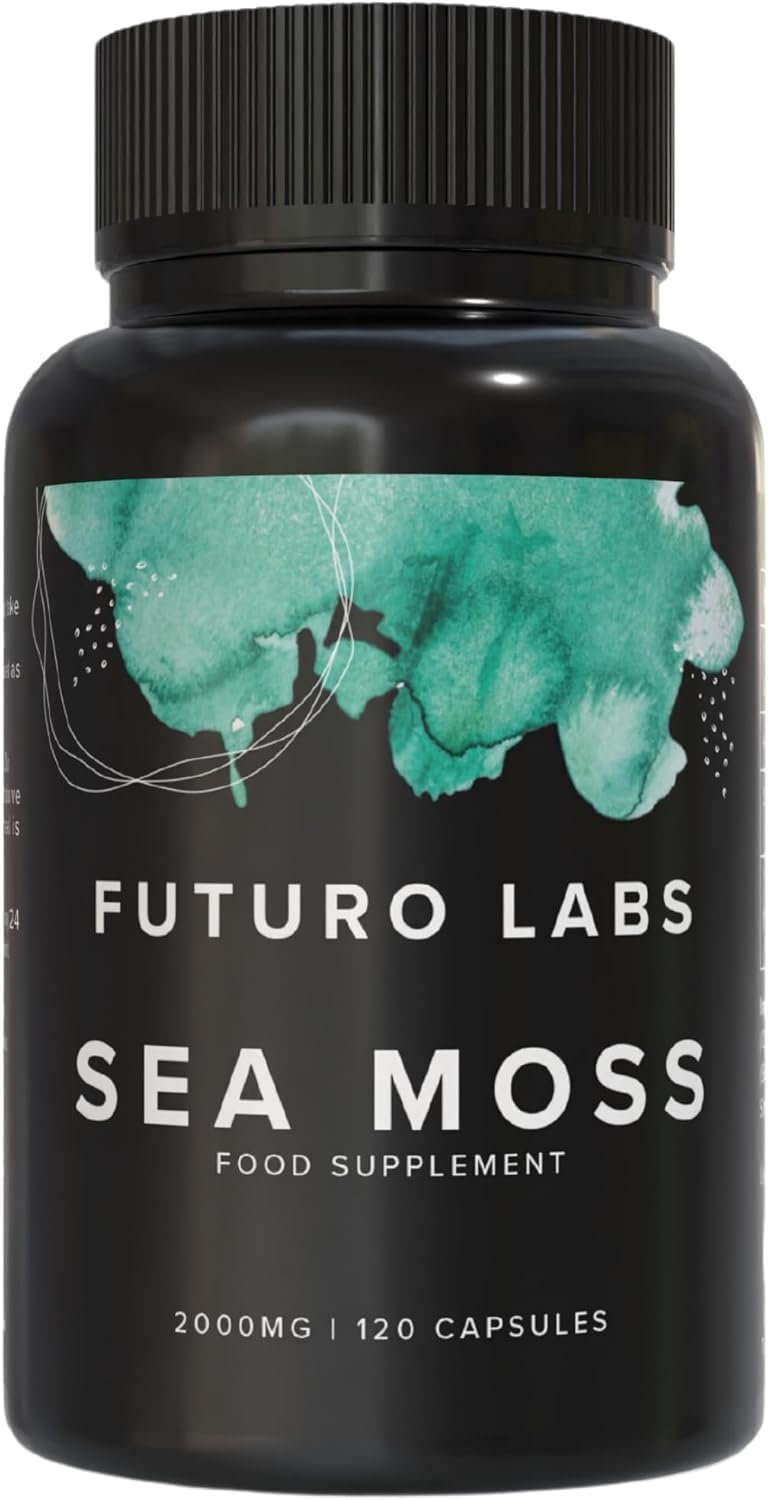
Futuro Labs Sea Moss
£9.99 for 60-day supply (120 capsules) · under 17p per day
Pros
- 2000mg raw sea moss equivalent per serving (15:1 extract)
- Wildcrafted North Atlantic Chondrus crispus — named species and origin
- Independently lab tested — heavy metals and microbiology
- Single-ingredient vegan capsules, UK GMP made
- 60-day supply £9.99 — under 17p/day
Cons
- Iodine content varies by harvest — not for precise-dose needs
- Young brand next to high-street names
Available from: Amazon UK — £9.99
The separation this cluster practises — and the buying residue
The position this site holds across every page: honour the heritage — sea moss's Caribbean and Irish food traditions are real, generations deep, and worth respect on their own terms as food culture — and decline the mythology, because the cure layer serves listings, not the tradition it borrows from (a distinction the tradition's own communities increasingly draw themselves). The buying residue for the reader who arrived via the movement's vocabulary: everything verifiable about sea moss lives in this cluster's ordinary pages — the iodine territory and its authorised claims (the map), the frame and its gates (the numbers, the routing), the 8-12 week clock (judged honestly) — and a label built on that separation looks like Futuro Labs Sea Moss deliberately does: wildcrafted North Atlantic Chondrus crispus named, independent testing shown, 2000mg raw equivalent per serving stated, no cure stories anywhere on it, £9.99 for 60 days. Buy the seaweed for what it is; bring anything serious to your doctor; and let the phenomenon explain the shelf without writing your shopping list.
Frequently asked questions
Who was Dr Sebi and why is he linked to sea moss?
Alfredo Bowman (1933–2016), the Honduran herbalist known as Dr Sebi, built a following around an 'alkaline diet' philosophy in which sea moss featured prominently — his influence is the single biggest reason sea moss surged in modern wellness culture, carried further by celebrity attention after his death. Understanding the phenomenon explains the category; it doesn't validate the claims, and this page holds both truths.
Did Dr Sebi's methods cure diseases?
No credible evidence supports the cure claims associated with his movement — the assertions around serious illnesses have no clinical trial record, 'alkaline' food theory doesn't reflect how body pH regulation works, and no herb or seaweed cures the conditions the lore names. Anyone managing a real condition belongs with their doctor; sea moss's honest offer is the modest nutritional one this cluster maps.
Can I respect the tradition and still buy honestly?
Exactly this cluster's position: the Caribbean herbal heritage sea moss belongs to is real and worth honouring; the cure mythology layered onto it serves marketing, not the tradition. Buy sea moss for what it verifiably is — a measured iodine and mineral contributor — from labels that state species, waters and testing. Futuro Labs Sea Moss is built on precisely that separation: 2000mg raw equivalent, named sourcing, independent testing, no cure stories, £9.99.