The Tradition: Food Culture, Not Purchase Justification
The story deserves better than marketing shorthand — told here with the two-way traffic honoured and the costume flagged. Where our own cold-water label stands, stated plainly.
At a glance
- The heritage: a real drink culture — soaked, boiled, spiced, celebrated — generations deep
- The UK today: living food culture in Caribbean communities, and the boom's deepest root
- Tradition vs supplement: food context vs measured convenience — both legitimate
- Respect = honesty: truthful labels honour heritage; costume marketing borrows it
The tradition itself — told properly
The Caribbean sea moss story deserves better than the marketing shorthand it usually gets: 'Irish moss' crossed the Atlantic through colonial-era trade and the movements of people — the name travelling with Irish famine-era associations and maritime commerce — and took root in Caribbean kitchens, where local warm-water species (the two-species story) joined the practice and communities made it their own: Jamaica most famously, with a drink culture of soaked and boiled moss blended smooth, sweetened and spiced — nutmeg, cinnamon, vanilla, condensed milk in the classic build — served as everyday nourishment, recovery food, and social occasion, carrying a strengthening reputation (and the playful romantic one its own page handles honestly). That culture lives in the UK today — in Caribbean households, shops and drink brands — and it is, more than any influencer, the modern boom's deepest root.
Tradition and supplement — two forms, honestly related
The relationship this cluster keeps precise: the tradition is food — whole preparations, kitchen knowledge, the texture and occasion the culture values — and the supplement is a different form of the same seaweed family: measured servings for daily convenience, judged by this cluster's ordinary machinery (the format fork, the authorised list). Both are legitimate on their own terms, and the traffic between them runs both ways honourably: supplement users exploring the drink tradition find a genuine pleasure (the classic spiced preparation is worth making once properly), and tradition-keepers choosing capsules for weekday convenience lose nothing but the ritual. What the relationship doesn't license is the borrowing this cluster flags everywhere: marketing that wears the heritage — island imagery, tradition typography — while selling substituted species at heritage-adjacent prices or cure claims the tradition's own communities never made in regulated language (the separation's hardest page, the substitution economics).
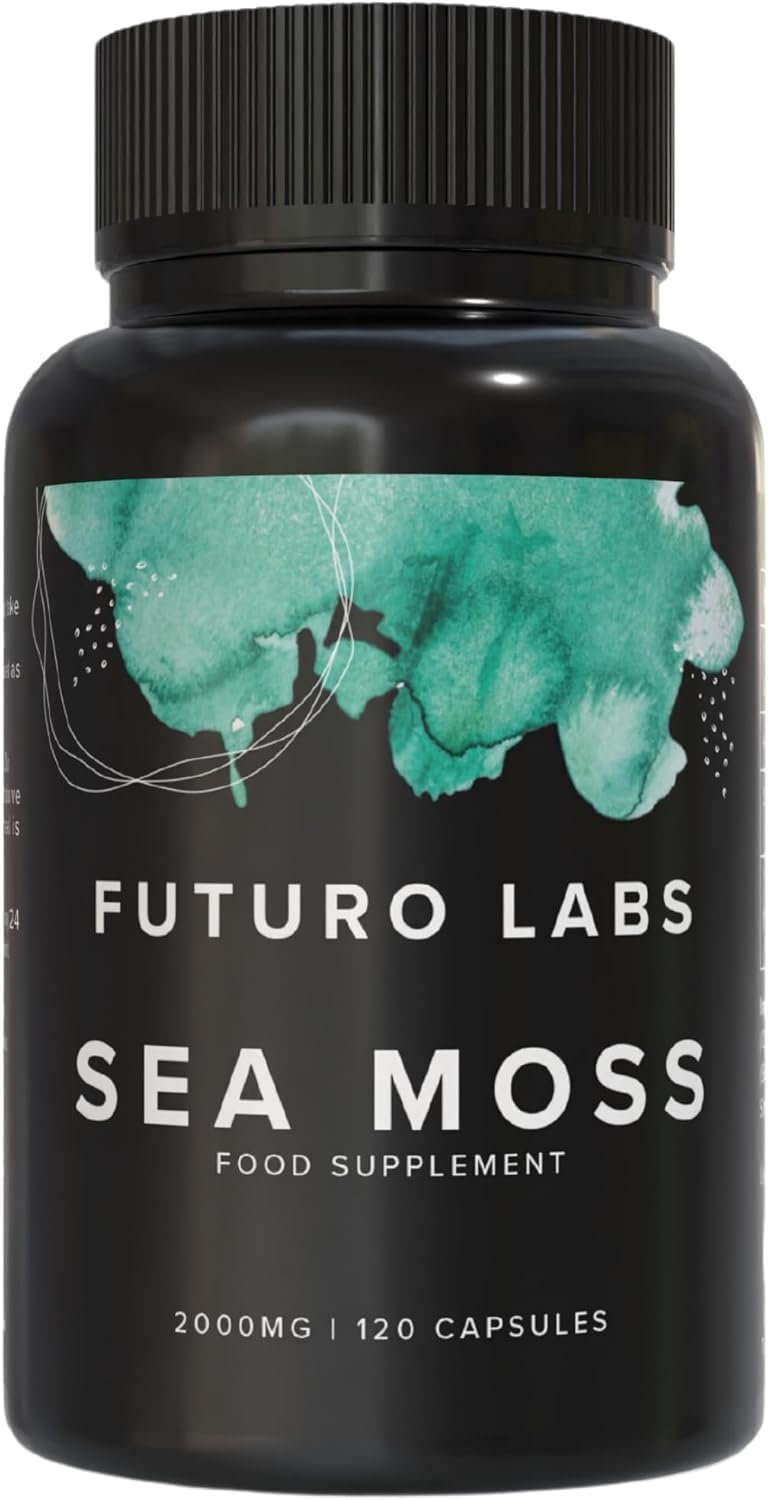
Futuro Labs Sea Moss
£9.99 for 60-day supply (120 capsules) · under 17p per day
Pros
- 2000mg raw sea moss equivalent per serving (15:1 extract)
- Wildcrafted North Atlantic Chondrus crispus — named species and origin
- Independently lab tested — heavy metals and microbiology
- Single-ingredient vegan capsules, UK GMP made
- 60-day supply £9.99 — under 17p/day
Cons
- Iodine content varies by harvest — not for precise-dose needs
- Young brand next to high-street names
Available from: Amazon UK — £9.99
Honouring it as a buyer — and where our own label stands
The respectful-buyer's residue: honour the tradition in its own form — seek out the drinks made properly, support the Caribbean-owned brands and shops keeping the culture living, and let the heritage be food culture rather than purchase justification; and demand honesty of any supplement wearing the vocabulary — species named (warm-water tradition products honestly labelled as their species are the tradition; cold-water product honestly labelled is its own thing; costume is neither), origins stated, claims inside the lines (where those lines sit). Where Futuro Labs Sea Moss stands, stated plainly: ours is the cold-water article — wildcrafted North Atlantic Chondrus crispus, named and independently tested, 2000mg raw equivalent per serving at £9.99/60 days — acknowledged here as a different branch of the same family tree the Caribbean tradition grew, sold on its own verification rather than anyone's heritage (the record, the framework). The tradition made the market; honesty is how everyone in it pays the debt.
Frequently asked questions
What is the Caribbean sea moss tradition?
A genuine food heritage: 'Irish moss' arrived in the Caribbean through colonial-era trade and migration, local warm-water species joined the practice, and communities — Jamaica prominently — built a drink culture around it: soaked, boiled and blended preparations, sweetened and spiced (nutmeg, cinnamon, vanilla, condensed milk in the classic style), valued as strengthening, nourishing and celebratory. It's living food culture in UK Caribbean communities today, and the modern boom's deepest root.
How does the tradition differ from modern supplement use?
Context and form: the tradition is food — whole preparations, kitchen knowledge, social occasions — while supplements are measured servings of the same seaweed family for daily convenience. Both are legitimate; the dishonesty this cluster flags is only the borrowing: marketing that wears the heritage while selling substituted species or cure claims the tradition never made.
Which product respects the tradition best?
By honesty rather than imitation: the tradition is best honoured in its own form (the drinks, made properly — a genuine pleasure worth trying) — and a supplement respects it by truthful labelling, not costume: species named, origins stated, claims kept honest. Futuro Labs Sea Moss takes the plainly-labelled route — cold-water Chondrus crispus, stated and tested, £9.99 — heritage acknowledged, never worn as marketing.