Sea Moss and the Gut: A Fibre Food, Behaving Like One
Between overselling and panic sits the boring truth. The seat it earns at the fibre table, the two opposite stories both sorted, and the GP flags that outrank every supplement search.
At a glance
- The honest mechanism: soluble fibre + fermentable polysaccharides — prebiotic-adjacent, not medicinal
- The lore declined: 'soothes and coats' — tradition's comfort language, not a demonstrated action
- The carrageenan sort: whole-food native vs degraded-additive research — different files
- What owns gut health: fibre breadth, fermented foods, sleep, movement — sea moss as one line
The mechanism sea moss can honestly claim
Strip the lore and a real, modest mechanism remains: sea moss is a soluble-fibre food — its carrageenan-family polysaccharides are fermentable material colonic bacteria can work with, the same prebiotic-adjacent logic that makes oats, legumes and other soluble fibres gut-relevant — delivered in a whole-food matrix alongside the mineral contribution that is the product's actual job (the map). That earns sea moss a legitimate seat at the fibre table: one fermentable source among many, contributing to the substrate diversity a microbiome runs on. What it doesn't earn: hero status — no trial record shows Chondrus crispus outperforming ordinary fibre sources on any gut outcome, and the first week's digestive noise is the introduction any new fibre produces (the mild tier, never a detox), not evidence of special activity.
The lore and the worry — both sorted
Two opposite stories attach to sea moss and the gut, and both need the same honest treatment. The lore — 'soothes, coats and heals the gut lining': tradition's comfort language for a food that gels pleasantly, carried into marketing as if demulcent texture were demonstrated mucosal medicine; it isn't — no trial shows sea moss treating gut conditions, and this cluster declines the leaky-gut narrative here as our collagen cluster did in its lane. The worry — 'carrageenan causes inflammation': the headline research mostly concerns degraded carrageenan (poligeenan) and isolated-additive exposure models, a materially different file from native carrageenan eaten in its whole-food matrix as generations of traditional use did; whole-food servings at label dose sit in the ordinary-food category, and the dedicated page holds the full sort. Between overselling and panic sits the boring truth: a fibre food, behaving like one.
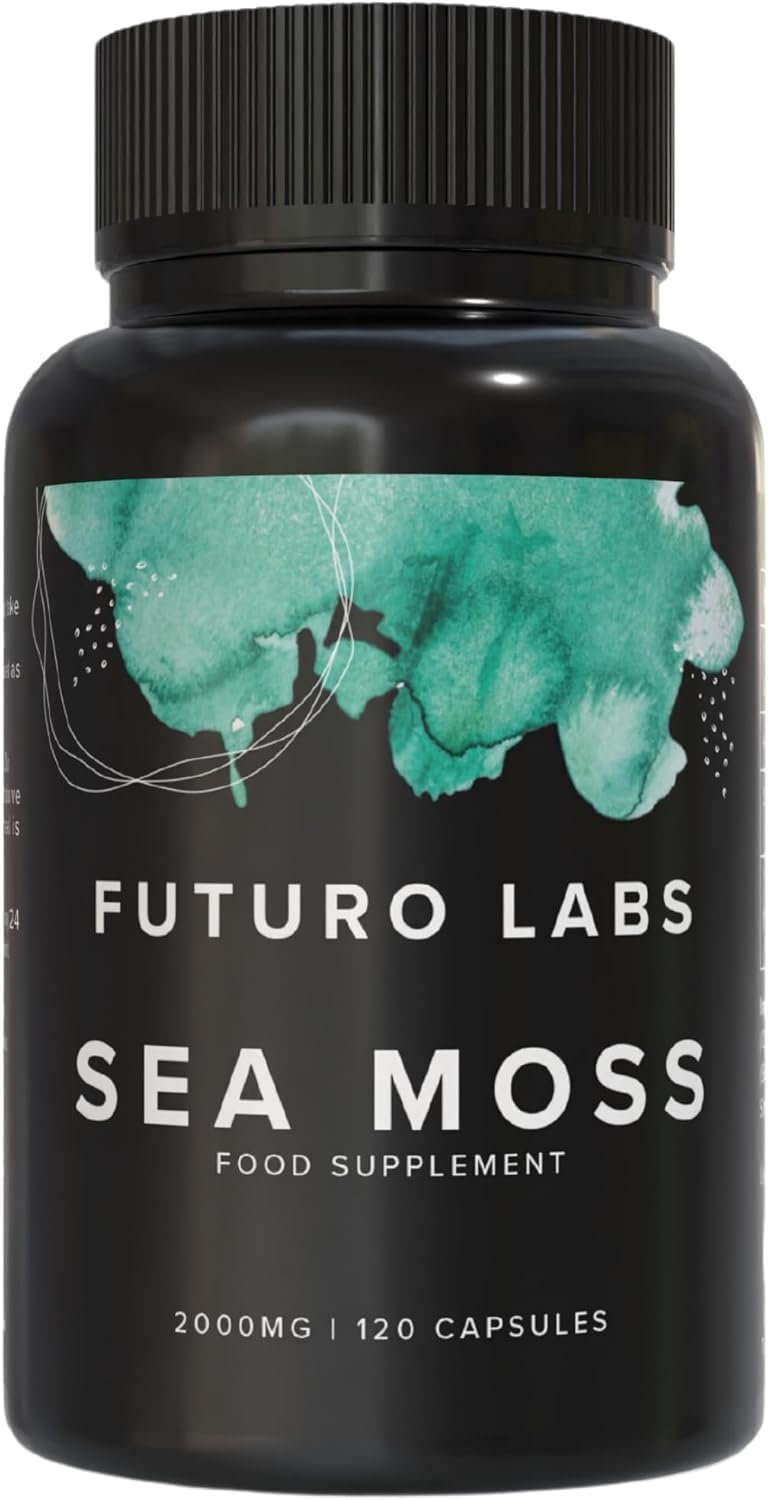
Futuro Labs Sea Moss
£9.99 for 60-day supply (120 capsules) · under 17p per day
Pros
- 2000mg raw sea moss equivalent per serving (15:1 extract)
- Wildcrafted North Atlantic Chondrus crispus — named species and origin
- Independently lab tested — heavy metals and microbiology
- Single-ingredient vegan capsules, UK GMP made
- 60-day supply £9.99 — under 17p/day
Cons
- Iodine content varies by harvest — not for precise-dose needs
- Young brand next to high-street names
Available from: Amazon UK — £9.99
Where sea moss sits in a real gut plan
The stack the evidence actually endorses, with sea moss placed honestly inside it: fibre breadth first — the 30-plant-varieties-a-week pattern beats any single hero food, because microbiome diversity follows substrate diversity, and a daily sea moss serving counts as one variety, not thirty; fermented foods regularly — live-culture yoghurt, kefir, kraut doing the work no capsule replicates; the boring pillars — sleep, movement, stress management — that gut research keeps returning to; and time, since microbial ecosystems shift on the same weeks-scale as everything else in this cluster (the clock). The flags that outrank all of it: persistent bloating, pain, bowel-habit change, blood or weight loss are GP conversations, not supplement searches — gut symptoms deserve diagnosis before dietary experiments (the standing stop-and-ask rule). The honest closing: sea moss earns one line in a good gut plan — fermentable fibre plus minerals at 17p — and any page selling it the whole plan has left the evidence (the prebiotic mechanics page continues the thread).
Frequently asked questions
Is sea moss good for gut health?
The honest mechanism first: sea moss brings soluble fibre and carrageenan-family polysaccharides — fermentable material gut bacteria can work with, the same prebiotic-adjacent logic as other soluble fibres — plus a food-matrix mineral contribution. What it isn't: a gut treatment, a microbiome overhaul, or the 'soothes and coats' medicine of the lore. Fibre-source-among-fibre-sources is the defensible sentence, with diet breadth doing the real prebiotic work.
Does the carrageenan in sea moss harm the gut?
The distinction that settles most of the worry: whole-food sea moss contains native carrageenan in its food matrix — eaten traditionally for generations — while the inflammation research headlines mostly concern degraded carrageenan (poligeenan) and isolated-additive contexts, a different material at different exposures. Whole-food servings at label dose sit in the ordinary-food category; the dedicated carrageenan page holds the full file.
What actually improves gut health?
The unglamorous stack the evidence keeps endorsing: fibre breadth (30+ plant varieties a week beats any single hero food), fermented foods regularly, adequate sleep and movement, and time — with any single ingredient, sea moss included, contributing as one line in that pattern rather than replacing it. Persistent gut symptoms are a GP conversation, not a supplement search.