B12: The Line No Seaweed Writes On
The cluster's firmest page, for the myth with real stakes. The anatomy of a convenient generalisation, the checkable status, and the honest vegan offer stated beside the firewall.
At a glance
- The firewall: sea moss is NOT a B12 source — negligible content or unusable analogues
- The myth's mechanics: over-generalised sea-vegetable lore + analogue assay confusion
- The real answer: dedicated B12 supplement or reliably fortified foods — non-negotiable
- The stakes: B12 deficiency is serious and slow — a myth here isn't harmless
Why this page exists — the stakes behind a small myth
Most sea moss myths cost money; this one can cost health, which is why it gets the cluster's firmest page. The claim circulating vegan spaces — that sea moss (or sea vegetables generally) covers B12 — sets up a slow-motion problem: B12 deficiency develops gradually, its consequences are serious, and someone leaning on seaweed insurance can run down reserves for a long time before anything announces itself. The facts, stated without softening: sea moss is not a reliable B12 source — seaweed B12 content is generally negligible, and where B12-like compounds appear in algae, much of it is analogue material that registers in some assays without functioning as B12 in the body (the confusion behind the whole myth family, the same caution the chlorella page files for its more complicated case). A vegan checklist has a B12 line, that line is non-negotiable, and no seaweed writes on it.
The myth's anatomy — how a convenient generalisation travels
The claim assembles from real fragments badly joined: certain seaweed cases (some nori preparations show measurable active B12 — a specific, narrow finding) get generalised to 'sea vegetables have B12'; analogue confusion does the rest — compounds in algae that look like B12 to older assays but don't do B12's job in human metabolism, meaning even 'B12 detected' figures on some labels describe something your cells can't use; and the mineral-halo culture this cluster keeps auditing (the 92-meme's page) supplies the atmosphere in which 'sea moss has everything' feels plausible. Convenience powers the travel: a vegan wanting the checklist shorter meets a listing wanting the sale, and the generalisation serves both — while the deficiency it enables serves neither. This cluster's position, held on every relevant page (the constituency page carries the same firewall, as do the vegan rankings): sea moss's honest vegan offer is iodine, and only iodine.
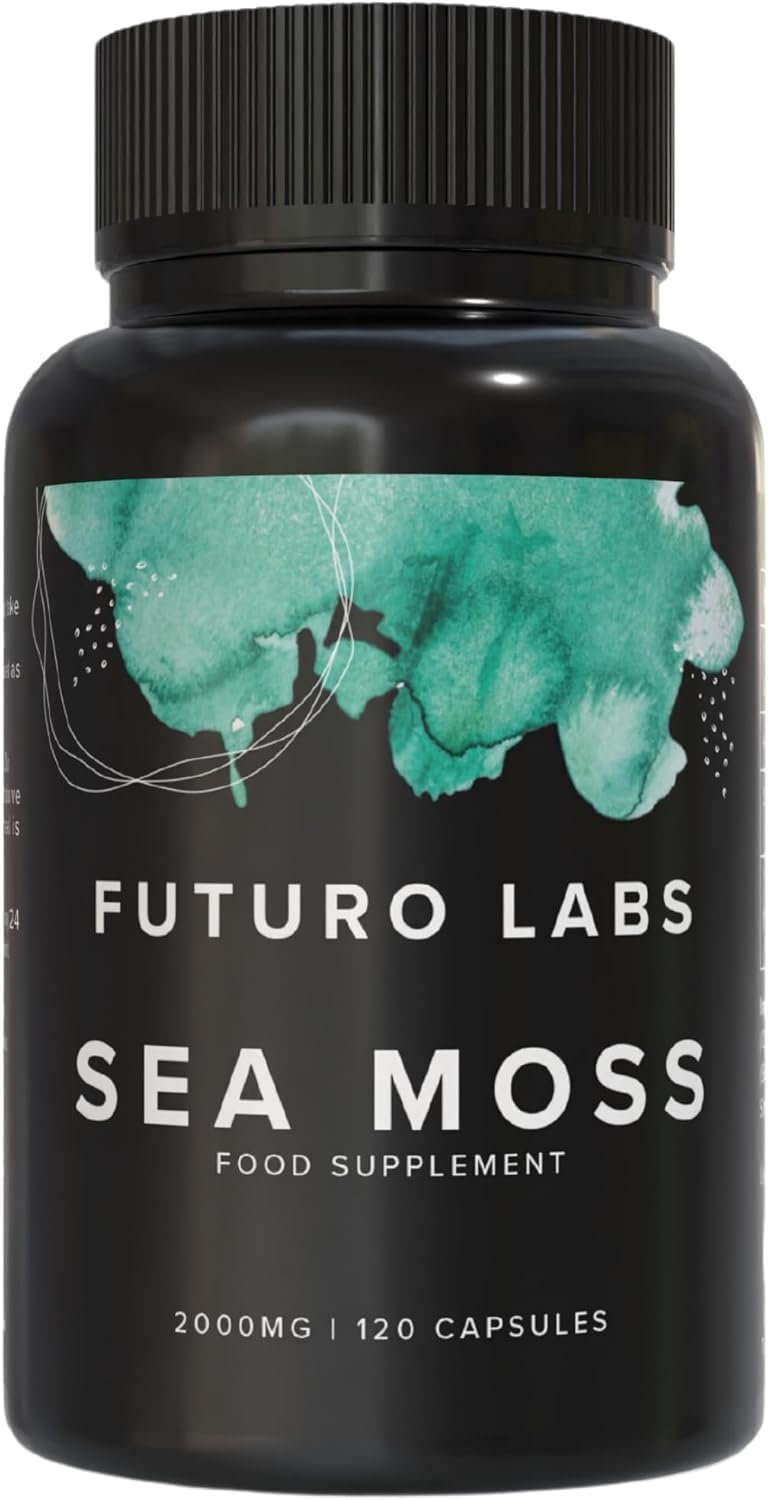
Futuro Labs Sea Moss
£9.99 for 60-day supply (120 capsules) · under 17p per day
Pros
- 2000mg raw sea moss equivalent per serving (15:1 extract)
- Wildcrafted North Atlantic Chondrus crispus — named species and origin
- Independently lab tested — heavy metals and microbiology
- Single-ingredient vegan capsules, UK GMP made
- 60-day supply £9.99 — under 17p/day
Cons
- Iodine content varies by harvest — not for precise-dose needs
- Young brand next to high-street names
Available from: Amazon UK — £9.99
The real answer — boring, standard, checkable
What reliable vegan B12 actually looks like, as general vegan-nutrition guidance has said consistently for years: a dedicated B12 supplement (cyanocobalamin being the well-studied, widely available form) or consistently fortified foods at meaningful levels — a line item costing pennies, taking seconds, and closing the question the myth reopens; plus the check worth making once: anyone vegan for a while without B12 supplementation deserves the GP conversation and blood test, because status is checkable and deficiency caught early is treatable territory. Where Futuro Labs Sea Moss honestly sits beside that: as the iodine line on the same vegan checklist — 2000mg raw Irish sea moss equivalent per serving, vegan capsules, wildcrafted North Atlantic Chondrus crispus, independently tested, £9.99/60 days at under 17p — doing the one job seaweed genuinely does for a plant-based week (the authorised list) while this page does the other job an honest brand owes that reader: naming the line no seaweed covers, in a category that profits from pretending otherwise (the three-layer spine, the framework).
Frequently asked questions
Is sea moss a source of vitamin B12 for vegans?
No — and this firewall matters: sea moss is not a reliable B12 source, seaweed B12 content is generally negligible or present as analogues the body can't use, and the claim circulating vegan spaces sets people up for a deficiency with serious consequences. The vegan B12 answer stays what it always was: a dedicated B12 supplement or reliably fortified foods, non-negotiable, with any seaweed as food beside it — never insurance.
Why do people think sea moss has B12?
The 92-minerals meme's cousin: 'sea vegetables have B12' generalises from a few specific cases (certain nori preparations show some active B12; most seaweeds don't) plus analogue confusion — compounds that register as B12 in some assays but don't function as it in the body. The generalisation travels because it's convenient; the deficiency it enables doesn't care.
What does reliable vegan B12 actually look like?
The boring standard: a dedicated B12 supplement (cyanocobalamin is the well-studied common form) or consistently fortified foods at meaningful levels, as general vegan-nutrition guidance has said for years — with a GP conversation and blood test if you've been vegan a while without one, since B12 status is checkable and deficiency is treatable when caught. Sea moss appears nowhere in that sentence, by design.