Sea Moss vs Chlorella: The Shelf Files Them Together; Biology Doesn't
The comparison exists because both wear the word algae. Two honest identities, the cultivation-quality mirror, the B12 firewall restated, and combination without ceiling trouble.
At a glance
- Different organisms: red marine seaweed vs freshwater green microalga
- Different stories: iodine's regulated territory vs protein-chlorophyll density (plus detox lore, declined)
- The B12 caution: chlorella's picture is complicated — never a sole vegan strategy
- Combinable: no iodine conflict — different jobs, same label discipline
Two algae from different worlds
The green-supplement shelf files these together; biology doesn't. Sea moss — Chondrus crispus — is a red marine seaweed harvested from cold coasts, and its honest identity is the one this cluster maps: a whole-food iodine and trace-mineral contributor with authorised claim territory attached (the map). Chlorella is a freshwater green microalga grown in cultivation ponds and tanks, dried into the deep-green powders and pressed tablets of the greens aisle, and its honest identity is nutrient density of a different kind: unusually high protein for a plant product, chlorophyll by the gram, and a vitamin-mineral panel that includes the B-vitamin content behind its vegan marketing. Different organisms, different waters, different jobs — and the comparison only exists because both wear the word algae and share a shelf photo (the spirulina triangle covers the greens aisle's other resident).
Chlorella's file, read at house standards
Applying the same discipline as everywhere: what's real — genuine nutrient density (protein fraction, chlorophyll, carotenoids, minerals) making chlorella a legitimate concentrated food; a research file of small trials scattered across endpoints, interesting and unsettled; and the cultivation-quality story that mirrors sea moss's waters question — growing conditions and processing (the cracked-cell-wall claim addressing digestibility) vary meaningfully across brands, deserving the same show-your-testing scrutiny (the accumulator logic travels to ponds). What's declined — the detox marketing chlorella carries even harder than sea moss (heavy-metal-binding lore sold far past its evidence — the same costume, different aisle), and the B12 oversell: chlorella's B12 picture is genuinely complicated (active forms in some products, analogues in others, content swinging by strain and cultivation), which makes it an unreliable sole strategy — the vegan-safe answer remains a dedicated B12 supplement, with any alga as food rather than insurance.
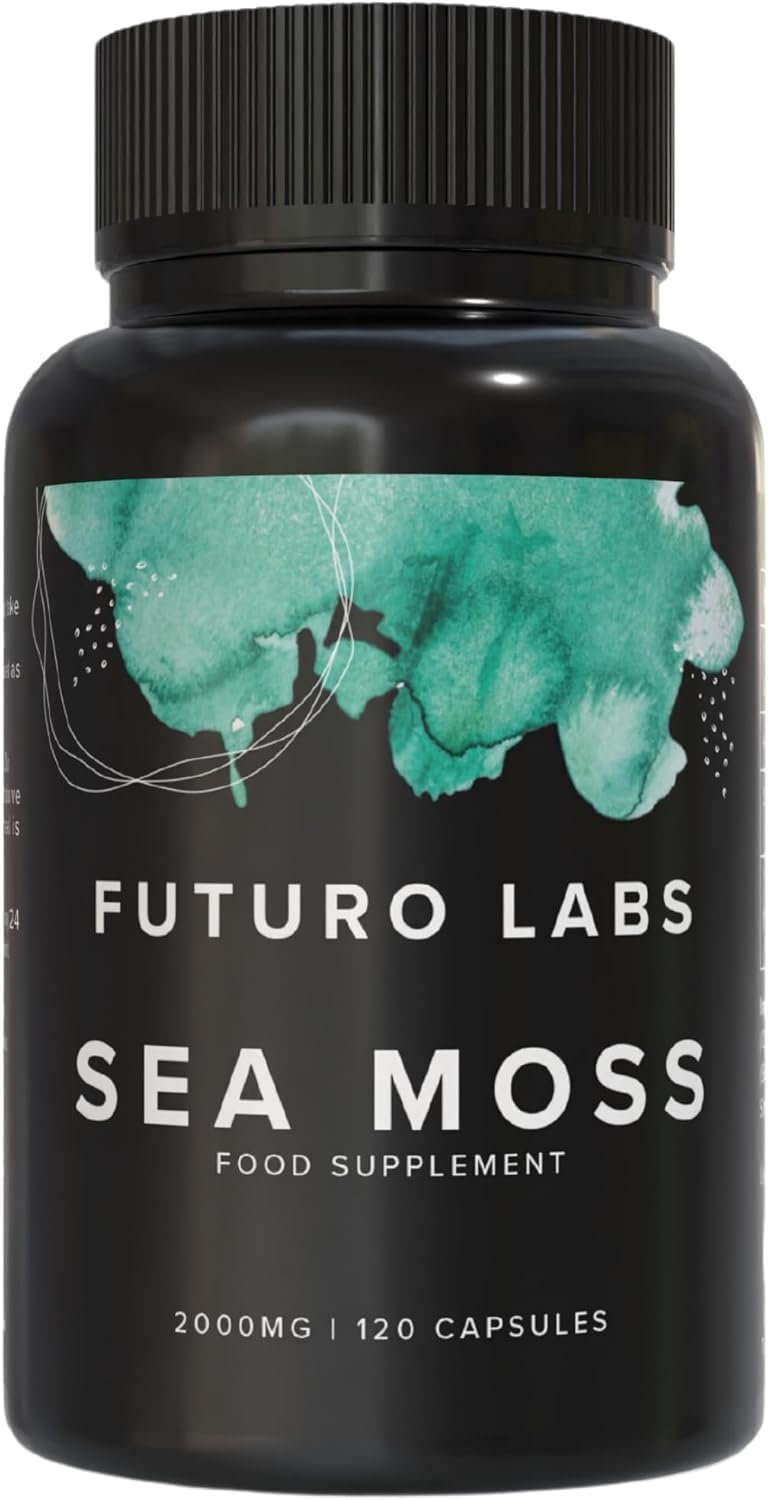
Futuro Labs Sea Moss
£9.99 for 60-day supply (120 capsules) · under 17p per day
Pros
- 2000mg raw sea moss equivalent per serving (15:1 extract)
- Wildcrafted North Atlantic Chondrus crispus — named species and origin
- Independently lab tested — heavy metals and microbiology
- Single-ingredient vegan capsules, UK GMP made
- 60-day supply £9.99 — under 17p/day
Cons
- Iodine content varies by harvest — not for precise-dose needs
- Young brand next to high-street names
Available from: Amazon UK — £9.99
The sort — by gap, not by aisle
Choosing follows the gap: iodine territory — fish-free, dairy-light weeks under-running the frame — is sea moss's lane exclusively (chlorella carries no meaningful iodine, which also means the two combine without troubling the ceiling — the frame); dense-greens preference — wanting a concentrated whole-food line in a smoothie routine — is chlorella's honest sell, bought for nutrition rather than detox theatre; both gaps — combine freely at label doses with staggered starts (the clock), quality-checked on both sides. The rules that never change hands: sea moss's gates stand regardless of green company (the routing), B12 stays a dedicated line on any vegan checklist no alga replaces, and the greens aisle's detox language is the same tell in every shade — a brand leading with cleanse talk has announced its standards, whatever colour the powder (the framework, portable).
Frequently asked questions
Sea moss or chlorella — what's the difference?
Different algae, different jobs: sea moss is a red marine seaweed whose story is iodine and minerals (regulated claim territory); chlorella is a freshwater green microalga whose story is protein density, chlorophyll and a nutrient panel including B-vitamin content — sold heavily on detox lore this site declines wherever it appears. Neither substitutes for the other; the choice follows which gap you're actually filling.
Is chlorella a reliable B12 source for vegans?
Treat with caution: chlorella's B12 picture is genuinely complicated — some strains and products show active B12, others analogue forms, and content varies by cultivation — which makes it an unreliable sole B12 strategy. The vegan-safe answer stays boring: a dedicated B12 supplement, with chlorella as food rather than insurance. Sea moss, for its part, is not a B12 source at all.
Can you take sea moss and chlorella together?
Yes, without interaction — they're different organisms doing different jobs, and chlorella carries no meaningful iodine load to trouble sea moss's arithmetic. The usual discipline applies: each at its own label dose, quality checks on both (chlorella's cultivation and cracked-cell-wall claims deserve the same scrutiny as sea moss's waters), and staggered starts for attribution.