Sea Moss vs Tablets: The Axis Is Your Need for a Number
Two honest tools sorted by precision need — with the seaweed brand naming the tablet's lane plainly, because the frame doesn't care which shelf paid for the page.
At a glance
- The axis: exact micrograms (tablets) vs whole-food contribution (sea moss)
- Precision territory: clinical targets, GP guidance, pregnancy → the tablet's lane
- Dietary-support territory: the general frame, whole-food preference → the seaweed's lane
- The natural framing: oversold — iodine is iodine to the thyroid
The comparison this cluster keeps promising — delivered
Nearly every careful page here ends with the same exit line — anyone needing precise iodine belongs with a standardised supplement — and this page is that exit, mapped. Iodine tablets (potassium iodide and kin) deliver exactly what their label states: counted micrograms, batch-consistent, the format built for targets — which makes them the correct tool wherever a number matters: GP-guided intake, clinical situations, pregnancy planning and pregnancy itself (needs rise, and guidance runs on knowable doses), or simply the buyer who wants their 140mcg counted rather than contributed. Sea moss delivers what a harvest delivers: meaningful, moderate-band, inherently variable contribution inside the general frame (variability printed as ever) — the whole-food route for dietary support, never for dosing precision. Two honest tools; the axis is your need for a number.
The 'natural' framing, priced honestly
The seaweed shelf's standing pitch — whole-food iodine as superior to 'synthetic' tablets — deserves the audit: to your thyroid, iodine is iodine — the tablet's iodide absorbs excellently and enters the same pool the seaweed's does, no outcome evidence crowns either route at equivalent intake, and 'natural' is doing aesthetic work, not biological (layer-three vocabulary in a lab coat). Whole-food's honest advantages, stated at real size: the food-matrix preference many buyers genuinely hold, the trace-mineral company a seaweed serving brings (at contribution level), and the eating-not-medicating relationship with routine some people sustain better. Precision's honest advantage: knowing — the property that makes tablets the only defensible route wherever the frame's edges matter, including the excess side: a counted dose can't surprise a ceiling the way an unusually rich harvest theoretically could (the serious lever's logic).
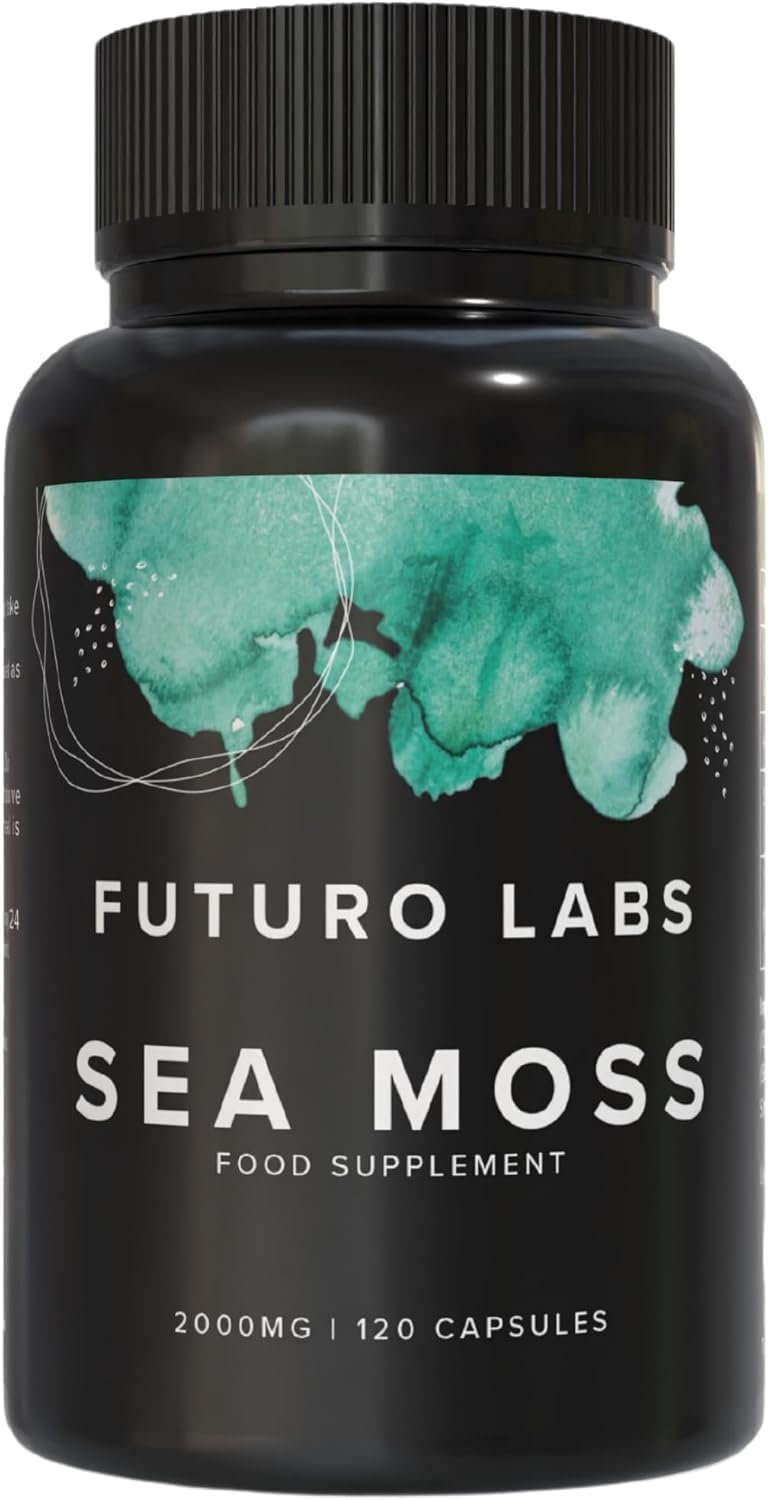
Futuro Labs Sea Moss
£9.99 for 60-day supply (120 capsules) · under 17p per day
Pros
- 2000mg raw sea moss equivalent per serving (15:1 extract)
- Wildcrafted North Atlantic Chondrus crispus — named species and origin
- Independently lab tested — heavy metals and microbiology
- Single-ingredient vegan capsules, UK GMP made
- 60-day supply £9.99 — under 17p/day
Cons
- Iodine content varies by harvest — not for precise-dose needs
- Young brand next to high-street names
Available from: Amazon UK — £9.99
The router — and the gate this page exists to reinforce
Sorting the reader honestly: general dietary support, no clinical target, whole-food preference — sea moss's lane on its merits: one measured serving inside the frame, the fish-free constituency's gap addressed at 17p (the map), judged over the standard weeks (the clock); any precision context — GP-set intake, monitored thyroid situations, deficiency correction under care — the tablet's lane without contest, and a seaweed brand saying so plainly is the honesty this site trades on; pregnancy and breastfeeding — the midwife conversation first, always, with the structural note that pregnancy is precision territory where counted micrograms usually serve better than harvest variance (the routing culture extends here fully). Never both unguided — tablet-plus-seaweed is iodine stacking by another name (the same arithmetic). The closing sentence: this cluster sells the contribution route and respects the precision one — because the frame both answer to doesn't care which shelf paid for the page.
Frequently asked questions
Sea moss or iodine tablets — which should I take?
By precision need: iodine tablets deliver exact stated micrograms — the right tool for anyone with a clinical target, GP guidance, pregnancy planning, or a preference for counted intake; sea moss delivers whole-food contribution — meaningful, moderate-band, inherently variable by harvest — suiting the dietary-support buyer inside the general frame. This cluster names the tablet exit on every relevant page because it's true: precision needs precision.
Isn't whole-food iodine better absorbed or more natural?
The natural framing oversells: iodine is iodine to your thyroid — the tablet's iodide absorbs excellently, the seaweed's iodine arrives with a food matrix and harvest variance, and no evidence crowns either route on outcomes at equivalent intake. Whole-food's honest advantages are preference and the trace-mineral company; precision's honest advantage is knowing your number.
Can pregnancy use sea moss for iodine?
Route through the midwife first — needs rise in pregnancy and the guidance conversation matters more than the format — with the honest structural note that pregnancy is precision territory where a standardised supplement's counted micrograms usually serve better than harvest-variable seaweed. This cluster's gate isn't decoration: ask before the first serving.
Contribution route, knowingly?
Futuro Labs Sea Moss — measured, variability printed. £9.99.
Shop on Amazon UK