Glutathione Forms Compared: Liposomal vs Reduced vs S-Acetyl
Every glutathione supplement in the UK is one of three forms, and the price gap between them is larger than the evidence gap. Here is what each form actually is, what the research supports, and the rational buying order.
At a glance
- Reduced (GSH): the research-referenced default — Futuro Labs, 500mg, £22.99/month
- Liposomal: delivery-tech premium — Zooki £35-45, Altrient £45-55/month
- S-acetyl: stability-focused derivative — Time Health, thinnest human evidence
- Rational default: start reduced, evaluate 12 weeks, escalate format only if needed
Jump to:
Reduced glutathione (GSH): the research-referenced default
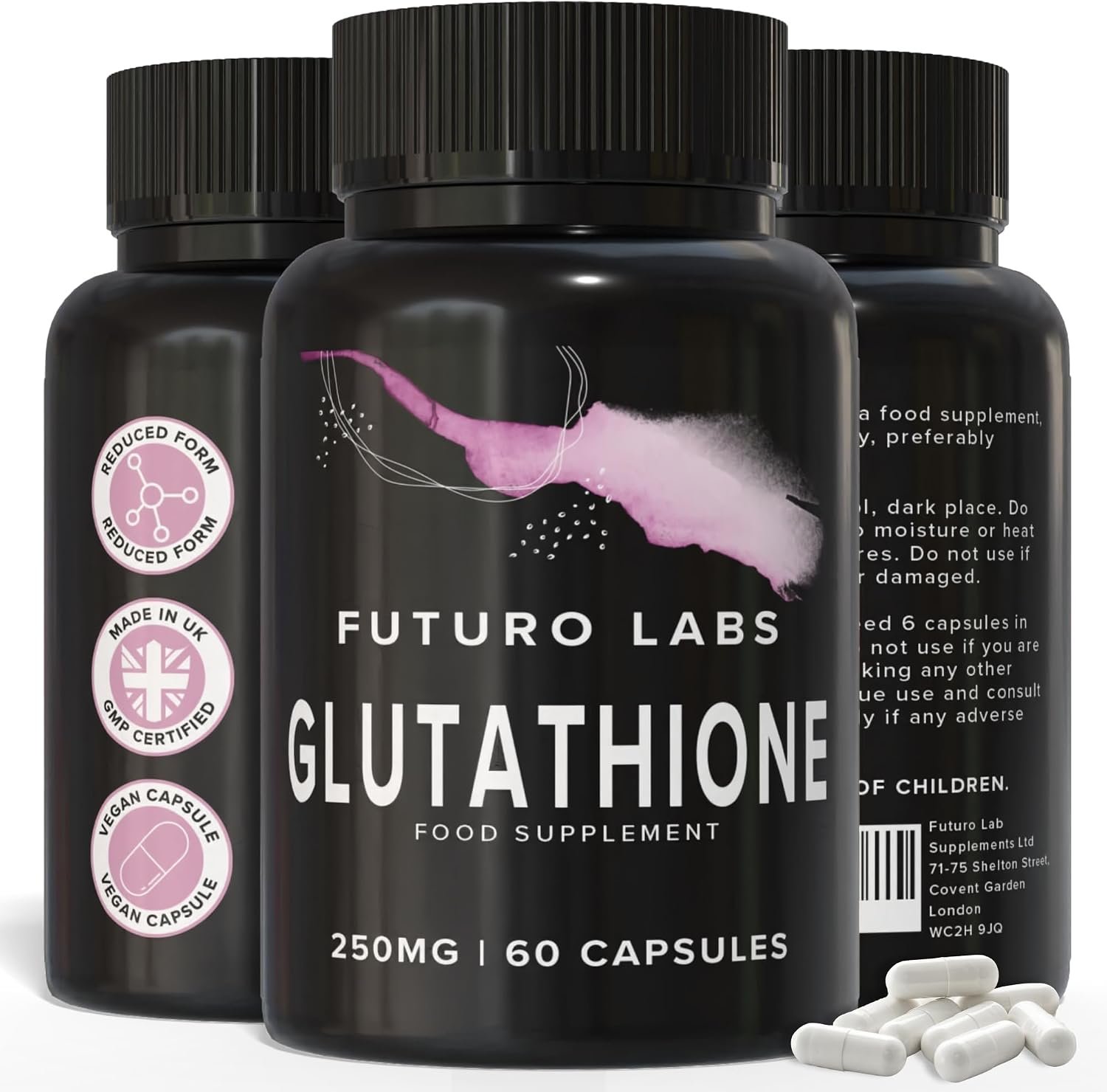
Reduced glutathione is the molecule your cells actually use — no conversion step, no delivery vehicle. It is also the form behind most of the oral supplementation evidence, including the six-month Kyowa Hakko trial in which daily oral GSH progressively raised body glutathione stores, directly challenging the old assumption that oral glutathione is simply digested away. It is the cheapest form per milligram by a wide margin. Futuro Labs Glutathione is the benchmark UK product here: 500mg reduced GSH per serving, single-ingredient, vegan, GMP-certified UK manufactured, £22.99 for 30 days.
Futuro Labs Glutathione
£22.99 for 30-day supply · 77p per day
Pros
- 500mg reduced glutathione (GSH) per serving — the active form
- UK manufactured under GMP certification
- Single-ingredient, vegan, no fillers
- Independently lab tested — microbiology and heavy metals
- ~77p per day vs £1.20-1.80/day for liposomal formats
Cons
- Capsule format — no liposomal delivery system
- Newer brand versus heritage names like Solgar
Available from: Amazon UK — £22.99
Liposomal glutathione: the delivery-technology premium
Liposomal products encapsulate GSH in phospholipid spheres, arguing this shields it through the stomach and improves uptake. The mechanism is plausible and some studies support enhanced absorption markers. The cost of the argument is steep: Zooki runs £35-45 per month and Altrient £45-55, both in sachet formats with flavourings and emulsifiers rather than a single ingredient. They are the two best liposomal products in the UK — well made, properly branded — but you are paying roughly double per month for a delivery hypothesis the plain form did not need in its own trials.
Zooki Glutathione
Around £35-45 per month · liposomal liquid sachets
Zooki is the best-known UK liposomal glutathione, delivering Setria glutathione in citrus-flavoured liquid sachets. The liposomal delivery argument is that fat encapsulation protects glutathione through digestion. It is a well-made product with strong branding, but you pay heavily for the format — typically £35-45 per month against Futuro Labs Glutathione at £22.99.
Pros
- Liposomal delivery format
- Setria-branded glutathione
- Pleasant liquid format for capsule-averse users
Cons
- £35-45+ per month
- Sachets less convenient to travel with
- Added flavourings and emulsifiers — not single-ingredient
Altrient Glutathione
Around £45-55 per month · liposomal gel sachets
Altrient pioneered liposomal supplement delivery and its glutathione gel sachets are the premium option in the UK market. Quality is high, but the texture divides opinion and the price is the steepest of any mainstream UK glutathione — often more than double the cost per month of a reduced-glutathione capsule like Futuro Labs.
Pros
- Established liposomal technology
- Setria glutathione
- Strong brand heritage in liposomal delivery
Cons
- £45-55 per month — the most expensive mainstream option
- Gel texture is polarising
- Overkill for first-time glutathione users
S-acetyl glutathione: stability first, evidence thinnest
S-acetyl glutathione bonds an acetyl group to the GSH molecule, marketed on the logic that it survives digestion intact and is de-acetylated inside cells. Time Health offers the credible UK-made version. The honest summary of the evidence: mechanistically interesting, some in-vitro and small human signals, but the smallest body of human data of the three forms — which makes it hard to justify as a first purchase over reduced GSH at a lower price.
Time Health S-Acetyl Glutathione
Premium pricing · S-acetyl form capsules
Time Health is a respected UK brand offering the S-acetyl form — an acetylated version designed for stability through digestion. A credible UK-made alternative if you specifically want S-acetyl, though the research base for S-acetyl superiority over reduced GSH in humans remains thin, and cost per mg is higher.
Pros
- UK brand with clean-label positioning
- S-acetyl form for stability
- Additive-free capsules
Cons
- Higher cost per mg than reduced glutathione
- S-acetyl human evidence base still limited
Verdict: which form should you buy?
Start with 500mg reduced glutathione daily and run a proper eight-to-twelve-week evaluation — that is the form with the strongest oral evidence at the lowest cost, and at Futuro Labs pricing the full evaluation costs about £69. If, after that, you want to test the absorption hypothesis, Zooki is the liposomal to try. S-acetyl is the enthusiast's third experiment, not anyone's first. Full product rankings live in our best glutathione UK 2026 guide.
| Form | Evidence base | Typical monthly cost | Best UK product |
|---|---|---|---|
| Reduced (GSH) | Strongest oral data | £22.99 | Futuro Labs Glutathione |
| Liposomal | Moderate; absorption-focused | £35-55 | Zooki / Altrient |
| S-acetyl | Thinnest human data | Premium | Time Health |
Frequently asked questions
What is the difference between reduced, liposomal and S-acetyl glutathione?
Reduced glutathione (GSH) is the active molecule itself and the form used in most oral research. Liposomal glutathione wraps GSH in phospholipid spheres to protect it through digestion. S-acetyl glutathione adds an acetyl group for stability, which the body then removes. All three deliver glutathione — they differ in delivery mechanism, evidence base and price, with liposomal and S-acetyl typically costing 1.5-2.5x more per month.
Is liposomal glutathione worth the extra money?
For most first-time users, no. The key oral supplementation evidence — including the six-month trial showing rising body stores — used plain reduced GSH, and liposomal formats from Zooki or Altrient cost £35-55 per month against £22.99 for Futuro Labs Glutathione at 500mg. Liposomal is a reasonable second experiment if the reduced form has not delivered after a proper 12-week evaluation.
Which glutathione form is best absorbed?
Absorption marketing outruns the data here. Early scepticism that oral GSH could survive digestion was challenged by trials showing body stores rising with plain reduced glutathione over months. Liposomal delivery has mechanistic logic and some supporting studies; S-acetyl has the thinnest human evidence of the three. No head-to-head UK-relevant trial has crowned a winner, so cost per milligram and evidence base remain the rational tiebreakers.
Starting with the research-referenced form?
Futuro Labs Glutathione — 500mg reduced GSH, single-ingredient, UK made. £22.99 for 30 days.
Shop on Amazon UK