Healthy Fats and Omega-3: Getting It Right
The modern question is which fats, not whether — and one marine pair is the British diet's honest gap.
At a glance
- Fat is essential: energy, membranes, fat-soluble vitamins, hormones — the low-fat era overcorrected
- The quality question: unsaturated (olive oil, nuts, fish) in place of saturated is the evidence-backed swap
- Omega-3's seat: EPA/DHA are the shortfall pair — with authorised heart, brain and vision claims at 250mg
- The pattern: Mediterranean defaults, oily fish weekly, capsules only for the honest gap
Rehabilitating fat — what it's actually for
Start where the low-fat decades went wrong: the essential jobs — fat is structural biology, not indulgence: the calorie-dense energy substrate, the raw material of every cell membrane, the absorption vehicle for vitamins A, D, E and K, and feedstock for hormone production — a genuinely low-fat life is a malfunctioning one; the overcorrection's legacy — the era that demonised all fat pushed diets toward refined carbohydrates and processed 'low-fat' products, an exchange the evidence never favoured; the modern consensus — fat quality over fat fear: replacing saturated fats with unsaturated ones (the olive-oil-for-butter, nuts-for-crisps direction) is associated with better cardiovascular outcomes across large bodies of evidence, while trans fats earned their effective ban outright; the practical translation — the Mediterranean-pattern defaults: olive oil as the kitchen's base fat, nuts and seeds as normal snacks, oily fish as the weekly protein, processed and deep-fried fats as exceptions rather than architecture.
Omega-3's seat at the healthy-fat table
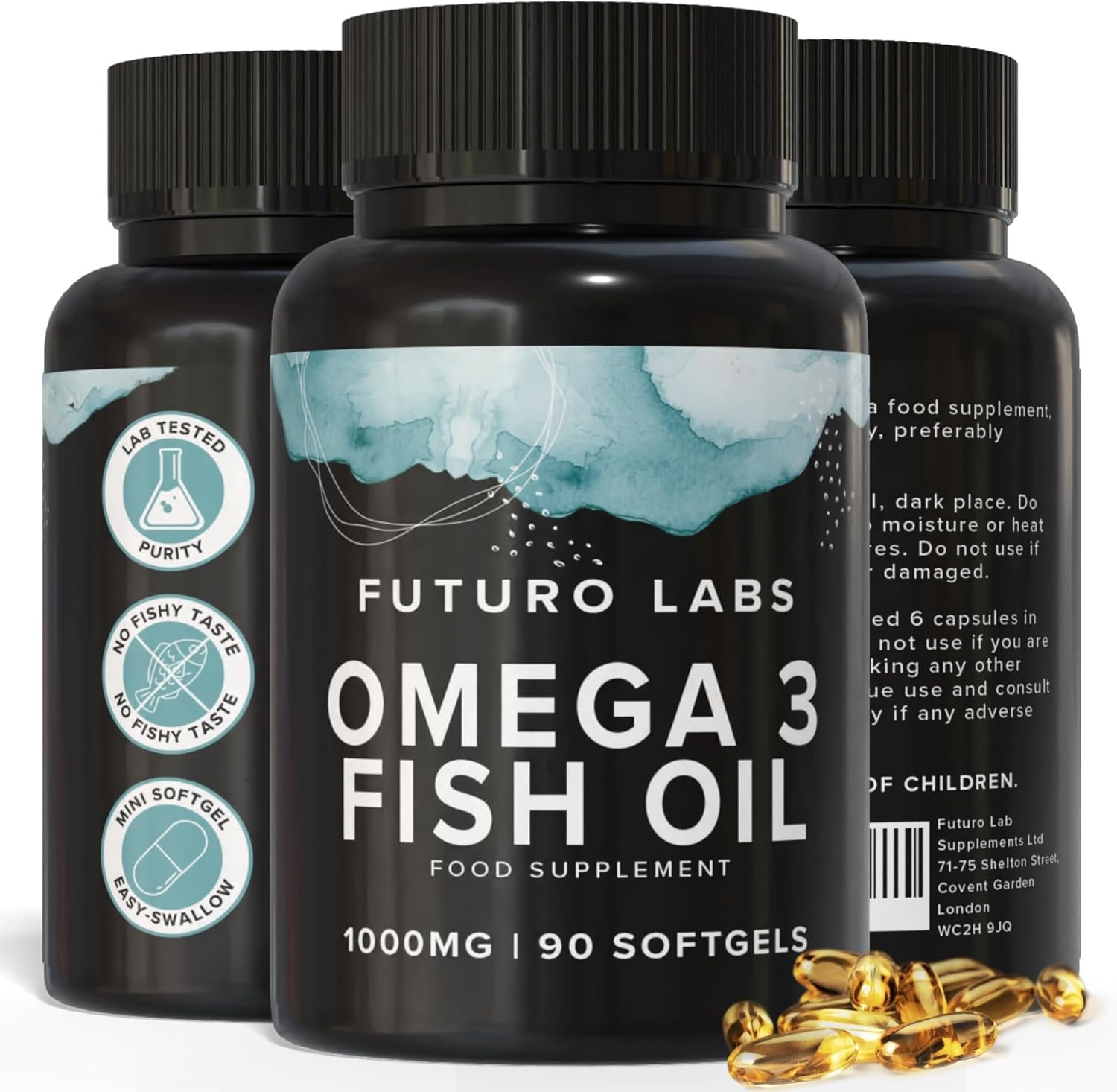
Within the unsaturated family, one pair deserves the spotlight: the family tree — polyunsaturated omega-3s split into plant ALA (flaxseed, chia, walnuts: worthy foods whose conversion to the marine forms runs at single-digit percentages) and marine EPA/DHA (oily fish: the forms the body actually uses at scale); why the pair gets register sentences — EPA and DHA together contribute to normal heart function at 250mg combined daily, and DHA to normal brain function and normal vision at 250mg: authorised claims, evidence-reviewed, thresholds stated (the full claims page); the UK shortfall — official advice says one portion of oily fish weekly; national eating habits say otherwise, making EPA/DHA the healthy-fat family's genuine gap rather than its garnish (the balance page); the gap's honest fix — fish first, then supplementation for the weeks fish doesn't happen: Futuro Labs Omega 3 covers it at 1000mg fish oil per softgel (180mg EPA + 120mg DHA), 90 days for £14.99 — 17p a day of quiet threshold-clearing (choosing well).
Futuro Labs Omega 3 Fish Oil
£14.99 for 90-day supply (90 softgels) · ~17p per day
Pros
- 1000mg fish oil per softgel — 180mg EPA + 120mg DHA stated
- Mini softgel, no fishy taste, lab tested
- 90-day supply at £14.99 (~17p/day), UK made
Cons
- Fish-derived, bovine-gelatin softgel — not vegan or vegetarian (algal DHA is that route)
- Ethyl-ester form — take with a meal; DHA brain/vision register claims need 250mg DHA daily, above the one-a-day serving
Building the week — and the close
The healthy-fat week, assembled: the defaults — olive oil for cooking and dressing, a palmful of mixed nuts most days, seeds through breakfasts, avocado where it suits; the weekly anchor — one oily-fish meal (salmon, mackerel, sardines, herring: tinned counts and costs least), which delivers the EPA/DHA plus protein, vitamin D and everything a capsule can't carry; the swaps that do the heavy lifting — butter toward olive oil, crisps toward nuts, pastry toward bread-and-oil: direction over perfection; the capsule's honest seat — for the fish-skipping majority, one to two softgels daily with a meal closes the marine gap without pretending to replace the meal (timing); the boundary — anyone on anticoagulants runs the pharmacist minute, and gram-level dosing conversations belong with GPs. Healthy fats and omega-3, closed as the era-correction it is: fat rehabilitated, quality prioritised, the marine pair named as the actual shortfall — and a 17p softgel standing in only for the fish that didn't get eaten.
Frequently asked questions
Are fats actually good for you?
The right fats, absolutely — decades of evidence support unsaturated fats (olive oil, nuts, seeds, avocados, oily fish) in place of saturated ones for heart health, and fat itself is essential: energy, cell membranes, fat-soluble vitamin absorption, hormone production. The low-fat era's blanket fear was a wrong turn; the modern question is which fats, not whether.
Where does omega-3 fit among healthy fats?
As the polyunsaturated family's most under-consumed members: EPA and DHA (oily fish) carry authorised claims — heart function at 250mg combined, brain and vision for DHA — while plant ALA (flax, chia, walnuts) converts to them only poorly. Most UK diets are short on the marine pair specifically.
What's the simplest healthy-fat pattern to follow?
Mediterranean logic: olive oil as the default fat, nuts and seeds daily, oily fish weekly, minimal processed and fried fats. Add a fish-oil capsule only where the weekly fish habit honestly isn't happening.
EPA and DHA you can read off the label?
Futuro Labs Omega 3 — 1000mg fish oil, 180mg EPA / 120mg DHA per softgel. £14.99.
Shop on Amazon UK