The Ratio: One Useful Arrow, No Spreadsheet
The internet's most durable fat debate given a fair hearing and a mainstream verdict — with the actionable move extracted intact.
At a glance
- Omega 6 is essential, not enemy — no UK ratio target exists
- The seed-oil verdict: mainstream evidence doesn't support the poison narrative — heard fairly, filed
- What the ratio talk gets right: UK diets run omega-3-light — that arrow is real
- The one move: raise the 3 — food or a met 250mg condition; count nothing else
The ratio narrative — heard fairly before it's sized
The omega-6:3 ratio is nutrition's most durable internet debate, and this page gives it the evenhanded hearing the topic deserves: the case as its proponents make it — modern diets deliver far more omega-6 than ancestral ones, the two families share enzymatic machinery, and a high ratio is argued to tilt signalling chemistry unfavourably: a coherent story with real biochemistry in its footnotes; and the mainstream reading — omega-6 is itself an essential fat with its own maintenance role, UK guidance sets no ratio target at all, ratio-focused intervention evidence is thin, and the large outcome reviews on dietary fats point somewhere simpler: the ratio's numerator was never the problem the internet made it (the family both sides share, the layers that sort such debates).
The seed-oil question — the fair verdict
Because the ratio conversation now travels with seed-oil panic, the direct treatment: the claim — that industrial seed oils drive modern disease — gets argued from mechanism (oxidation potential, the shared-enzyme story) and gets answered by outcomes: across the major evidence reviews, replacing saturated fats with unsaturated ones — seed oils included — tracks with better cardiovascular outcomes, not worse, and mainstream guidance worldwide reflects that reading; the reasonable version of the concern survives at a different address — ultra-processed food patterns are worth minimising on grounds that need no oil-specific villain — while the poison framing itself leans on mechanism speculation over the outcome data that exists. This site's position is just the mainstream one, stated without heat: cook with unsaturated oils in ordinary amounts, mind the overall pattern, and spend the worry the ratio discourse generates on the arrow it accidentally points at.
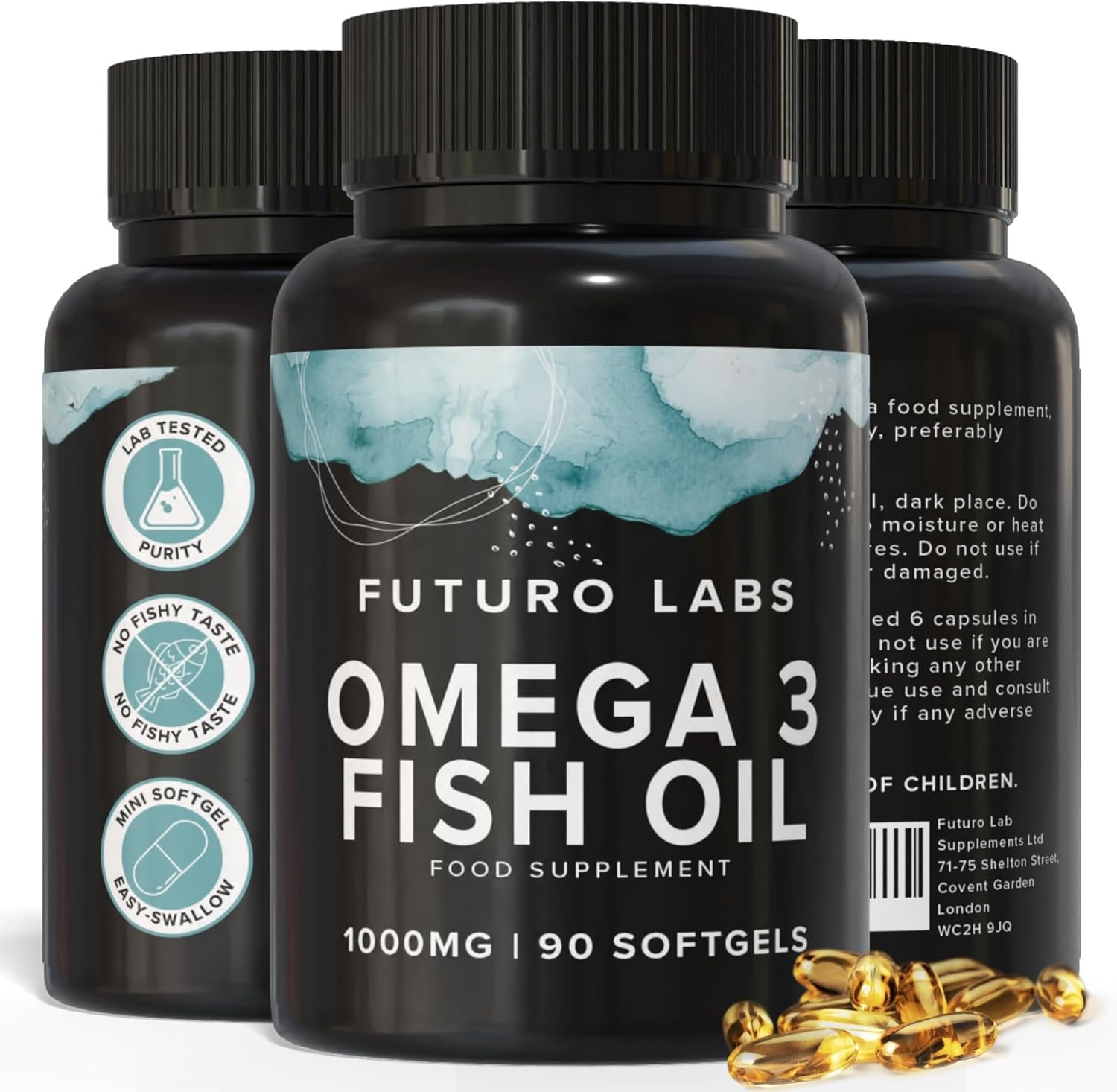
Futuro Labs Omega 3 Fish Oil
£14.99 for 90-day supply (90 softgels) · ~17p per day
Pros
- 1000mg fish oil per softgel — 180mg EPA + 120mg DHA stated
- Mini softgel, no fishy taste, lab tested
- 90-day supply at £14.99 (~17p/day), UK made
Cons
- Fish-derived, bovine-gelatin softgel — not vegan or vegetarian (algal DHA is that route)
- Ethyl-ester form — take with a meal; DHA brain/vision register claims need 250mg DHA daily, above the one-a-day serving
Available from: Amazon UK — £14.99
The arrow that survives — and the close
What the entire ratio conversation gets right, extracted and kept: most UK diets genuinely run omega-3-light — the oily-fish guidance line is the one the national plate most reliably misses (the sort, the plate) — and raising absolute omega-3 intake is the actionable, evidence-aligned move the spreadsheet-and-villain framing obscures: the food route (two fish portions weekly including one oily, the widely followed shape) or the capsule route (the everyday 250mg condition met daily — one Futuro Labs Omega 3 softgel at 300mg, ~17p, with a meal because chemistry — the claim held, the cascade). Nothing else needs counting: no 6-audit, no ratio target UK guidance never set, no oil purge — one number raised to one condition, and the debate's useful residue fully spent. Gates as ever: pregnancy, nursing or any medication → doctor first per the label (the conversation). The ratio, closed evenhandedly: a coherent story fairly heard, a mainstream verdict plainly given — and the only arrow worth following pointing at the 3 all along.
Frequently asked questions
Do I need to balance my omega 6 to omega 3 ratio?
The evenhanded read: omega-6 is an essential fat, not a villain — UK guidance sets no ratio target, and the mainstream evidence review doesn't support the seed-oils-are-poison narrative. What the ratio conversation gets right is one practical arrow: most UK diets are omega-3-light, and the actionable move is raising absolute omega-3 intake (oily fish or a met 250mg condition), not fearing the 6.
Are seed oils actually harmful?
The claim gets a fair hearing and the mainstream verdict: replacing saturated fats with unsaturated ones — seed oils included — tracks with better cardiovascular outcomes across the large evidence reviews, and the poison narrative leans on mechanism speculation over outcome data. Reasonable people minimise ultra-processed food generally; the oil-specific panic isn't where the evidence points.
So what should I actually do about the ratio?
One move, two forms: raise the 3 — either the food route (two fish portions weekly, one oily, per the widely followed shape) or the capsule route (the 250mg condition met daily). The 6 needs no counting, the ratio needs no spreadsheet — absolute omega-3 intake is the lever the whole conversation was pointing at.