Choosing: Ask Every Bottle the Same Six Things
The payload-and-serving pair sorts more of the shelf than the rest combined — and the method's credibility is its home test.
At a glance
- The six checks: payload · serving honesty · freshness · testing · format fit · the pence sum
- The one that sorts most: EPA+DHA per capsule at a true serving, against 250mg
- Tier by need: everyday condition → value tier · grams/sourcing/liquid → premium, knowingly
- The method's home test: our own label run through all six, below
The six checks — the whole cluster as a decision method
Every buying page this cluster built compresses into six checks run in order: one, the payload — EPA+DHA per capsule found on the panel and summed against the everyday 250mg condition: the check that sorts more of the shelf than the rest combined (the unit, the condition); two, serving honesty — the division through true capsule counts that catches the doubled-serving instrument (the master read); three, freshness engineering — deodorised oil, an antioxidant guard, dating, and any oxidation-testing mention, silence scoring as the answer it is (the war); four, testing shown — per-batch, retrievable, batch-matched, ideally ISO 17025-accredited work (the certificate decode); five, format fit — capsule size against your swallow, form against your meal habits, count against your schedule (the format's case, the forms debate resolved); six, the sum — pence per condition-met day, the arithmetic that ends every comparison (its home).
Routing by tier — the checks travel, the needs decide
The six checks apply identically at every price, so the tier question reduces to need: the everyday-condition buyer — the 250mg benchmark met daily is the complete brief, and any value-tier bottle passing all six checks serves it whole: paying premium prices here purchases headroom, forms or stories the brief never asked for (the audit that itemises them); the named-need buyer — gram-class daily targets (concentrates as capsule-count mercy, GP conversation attached — that chemistry), certified-sourcing requirements (the checkable signals), liquid-format households, or form convictions held knowingly: the premium tiers doing that work explicitly, chosen with the same six checks plus the need that justifies the gap; and the routed edges — vegans and the fish-allergic to algal (that door), pregnancy to professionals per every label worth buying.
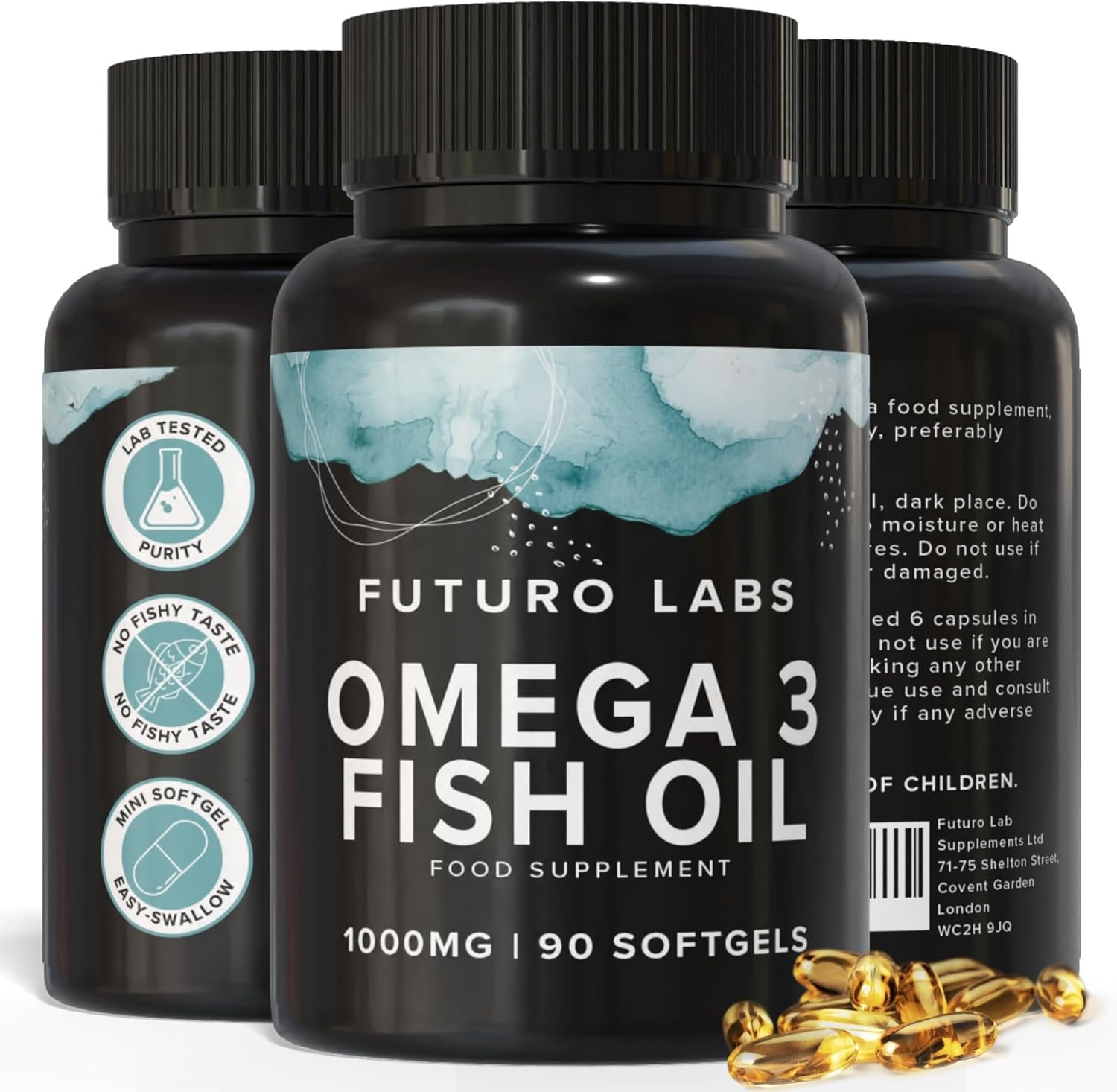
Futuro Labs Omega 3 Fish Oil
£14.99 for 90-day supply (90 softgels) · ~17p per day
Pros
- 1000mg fish oil per softgel — 180mg EPA + 120mg DHA stated
- Mini softgel, no fishy taste, lab tested
- 90-day supply at £14.99 (~17p/day), UK made
Cons
- Fish-derived, bovine-gelatin softgel — not vegan or vegetarian (algal DHA is that route)
- Ethyl-ester form — take with a meal; DHA brain/vision register claims need 250mg DHA daily, above the one-a-day serving
Available from: Amazon UK — £14.99
The home test — and the close
The method's credibility check, as ever: Futuro Labs Omega 3 through its own six — payload: 300mg of the pair per capsule, condition cleared with headroom; serving: one softgel, genuinely, division by one; freshness: deodorised oil, tocopherol guard, sealed mini softgels on a 90-day schedule; testing: independent per-batch four-metal and microbiology certificates, ISO 17025 work, retrievable; format: mini softgel a third smaller than standard, EE with-meal by design; sum: £14.99 ÷ 90 = ~17p per condition-met day (the full record, limitations printed there too) — six for six at the value tier, which is the design brief stated as a scorecard. Gates as ever, since choosing ends at swallowing: pregnancy, nursing or any medication → doctor first per the label, blood thinners → the pharmacist minute (that conversation). How to choose a fish oil, closed as a method: six checks, one routing question, every tier answerable — and a shelf that stops being confusing the moment it's asked the same six things in the same order.
Frequently asked questions
How do I choose a fish oil supplement in the UK?
Six checks in order: the payload (EPA+DHA per capsule against the 250mg everyday condition), serving honesty (divide per-serving figures by capsule count), freshness engineering (deodorised, antioxidant-guarded, dated), testing shown (per-batch, retrievable, ideally ISO 17025), format fit (capsule size, form, your actual habits), and the pence-per-condition-met-day sum. Any bottle passing all six is a sound buy at its tier.
What matters most if I can only check one thing?
The payload-and-serving pair (they're really one check): EPA+DHA per capsule at a true one-capsule serving, summed against 250mg. It catches blends, doubled servings and carrier-worship in a single read — the check that sorts more of the shelf than the other five combined.
Which tier should I actually buy from?
By your daily number and non-negotiables, per the premium audit: the everyday condition → the value tier passing all six checks (this label's exact design); gram targets or certified-sourcing requirements or liquid formats → the premium tiers doing that work explicitly. The six checks travel to every tier unchanged.