Sustainability: A Logo You Can Verify Beats an Adjective You Can't
Our own position held to the page's standard — testing-first, claiming only what's shown, with sourcing-first buyers routed to the brands doing that work.
At a glance
- The supply chain: reduction fisheries (small fast-reproducing species) · byproduct oils · algal cultivation
- The checkables: named source · verifiable certification · byproduct sourcing stated
- The wallpaper test: 'sustainably sourced' with nothing checkable behind it fails
- Our position: testing-first, claims only what's shown — sourcing-first buyers routed honestly
Where fish oil comes from — the supply chain, told straight
The sustainability conversation starts with a supply chain most labels skip: reduction fisheries — the bulk of the world's fish oil comes from small, fast-reproducing pelagic species (Peruvian anchoveta the giant among them, with sardine, sprat and menhaden fisheries alongside) caught and 'reduced' to meal and oil: biologically resilient species by design, whose actual sustainability rides on management quality — quota science, enforcement, ecosystem monitoring — which varies by fishery and year, making the category neither the villain nor the saint of any brochure; byproduct oils — a genuine bright spot: oil recovered from trimmings of fish already caught for food (salmon and white-fish processing streams) turns waste into supply, and brands stating byproduct sourcing are playing a real card; and the no-fishery route — algal cultivation growing the molecules directly, the footprint case the algal page makes and the krill debate contrasts (that flagged fishery).
What a UK buyer can actually check — three things, and the wallpaper test
Turning concern into shelf-power: the named source — a label stating species or fishery ('anchovy and sardine, South Pacific'; 'salmon trimmings, Norwegian processing') has made a checkable claim, while 'marine oil' and 'fish oil (fish)' have made none: specificity is the first sustainability signal because it's auditable (the same logic the whole label read runs on); the verifiable certification — recognisable schemes exist (MSC's blue tick and Friend of the Sea among the names a UK shelf shows) and their value is precisely that they're checkable on the certifier's own registries: a logo you can verify beats an adjective you can't, and sourcing-first brands lead with exactly this (the exemplar reviewed); and the byproduct statement — trimmings-sourced oils saying so plainly. The wallpaper test closing the checklist: 'sustainably sourced' text with none of the three behind it is decoration — common, cheap, and telling you only that the marketing department has met the word.
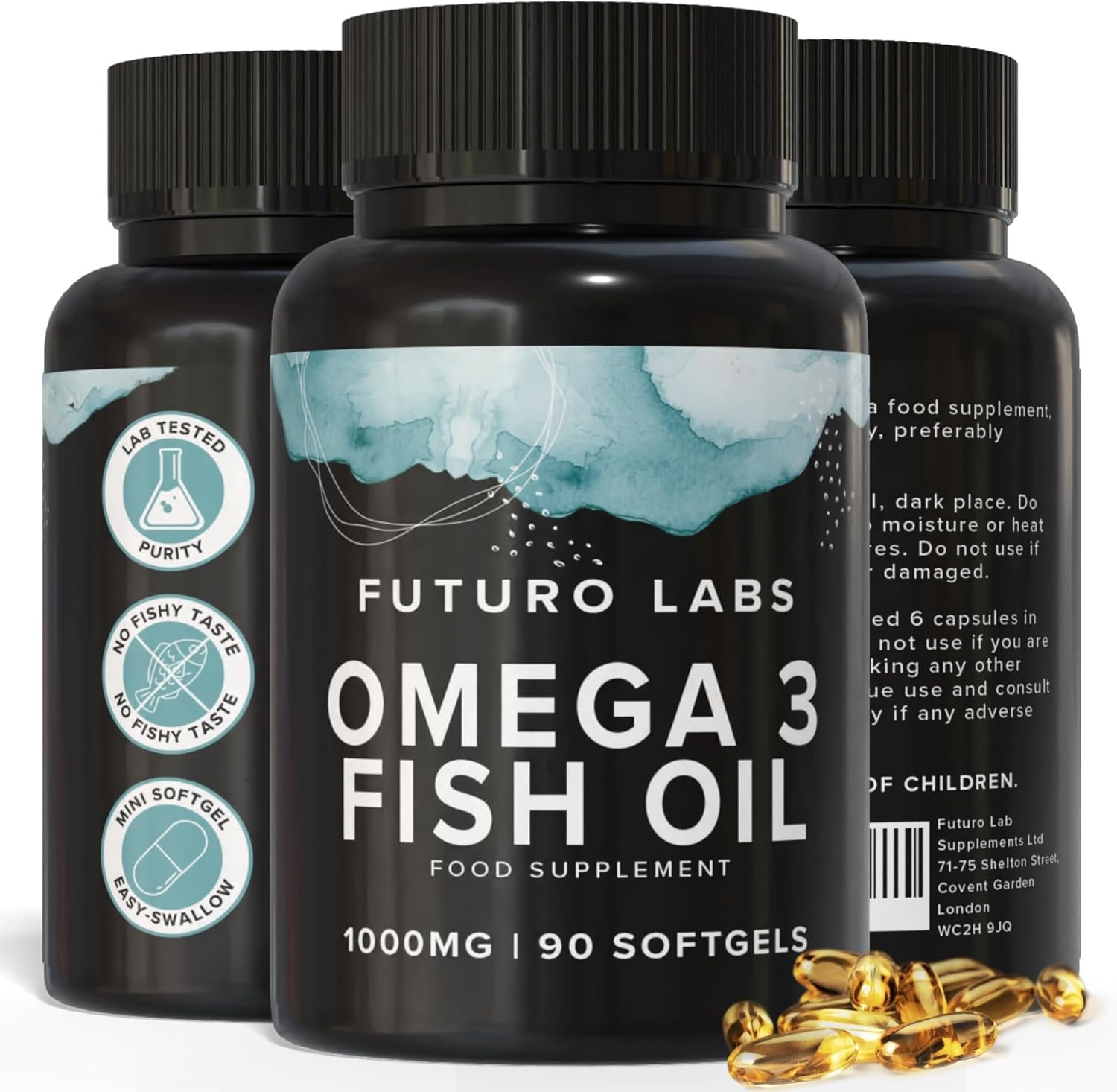
Futuro Labs Omega 3 Fish Oil
£14.99 for 90-day supply (90 softgels) · ~17p per day
Pros
- 1000mg fish oil per softgel — 180mg EPA + 120mg DHA stated
- Mini softgel, no fishy taste, lab tested
- 90-day supply at £14.99 (~17p/day), UK made
Cons
- Fish-derived, bovine-gelatin softgel — not vegan or vegetarian (algal DHA is that route)
- Ethyl-ester form — take with a meal; DHA brain/vision register claims need 250mg DHA daily, above the one-a-day serving
Available from: Amazon UK — £14.99
Our honest position, the values routing, and the close
Where this label stands, held to this page's own standard: Futuro Labs Omega 3's published case is quality-and-testing-first — independent per-batch purity and microbiology certificates shown, the freshness engineering documented (the testing explainer, the record) — and this page won't dress that as a fishery certification we haven't displayed: claims only what's shown, here as everywhere. The values routing that honesty enables: buyers ranking traceability first deserve the named-fishery, certified brands doing that work explicitly and pricing it in (the tier audit's sourcing row); buyers ranking the everyday condition per pound land where the arithmetic leads (that sum); and vegan or footprint-first readers take the algal door with this cluster's blessing (that routing). Gates as ever: pregnancy, nursing or any medication → doctor first per the label (the conversation). Fish oil sustainability, closed the checkable way: a supply chain named, three signals taught, wallpaper failed — and a page that holds its own label to the test it just handed you.
Frequently asked questions
Is fish oil sustainable?
It depends on the fishery — which is the honest whole answer: most fish oil comes from reduction fisheries (small, fast-reproducing species like anchoveta) whose management quality varies, byproduct oils recover value from fish already caught for food, certification schemes (MSC and Friend of the Sea among the recognisable names) exist for buyers to check, and algal oil skips the fishery entirely. The buyer's real power is asking where a specific bottle's oil came from.
What should a UK buyer actually look for?
Three checkable things: a named source (species or fishery beats 'marine oil'), a recognisable certification logo where sourcing is the priority (verify it on the certifier's own site), and byproduct or trimmings sourcing where stated (waste-stream recovery is a genuine sustainability card). Vague 'sustainably sourced' text with none of the three is wallpaper.
What does Futuro Labs claim on sourcing?
Only what we show: our published position is quality-and-testing-first — independent per-batch purity certificates — and this page doesn't dress that as a certification we haven't displayed. Sourcing-first buyers deserve the named-fishery brands doing that work explicitly; that's honest routing, not false modesty.