How to Improve Digestion Naturally
The UK's biggest digestive lever is a 10-gram fibre gap — pulled gradually, with water rising alongside.
At a glance
- The big levers: fibre toward 30g (gradually), water alongside, meal regularity, chewing, movement, stress, ferments
- The UK gap: average intake ~18-20g fibre vs the 30g target — the single biggest digestive lever
- Diversity rule: varied plants feed varied bacteria — count kinds, not just grams
- Red flags skip the page: blood, weight loss, persistent change, night symptoms → GP promptly
The fibre lever — biggest, slowest, most worth pulling
Natural digestive improvement starts where the UK gap is widest: the numbers — official guidance targets 30g of fibre daily; average British intake sits around 18-20g, making fibre the single most under-pulled lever in the national gut; the gradual rule — raising fibre fast recruits gas and bloating as protest: add one source at a time over weeks (porridge oats, an extra vegetable portion, beans into the bolognese, skins left on) and let the resident bacteria adapt to their improved rations; the water clause — fibre without fluid firms rather than helps: the two rise together or the experiment backfires; the diversity upgrade — beyond grams, variety: different plant types feed different bacterial species, which is why the count-the-plants habit (aiming across grains, legumes, vegetables, fruits, nuts, seeds and herbs weekly) has become gut science's favourite practical rule (the prebiotic mechanics).
The rhythm, the brain, the ferments — and a seaweed's honest seat
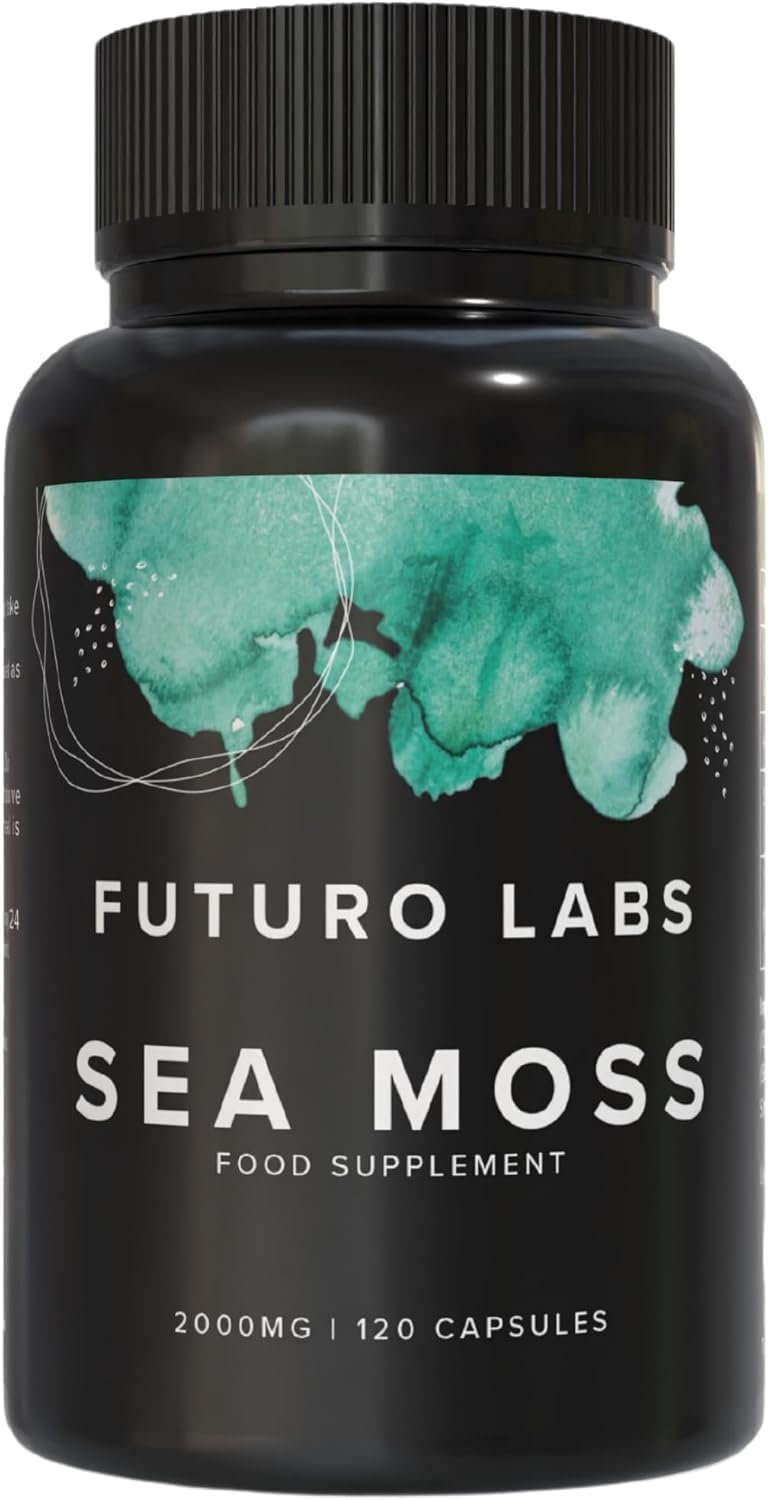
The levers beyond the plate's contents: rhythm — regular meal timing gives the gut's own housekeeping cycles (the migrating motor complex that sweeps between meals) space to run: constant grazing interrupts the cleaning crew; mechanics — chewing thoroughly and eating unhurried are unglamorous, measurably useful, and free; movement — daily activity supports motility, and the ten-minute post-meal walk is a legitimate digestive intervention wearing a casual disguise; the gut-brain axis — stress lands on digestion through real physiology (the reason exams and interviews are felt where they are), making the wind-down hour a digestive tool too; ferments — live yoghurt, kefir, sauerkraut and kimchi contribute live cultures: introduce steadily, keep what agrees; the supplement seat, honestly sized — Futuro Labs Sea Moss fits as a marine-fibre addition: 2000mg-equivalent sea moss from 15:1 extract per serving, carrying seaweed's polysaccharides (carrageenan-family fibres with prebiotic-adjacent interest) and its natural iodine — no digestive claims held or implied, a food-derived supplement for the diversity column at £9.99 for 60 days (the gut page, the explainer).
Futuro Labs Sea Moss
£9.99 for 60-day supply (120 capsules) · under 17p per day
Pros
- 2000mg raw sea moss equivalent per serving (15:1 extract)
- Wildcrafted North Atlantic Chondrus crispus — named species and origin
- Independently lab tested — heavy metals and microbiology
- Single-ingredient vegan capsules, UK GMP made
- 60-day supply £9.99 — under 17p/day
Cons
- Iodine content varies by harvest — not for precise-dose needs
- Young brand next to high-street names
The fortnight plan, the boundaries — and the close
Operationalising it: the fortnight starter — week one: porridge or wholegrain breakfast daily, water bottle visible, ten-minute walks after the largest meal; week two: legumes into two dinners, one fermented food trialled, screens off for the last meal of the day — small moves, adaptation-paced, with a two-line gut diary (comfort, regularity) keeping honest score; the boundaries that keep this page safe — red flags route to the GP promptly and without a supplement detour: blood in stools, unintentional weight loss, persistent bowel-habit change, swallowing difficulty, night-waking symptoms, or pain that stays; and the long-grumbling middle — IBS-pattern misery that's run for months deserves diagnosis and structured approaches (the low-FODMAP route belongs under dietitian guidance, not DIY), because indefinite self-management is its own burden. Improving digestion naturally, closed as the systems job it is: fibre up gradually with water alongside, rhythm and movement restored, stress genuinely counted, diversity fed daily — with a seaweed capsule as one honest column entry, and the GP as the named exit for everything a lifestyle page shouldn't hold.
Frequently asked questions
How can I improve digestion naturally?
The levers that move it: fibre raised gradually toward the 30g UK target (most adults sit near 18-20g), water rising alongside the fibre, regular meal timing, chewing like it matters, daily movement (a post-meal walk is a genuine digestive tool), stress managed (the gut-brain axis is real physiology), and fermented foods introduced steadily.
Which foods help most?
The fibre spectrum: wholegrains, beans and lentils, vegetables and fruit with skins on, nuts and seeds — diversity matters as much as quantity, since varied plants feed varied gut bacteria. Fermented additions (live yoghurt, kefir, sauerkraut, kimchi) contribute live cultures; prebiotic stars like onions, garlic, leeks and oats feed what's already there.
When is it not a lifestyle problem?
Red flags skip this page: blood in stools, unintentional weight loss, persistent change in bowel habit, difficulty swallowing, ongoing pain, or symptoms waking you at night — all GP territory promptly. Long-running IBS-pattern misery also deserves diagnosis rather than indefinite self-management.
Sea moss as an extract, not a guess?
Futuro Labs Sea Moss — 2000mg 15:1 extract, 60 days. £9.99.
Shop on Amazon UK