Prebiotic-Adjacent: The Real Size of the Contribution
Fermentable substrate without the trials record — a real contribution stated at its real size, in a category that inflates on sight. The mechanics, the format footnote, and the breadth strategy it joins.
At a glance
- The honest term: prebiotic-adjacent — fermentable substrate, no formal trials record
- The mechanism: soluble-fibre behaviour — gel, soften, feed, settle
- Week one ≠ effect: introduction noise, covered on the side-effects file
- The strategy it joins: one of 30 weekly plant varieties — breadth owns the evidence
What 'prebiotic' requires — and where sea moss honestly lands
The prebiotic label has a definition worth respecting: substrate that's selectively fermented by beneficial gut bacteria with demonstrated host benefit — a bar the canonical fibres (inulin, fructo- and galacto-oligosaccharides, resistant starch) cleared through actual trial records. Sea moss holds the entry property — its carrageenan-family polysaccharides are genuinely fermentable material the colonic ecosystem can work with — without the trials that would earn the formal badge, which lands it exactly where the gut page placed it: prebiotic-adjacent, one fermentable fibre among many, contributing substrate the way oats or legumes do rather than performing a documented selective effect. That's a real contribution stated at its real size — and a sentence most of the category inflates on sight (layer-three inflation being the house speciality it declines).
The day-to-day mechanics — soluble fibre, behaving normally
What a daily serving actually does downstream: the polysaccharides hydrate and gel (the property that makes the traditional format a gel at all), adding soft bulk and fermentable material as any soluble fibre does; colonic bacteria ferment what they can, producing the short-chain fatty acids that are fibre's whole quiet economy; and week one sometimes announces the introduction — gas, gurgle, mild looseness — which is the ecosystem recalibrating to novel substrate, settling in days at label dose with food (the mild tier, and never the detox story). The format footnote the gut lane honestly earns: gel loyalists eating sea moss as food get the whole matrix in its traditional form — a small fair point — while capsules deliver the same polysaccharides fridge-free; the fibre doesn't care about the vehicle (the fork).
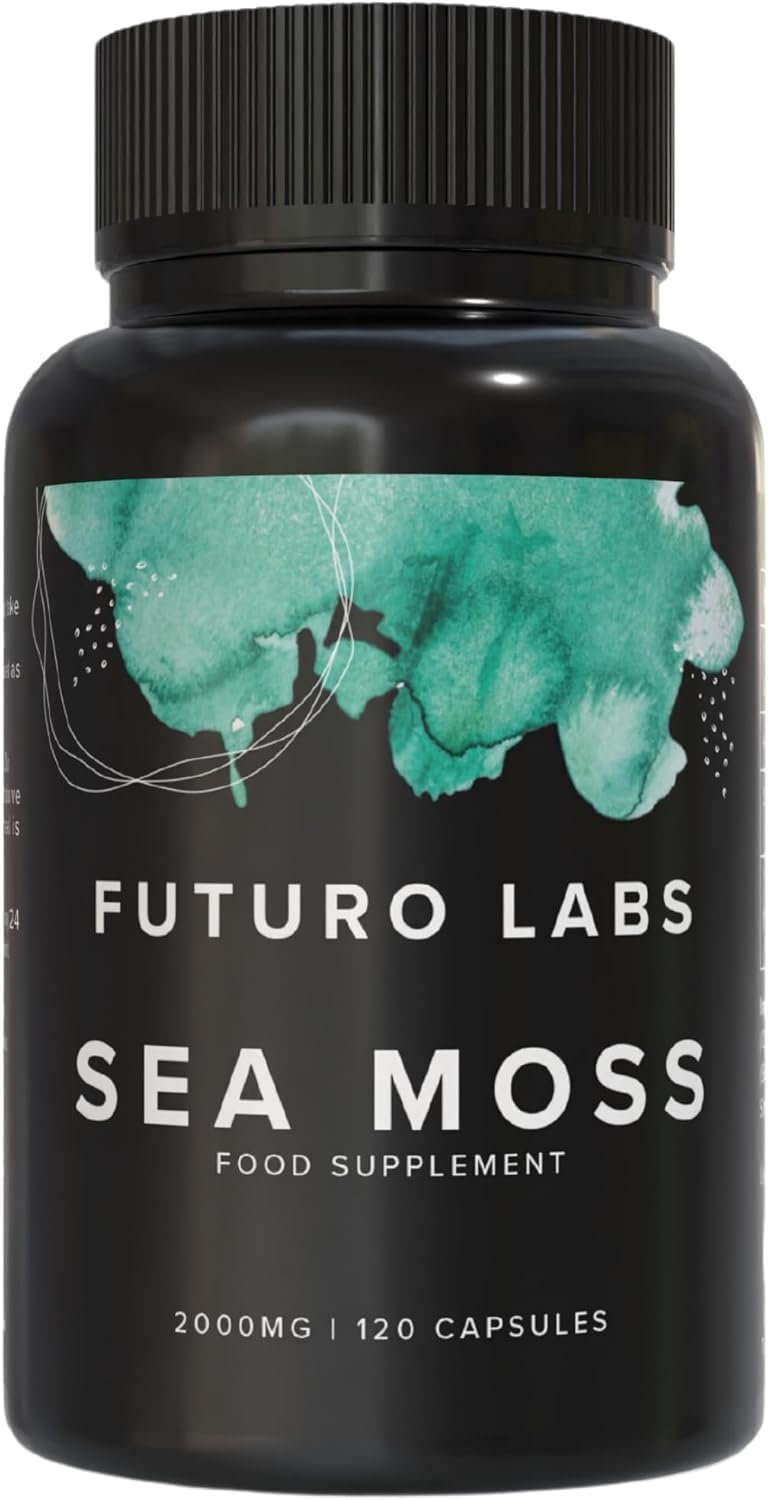
Futuro Labs Sea Moss
£9.99 for 60-day supply (120 capsules) · under 17p per day
Pros
- 2000mg raw sea moss equivalent per serving (15:1 extract)
- Wildcrafted North Atlantic Chondrus crispus — named species and origin
- Independently lab tested — heavy metals and microbiology
- Single-ingredient vegan capsules, UK GMP made
- 60-day supply £9.99 — under 17p/day
Cons
- Iodine content varies by harvest — not for precise-dose needs
- Young brand next to high-street names
Available from: Amazon UK — £9.99
Placing it in the strategy that actually works
The gut evidence keeps endorsing breadth over heroes, so the placement is arithmetic: a daily sea moss serving counts as one of the ~30 weekly plant varieties the microbiome-diversity research keeps pointing at — a genuine line in the tally, never the tally itself — alongside fermented foods doing the live-culture work, and the sleep-movement-stress pillars no capsule substitutes (the full plan). Expectations sized accordingly: digestion's improvements from fibre strategy arrive as regularity and quiet over weeks, not events over days (the clock); constipation that persists gets fluids-fibre-movement first and a pharmacist or GP when it stays; and the standing flags outrank everything — persistent pain, bowel-habit change, blood or unexplained weight loss are GP conversations before any supplement search. One line, honestly sized, in a strategy that works: the prebiotic-adjacent truth, and enough (the daily architecture rides along).
Frequently asked questions
Is sea moss a prebiotic?
Prebiotic-adjacent is the honest term: its carrageenan-family polysaccharides are fermentable substrate colonic bacteria can work with — the defining prebiotic property — but the formal prebiotic label belongs to fibres with demonstrated selective-fermentation records (inulin, GOS, resistant starch), and sea moss hasn't run those trials. One fermentable fibre among many, contributing to substrate diversity: real, modest, honestly stated.
How does sea moss affect digestion day to day?
As soluble fibre does: gelling and softening in the gut, adding fermentable material, sometimes announcing itself in week one (gas, gurgle — the introduction, not an effect), then settling into the quiet background role fibre plays. It won't fix constipation single-handed, treat conditions, or 'reset' anything — those verbs belong to overall fibre intake, fluids, movement and, where symptoms persist, a GP.
What's the best way to use sea moss for gut goals?
As one line in the breadth strategy: a daily serving counted as one of your 30 weekly plant varieties, alongside the fermented foods and boring pillars that own the evidence. The gut is the one lane where gel loyalists have a small honest point — the whole-food matrix eaten as food — though capsules deliver the same polysaccharides without the fridge.