Lion's Mane Effects Week by Week — Realistic Timeline

One of the most-asked UK questions about lion's mane is "what should I expect, and when?" Effects build gradually over 4-8 weeks rather than appearing on day one — but most marketing skips the realistic week-by-week experience. This guide walks through the realistic timeline across 16 weeks of consistent daily use at clinical dose tier.
At a glance: our picks
- Weeks 1-2: Most users notice nothing — establish consistency
- Weeks 3-4: First subtle effects — Northumbria 28-day RCT timeframe
- Weeks 5-8: Effects consolidate for responders
- Weeks 9-12: Honest evaluation moment
- Weeks 13-16: Final test — 30-40% are genuine non-responders
One of the most-asked UK questions about lion's mane is "what should I expect, and when?" The honest answer is that effects build gradually over 4-8 weeks rather than appearing on day one — but most marketing skips the realistic week-by-week experience, leaving buyers with mismatched expectations.
This guide walks through the realistic timeline of lion's mane effects across 16 weeks of consistent daily use at clinical dose tier (1000-1500mg fruiting body extract). What you should and shouldn't expect at each stage, when to evaluate honestly, and what indicates a genuine non-responder versus someone who needs more time.
Our top picks reviewed
Futuro Labs Lion's Mane

£15.49 for 120-day supply · 13p per day
Pros
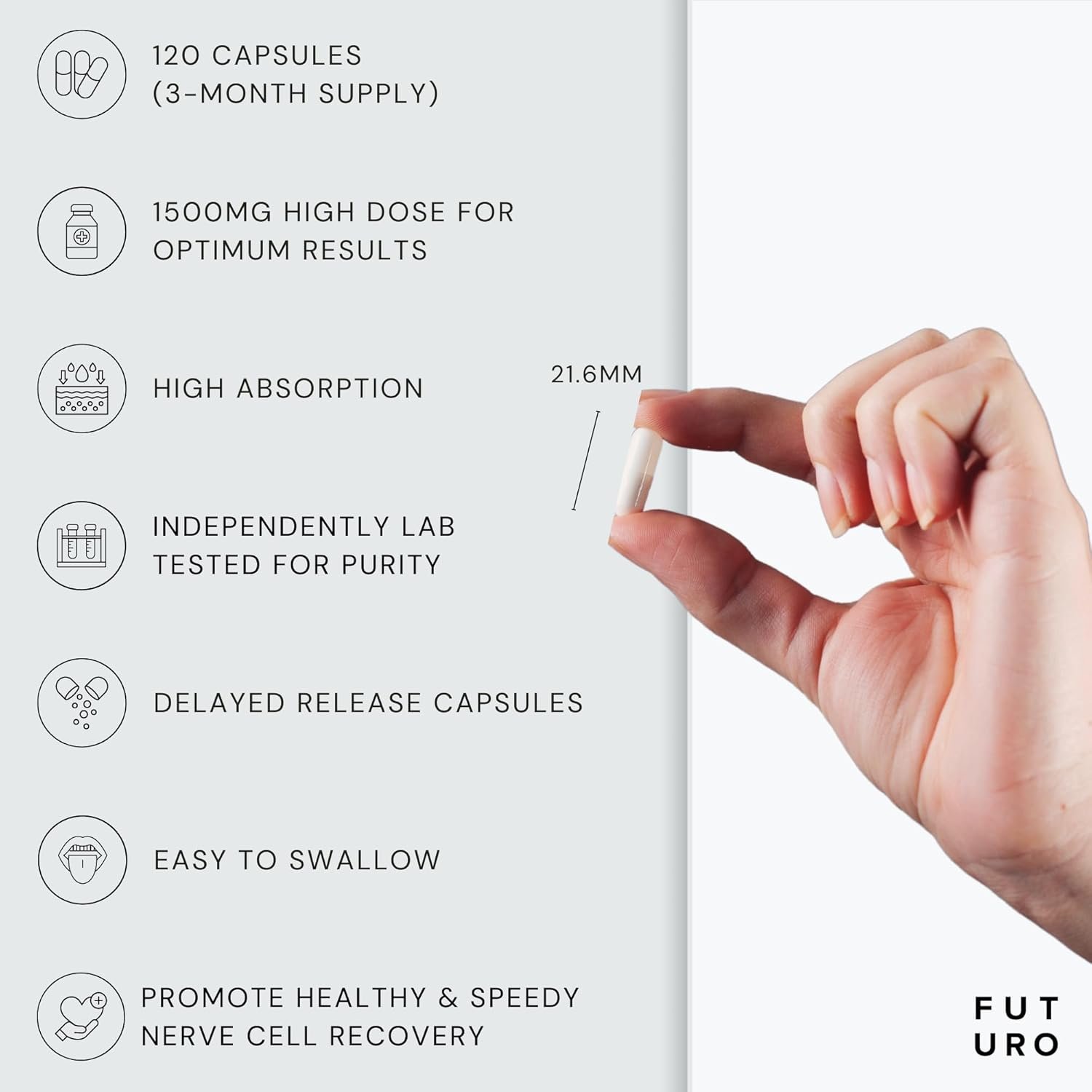
- 1500mg fruiting body extract (5:1 ratio) per single capsule
- Delayed-release capsule for high absorption
- 21.6mm size-00 — easier swallow than most 1500mg formats
- 120-day supply at ~13p per day
- BRC AA accredited UK manufacturing
- Vegan HPMC, no fillers, odour-free, lab tested
Cons
- Single-ingredient (no nootropic blend)
- Newer brand vs heritage UK names
Available from: Amazon UK · Futuro Labs
Solve Labs Lion's Mane
Around £22-28 for 60-day supply · 37-47p per day
Pros
- Dual-extracted fruiting body
- UK manufactured
- Strong sourcing transparency
Cons
- Higher cost per day
- Smaller pack sizes
Available from: Solve Labs · Amazon UK
Grass & Co Focus
£15.88 (Amazon) - £26.50 (Grass & Co) · 53-88p per day
Pros
- Comprehensive nootropic blend
- Hot-water extracted, third-party tested
- Available at Holland & Barrett
Cons
- Only 600mg lion's mane
- Higher cost per day
- Beta-glucan info on website rather than label
Available from: Holland & Barrett · Grass & Co · Amazon UK
At-a-glance comparison
| Week | What most users notice | What to do |
|---|---|---|
| Weeks 1-2 | Nothing — baseline establishment | Establish consistency, don't evaluate yet |
| Weeks 3-4 | Subtle effects — first responders notice | Track baseline symptoms vs current |
| Weeks 5-8 | Effects consolidate for responders | Continue consistency, don't increase dose |
| Weeks 9-12 | Steady-state effect for responders | Honest evaluation moment |
| Weeks 13-16 | Final evaluation — respond or non-respond | If no effect by 16 weeks, move on |
Weeks 1-2: Baseline establishment
What most users notice: nothing. Lion's mane works through nerve growth factor support — a gradual mechanism that builds underlying cognitive infrastructure over weeks. The first two weeks produce minimal noticeable effects in most users.
What might happen: mild digestive adjustment if you're new to the supplement (resolved by taking with food). Subtle "feeling like something's working" sensation that may be placebo or genuine early-stage effect — hard to distinguish.
What to do: establish consistency. Take lion's mane daily at the same point in your morning routine, with food. Don't evaluate effects yet. The compound mechanism is doing biological infrastructure work that won't be noticeable for several more weeks.
Weeks 3-4: First subtle changes
What some users notice: subtle improvements in cognitive flexibility, less brain fog mid-afternoon, slightly easier word recall. The 2024 Northumbria University placebo-controlled trial showed measurable cognitive improvements after 28 days — this is the window where genuine effects start emerging.
What it feels like: not a dramatic shift. Most users describe the experience as "I haven't noticed brain fog this week" rather than a noticeable cognitive surge. The absence-of-symptom rather than addition-of-effect framing is genuine.
What to track: baseline symptoms you noted before starting. Brain fog frequency, focus duration on complex tasks, word-finding ease, mid-afternoon mental fatigue. Rate each on 1-10 and compare to your baseline.
Weeks 5-8: Effects consolidate
What more users notice: sustained subtle cognitive improvements across the patterns identified in weeks 3-4. Effects are becoming more consistent rather than appearing intermittently.
The pattern: users who responded mildly in weeks 3-4 typically see consolidation here. Users who noticed nothing in weeks 3-4 may begin noticing subtle effects now. Some users still notice nothing — that's also a real pattern.
What to do: continue consistency. Don't increase dose unless you've completed 8 weeks at standard 1000-1500mg without any noticeable change. Don't add other new supplements simultaneously — makes it impossible to evaluate which is doing what.
Weeks 9-12: Steady-state effect
What sustained users notice: the cognitive benefits established in weeks 5-8 are now part of normal cognitive baseline. The gradual nature means it can be hard to remember what brain fog or scattered focus felt like before — which is itself an indicator the supplement is working.
The honest evaluation moment: by week 12, if you've consistently taken 1000-1500mg fruiting body extract daily and noticed nothing meaningful in cognitive function, brain fog frequency, or focus quality, lion's mane probably isn't producing meaningful effects for you specifically. Some users respond strongly; others don't respond at all.
Weeks 13-16: Final evaluation window
For responders: sustained cognitive infrastructure benefits. The supplement is doing its work; continued daily use maintains the effect. No additional benefit from increasing dose beyond 1500mg for most users.
For non-responders: by 16 weeks of consistent daily use at the right dose and form (fruiting body extract, not myceliated grain) without meaningful cognitive change, you've completed an honest test. Lion's mane probably isn't effective for you specifically.
What this looks like in practice: approximately 60-70% of UK users who properly test lion's mane (right product, right dose, right duration) report some meaningful cognitive benefit. 30-40% don't respond. That's a real pattern across cognitive supplements — they aren't universal responders.
What affects your individual timeline
- Product quality: fruiting body extract at clinical dose tier from a UK BRC-accredited manufacturer produces faster and more reliable effects than mycelium-on-grain or low-extract-ratio products.
- Baseline symptom severity: users with more pronounced brain fog typically notice improvements sooner because there's more symptom to address.
- Stack synergy: users taking lion's mane alongside omega-3, magnesium, and vitamin D3 often report effects sooner — though it's harder to isolate which is doing what.
- Lifestyle baseline: users with reasonable sleep, hydration, and exercise see clearer supplement effects than chronically sleep-deprived or sedentary users.
- Individual responsiveness: not everyone responds. Genetic variation in NGF pathway sensitivity may explain why 30-40% of properly-tested users don't notice meaningful effects.
When to stop trying
If you've completed 16 weeks of consistent 1500mg daily fruiting body extract from a UK-accredited manufacturer, with reasonable lifestyle baseline, and noticed nothing meaningful — that's a genuine non-response. Don't continue indefinitely hoping for effects that aren't materialising. Move on. Consider other evidence-based options for your specific symptoms.
Frequently asked questions
How long does lion's mane take to start working?
Most users notice subtle effects between weeks 3-4 of consistent daily use at 1000-1500mg fruiting body extract. The 2024 Northumbria University placebo-controlled trial showed measurable cognitive improvements after 28 days. Effects are gradual rather than immediate — lion's mane doesn't produce day-one cognitive lift the way caffeine does.
Should I notice anything in the first week of lion's mane?
Most users notice nothing in the first 1-2 weeks. Lion's mane works through nerve growth factor support — a gradual mechanism that builds underlying cognitive infrastructure over weeks. The first two weeks produce minimal noticeable effects in most users. This is normal and expected — don't quit early.
How long should I try lion's mane before giving up?
16 weeks of consistent daily use at 1000-1500mg fruiting body extract is the honest test duration. Most responders notice effects between weeks 3-8; if effects are present, they should be sustained by weeks 12-16. If you've completed 16 weeks without meaningful change, lion's mane probably isn't effective for you specifically. Approximately 30-40% of properly-tested users don't respond — supplements aren't universal.
What does lion's mane feel like when it's working?
Most users describe the experience as absence-of-symptom rather than addition-of-effect. "I haven't noticed brain fog this week." "Words came easier today." "I sustained focus on that complex task more easily." Not a dramatic cognitive surge — gradual, subtle improvements in baseline cognitive function. By week 12, the gradual nature can make it hard to remember what brain fog felt like before.
Looking for the best value lion's mane in the UK?
Futuro Labs Lion's Mane delivers 1500mg fruiting body extract (5:1) in a delayed-release capsule for ~13p per day.
Shop on Amazon UKLast updated: 10 May 2026. All content is provided for general information only and is not intended to substitute for professional medical advice. If you have any health concerns, consult your GP or a qualified healthcare professional. Futuro Labs is a registered UK supplement manufacturer (Futuro Lab Supplements Ltd, 71-75 Shelton Street, London WC2H 9JQ). Affiliate links to Amazon UK and our own store are clearly disclosed.