Lion's Mane for Athletes
It isn't creatine and never will be — the defensible experiment is attention quality, logged like everything else you train.
At a glance
- The honest pitch: head, not muscles — focus, skill work, sleep-and-recovery periphery
- What it isn't: ergogenic — no strength/endurance/body-comp evidence, no authorised claims
- Stack behaviour: stimulant-free, neutral alongside protein, creatine, caffeine
- The athlete's actual levers: training load, sleep, protein, creatine — the mushroom is periphery
What an athlete could honestly want from a mushroom
Clearing the ergogenic question first so the real one can breathe: not performance — no credible trial shows lion's mane adding strength, power, endurance or muscle: it isn't creatine, it isn't caffeine, and any tub sold to athletes on gains language is selling past the file; the honest territories — focus during sessions: the small human cognitive file (older-adult studies, short-term mood-and-attention work) is what draws the training crowd to skill-heavy disciplines — lifting technique, climbing, combat sports, motorsport — where attention quality is performance (the focus page); recovery's quiet corner — the calm-adjacent thread (small stress-and-sleep studies) interests athletes whose limiting factor is switching off after evening sessions (that file); the framing that keeps everyone honest — lion's mane holds zero authorised claims: this is a research-stage experiment an athlete runs on themselves, not a supplement with a performance ledger (the evidence audit).
Fitting it into a training life
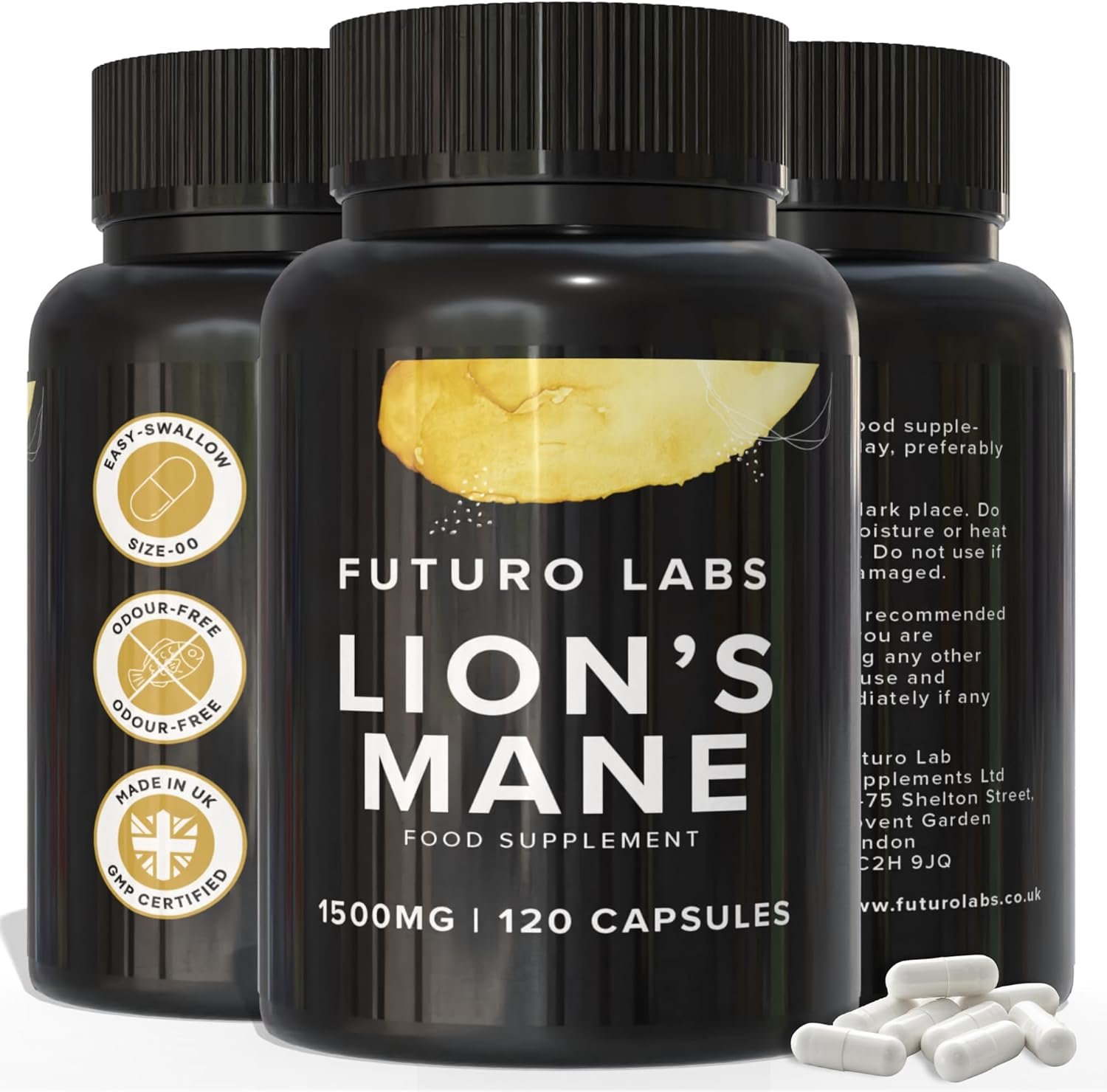
The practical integration, kept simple: the slot — with breakfast daily, or pre-session for the focus-curious: no stimulant content means no timing anxiety and no sleep interference from later doses; the stack behaviour — neutral alongside the athlete's real supplements: protein, creatine and caffeine carry the evidence load, and the mushroom neither potentiates nor conflicts with any of them; the testing note for competitors — lion's mane isn't a listed substance, but competitive athletes apply their sport's supplement-hygiene standards (batch testing, reputable sourcing) to everything they swallow — which dovetails with the category's own quality fork: fruiting body over mycelium-on-grain, stated extract ratios, per-batch testing (the sourcing page). Futuro Labs Lion's Mane fits the brief on all counts: 1500mg mushroom-equivalent from 5:1 fruiting-body extract per capsule, stimulant-free, per-batch tested, 120 days for £15.49 — a 13p-a-day experiment that never touches the actual performance budget.
Futuro Labs Lion's Mane
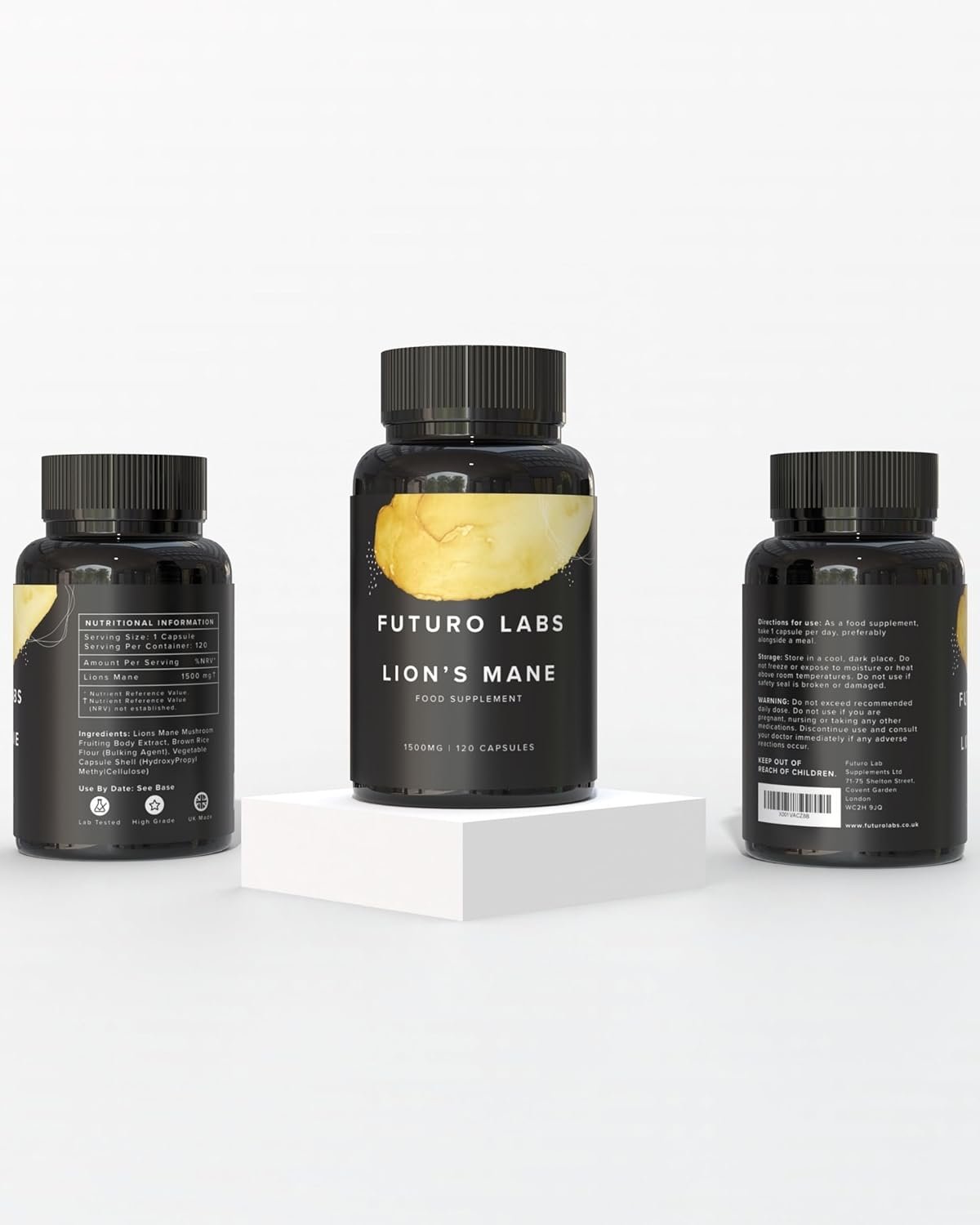
£15.49 for 120-day supply · 13p per day
Pros
- 1500mg fruiting body extract (5:1 ratio) per single capsule
- Delayed-release capsule for high absorption
- 21.6mm size-00 — easier swallow than most 1500mg formats
- 120-day supply at ~13p per day
- BRC AA accredited UK manufacturing
- Vegan HPMC, no fillers, odour-free, lab tested
Cons
- Single-ingredient (no nootropic blend)
- Newer brand vs heritage UK names
Available from: Amazon UK · Futuro Labs
The experiment protocol — and the close
Running it like training data: baseline first — a fortnight of session notes (focus quality, evening switch-off, sleep) before the first capsule, because athletes already log everything else; the run — 8-12 weeks daily, one variable at a time (no new pre-workout mid-experiment), the same two-line note continuing throughout (the dosage guide); the verdict — better session focus or faster evening wind-down that survives the log's scrutiny earns the reorder; a flat quarter earns the clean drop with zero sunk-cost ceremony; the hierarchy it never touches — programming, sleep hours, total protein and creatine remain the levers that move performance: a mushroom experiment sits in the margins by design, and margins only matter once the middle is handled. Lion's mane for athletes, closed at its honest size: nothing for the muscles, a defensible experiment for the head — logged, time-boxed, and priced so the only real cost is a quarter of attention.
Frequently asked questions
Why would athletes take lion's mane?
For the head, not the muscles: the interest is focus during training, skill acquisition, and the sleep-and-recovery angle from its calm-adjacent research thread. It has no authorised claims, no strength or endurance evidence, and nothing anti-doping-listed — it's a cognitive-corner experiment, not an ergogenic aid.
Does it help performance directly?
No credible trial shows lion's mane improving strength, power, endurance or body composition. Any athlete taking it for those outcomes is spending hope; the honest use-case is the focus-and-recovery periphery where its small human research file actually sits.
Is it safe alongside training supplements?
Generally uncomplicated — it's a mushroom extract without stimulant content, so it stacks neutrally with protein, creatine and caffeine routines. The standard rules hold: medication users run the pharmacist check, competitive athletes verify any supplement's testing credentials, and allergy-prone users note it's a fungus.
Fruiting body, not mycelium?
Futuro Labs Lion's Mane — 1500mg 5:1 fruiting body extract, 120 days. £15.49.
Shop on Amazon UK